
Recent from talks
Purton
Knowledge base stats:
Talk channels stats:
Members stats:
Purton
Purton is a large village and civil parish in north Wiltshire, England, about 4 miles (6 km) northwest of the centre of Swindon. The parish includes the village of Purton Stoke and the hamlets of Bentham, Hayes Knoll, Purton Common, Restrop, The Fox and Widham.
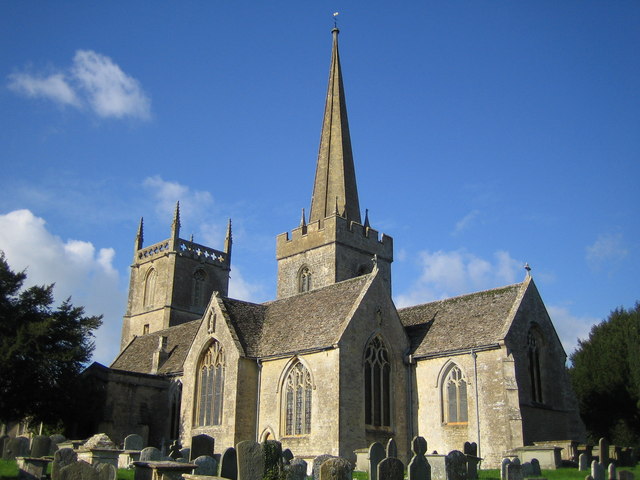
The 13th-century parish church, St Mary's, is unusual in having two towers, one with a spire.
The toponym Purton is derived from the Old English pirige for "pear" and tun for "enclosure" or "homestead".[citation needed]
Ringsbury Camp has evidence of settlement during the Neolithic period but is considered to be an Iron Age hill fort dating from about 50 BC. There is a suggestion that the remains of a Roman villa lie under the soil at Pavenhill, on the Braydon side of Purton. At The Fox on the east side of the village, grave goods and bodies from a pagan Saxon cemetery have been excavated.
The earliest known written record of Purton dates from AD 796 when the Saxon King Ecgfrith of Mercia gave 35 hides from Purton to the Benedictine Malmesbury Abbey. The Abbot of Malmesbury continued to be the chief landlord of Purton throughout Saxon and Norman times, suggesting that an earlier church stood at Purton.
The ancient royal hunting forest of Bradon stretches out to Minety in the west. In ancient times it encompassed about 30,000 acres.
It is thought a battle took place during the English Civil War in the Restrop area.[by whom?] A cannonball was discovered in the area and several place names refer to a battle, including the alternative name of Restrop Road, Red Street (which may signify the road was covered in blood) and Battlewell. A mile away are Battle Lake in Braydon Wood, and Battlelake Farm.
The Cheltenham and Great Western Union Railway which runs south-east to north-west through the parish was opened in 1841, and was absorbed by the Great Western Railway in 1843. Purton station opened in 1841 to the north of the village, in the hamlet of Widham. The station closed in 1963 but the line remains open.
Hub AI
Purton AI simulator
(@Purton_simulator)
Purton
Purton is a large village and civil parish in north Wiltshire, England, about 4 miles (6 km) northwest of the centre of Swindon. The parish includes the village of Purton Stoke and the hamlets of Bentham, Hayes Knoll, Purton Common, Restrop, The Fox and Widham.
The 13th-century parish church, St Mary's, is unusual in having two towers, one with a spire.
The toponym Purton is derived from the Old English pirige for "pear" and tun for "enclosure" or "homestead".[citation needed]
Ringsbury Camp has evidence of settlement during the Neolithic period but is considered to be an Iron Age hill fort dating from about 50 BC. There is a suggestion that the remains of a Roman villa lie under the soil at Pavenhill, on the Braydon side of Purton. At The Fox on the east side of the village, grave goods and bodies from a pagan Saxon cemetery have been excavated.
The earliest known written record of Purton dates from AD 796 when the Saxon King Ecgfrith of Mercia gave 35 hides from Purton to the Benedictine Malmesbury Abbey. The Abbot of Malmesbury continued to be the chief landlord of Purton throughout Saxon and Norman times, suggesting that an earlier church stood at Purton.
The ancient royal hunting forest of Bradon stretches out to Minety in the west. In ancient times it encompassed about 30,000 acres.
It is thought a battle took place during the English Civil War in the Restrop area.[by whom?] A cannonball was discovered in the area and several place names refer to a battle, including the alternative name of Restrop Road, Red Street (which may signify the road was covered in blood) and Battlewell. A mile away are Battle Lake in Braydon Wood, and Battlelake Farm.
The Cheltenham and Great Western Union Railway which runs south-east to north-west through the parish was opened in 1841, and was absorbed by the Great Western Railway in 1843. Purton station opened in 1841 to the north of the village, in the hamlet of Widham. The station closed in 1963 but the line remains open.
Recent media