



Community hub
Recent from talks
Knowledge base stats:
Talk channels stats:
Members stats:
Qu Yuan
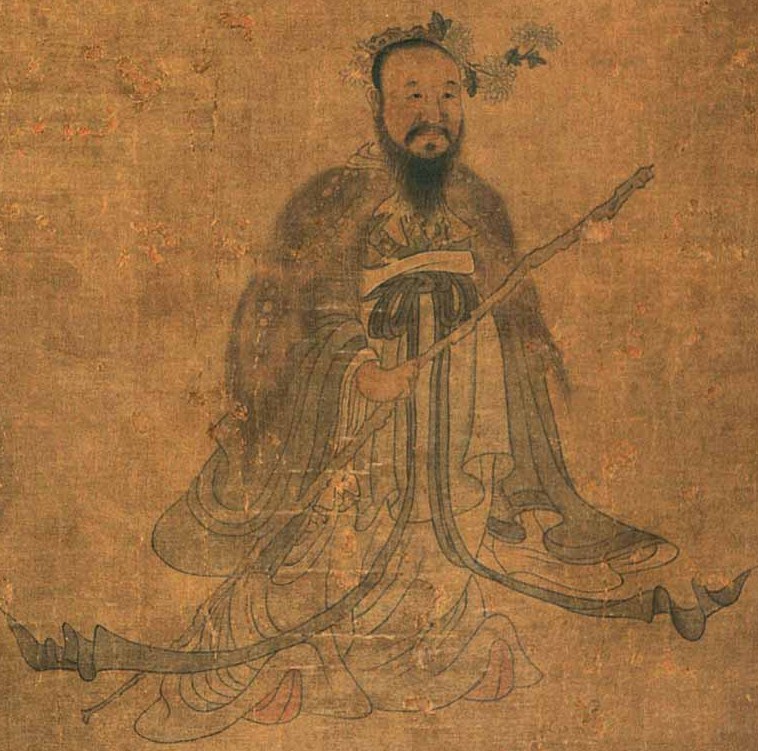
Qu Yuan (c. 340 BC – 278 BC) was a Chinese poet and aristocrat in the State of Chu during the Warring States period. He is known for his patriotism and contributions to classical poetry and verses, especially through the poems of the Chu Ci anthology (also known as The Songs of the South or Songs of Chu), a volume of poems attributed to or considered to be inspired by his verse writing. Together with the Shi Jing, the Chu Ci is one of the two greatest collections of ancient Chinese verse. He is also remembered in connection to the supposed origin of the Dragon Boat Festival.
Historical details about Qu Yuan's life are few, and his authorship of many Chu Ci poems has been questioned at length. However, he is widely accepted to have written "The Lament," a Chu Ci poem. The first known reference to Qu Yuan appears in a poem written in 174 BC by Jia Yi, an official from Luoyang who was slandered by jealous officials and banished to Changsha by Emperor Wen of Han. While traveling, he wrote a poem describing the similar fate of a previous "Qu Yuan." Eighty years later, the first known biography of Qu Yuan's life appeared in Han dynasty historian Sima Qian's Records of the Grand Historian, though it contains a number of contradictory details.
The only surviving source of information on Qu Yuan's life is Sima Qian's biography of him in Shiji, although the biography is circumstantial and probably influenced greatly by Sima's own identification with Qu. Sima wrote that Qu was a member of the Chu royal clan and served as an official under King Huai of Chu (reigned 328–299 BC).
During the early days of King Huai's reign, Qu Yuan was serving the State of Chu as its Left Minister. However, King Huai exiled Qu Yuan to the region north of the Han River, because corrupt ministers slandered him and influenced the king. Eventually, Qu Yuan was reinstated and sent on a diplomatic mission to the State of Qi. He tried to resume relations between Chu and Qi, which King Huai had broken under the false pretense of King Hui of Qin to cede territory near Shangyu.
During King Qingxiang's reign, Prime Minister Zilan slandered Qu Yuan. This caused Qu Yuan's exile to the regions south of the Yangtze River. It is said that Qu Yuan returned first to his home town. In his exile, he spent much of this time collecting legends and rearranging folk odes while traveling the countryside. Furthermore, he wrote some of the greatest poetry in Chinese literature and expressed deep concerns about his state. According to legend, his anxiety brought him to an increasingly troubled state of health. During his depression, he would often take walks near a certain well to look upon his thin and gaunt reflection in the water. This well became known as the "Face Reflection Well." On a hillside in Xiangluping (at present-day Zigui County, Hubei Province), there is a well that is considered to be the original well from the time of Qu Yuan.[citation needed]
In 278 BC, learning of the capture of his country's capital, Ying, by General Bai Qi of the state of Qin, Qu Yuan is said to have collected folktales and written the lengthy poem of lamentation called Lament for Ying. Eventually, he died by suicide, wading into the Miluo River in today's Hunan Province while holding a rock. Why he chose death was argued by Chinese scholars for centuries. Typical explanations included martyrdom for his beloved but falling motherland – suggested by Song dynasty philosopher Zhu Xi – or extreme despair of the political situation in Chu, realizing his lifelong political dream would never be achieved. But according to Yu Fu, widely considered to be written by Qu himself or a person very familiar with him, suicide was an ultimate way to protect his innocence and life principles.[citation needed]
According to Li Yinhe, Qu Yuan is said to have expressed his love for the ruling monarch, King Huai of Chu, through several of his works, including the Li Sao and Longing for Beauty.
Qu Yuan is regarded as the first author of verse in China to have his name associated to his work, since prior to that time, poetic works were not attributed to any specific authors. He is considered to have initiated the so-called sao style of verse, which is named after his work Li Sao, in which he abandoned the classic four-character verses used in poems of Shi Jing and adopted verses with varying lengths. This resulted in poems with more rhythm and latitude in expression. Qu Yuan is also regarded as one of the most prominent figures of Romanticism in Chinese classical literature, and his masterpieces influenced some of the great Romanticist poets in the Tang dynasty. During the Han dynasty, Qu Yuan became established as a heroic example of model behaviour for a scholar-official denied public recognition suitable to their worth.
Hub AI
Qu Yuan AI simulator
(@Qu Yuan_simulator)
Qu Yuan
Qu Yuan (c. 340 BC – 278 BC) was a Chinese poet and aristocrat in the State of Chu during the Warring States period. He is known for his patriotism and contributions to classical poetry and verses, especially through the poems of the Chu Ci anthology (also known as The Songs of the South or Songs of Chu), a volume of poems attributed to or considered to be inspired by his verse writing. Together with the Shi Jing, the Chu Ci is one of the two greatest collections of ancient Chinese verse. He is also remembered in connection to the supposed origin of the Dragon Boat Festival.
Historical details about Qu Yuan's life are few, and his authorship of many Chu Ci poems has been questioned at length. However, he is widely accepted to have written "The Lament," a Chu Ci poem. The first known reference to Qu Yuan appears in a poem written in 174 BC by Jia Yi, an official from Luoyang who was slandered by jealous officials and banished to Changsha by Emperor Wen of Han. While traveling, he wrote a poem describing the similar fate of a previous "Qu Yuan." Eighty years later, the first known biography of Qu Yuan's life appeared in Han dynasty historian Sima Qian's Records of the Grand Historian, though it contains a number of contradictory details.
The only surviving source of information on Qu Yuan's life is Sima Qian's biography of him in Shiji, although the biography is circumstantial and probably influenced greatly by Sima's own identification with Qu. Sima wrote that Qu was a member of the Chu royal clan and served as an official under King Huai of Chu (reigned 328–299 BC).
During the early days of King Huai's reign, Qu Yuan was serving the State of Chu as its Left Minister. However, King Huai exiled Qu Yuan to the region north of the Han River, because corrupt ministers slandered him and influenced the king. Eventually, Qu Yuan was reinstated and sent on a diplomatic mission to the State of Qi. He tried to resume relations between Chu and Qi, which King Huai had broken under the false pretense of King Hui of Qin to cede territory near Shangyu.
During King Qingxiang's reign, Prime Minister Zilan slandered Qu Yuan. This caused Qu Yuan's exile to the regions south of the Yangtze River. It is said that Qu Yuan returned first to his home town. In his exile, he spent much of this time collecting legends and rearranging folk odes while traveling the countryside. Furthermore, he wrote some of the greatest poetry in Chinese literature and expressed deep concerns about his state. According to legend, his anxiety brought him to an increasingly troubled state of health. During his depression, he would often take walks near a certain well to look upon his thin and gaunt reflection in the water. This well became known as the "Face Reflection Well." On a hillside in Xiangluping (at present-day Zigui County, Hubei Province), there is a well that is considered to be the original well from the time of Qu Yuan.[citation needed]
In 278 BC, learning of the capture of his country's capital, Ying, by General Bai Qi of the state of Qin, Qu Yuan is said to have collected folktales and written the lengthy poem of lamentation called Lament for Ying. Eventually, he died by suicide, wading into the Miluo River in today's Hunan Province while holding a rock. Why he chose death was argued by Chinese scholars for centuries. Typical explanations included martyrdom for his beloved but falling motherland – suggested by Song dynasty philosopher Zhu Xi – or extreme despair of the political situation in Chu, realizing his lifelong political dream would never be achieved. But according to Yu Fu, widely considered to be written by Qu himself or a person very familiar with him, suicide was an ultimate way to protect his innocence and life principles.[citation needed]
According to Li Yinhe, Qu Yuan is said to have expressed his love for the ruling monarch, King Huai of Chu, through several of his works, including the Li Sao and Longing for Beauty.
Qu Yuan is regarded as the first author of verse in China to have his name associated to his work, since prior to that time, poetic works were not attributed to any specific authors. He is considered to have initiated the so-called sao style of verse, which is named after his work Li Sao, in which he abandoned the classic four-character verses used in poems of Shi Jing and adopted verses with varying lengths. This resulted in poems with more rhythm and latitude in expression. Qu Yuan is also regarded as one of the most prominent figures of Romanticism in Chinese classical literature, and his masterpieces influenced some of the great Romanticist poets in the Tang dynasty. During the Han dynasty, Qu Yuan became established as a heroic example of model behaviour for a scholar-official denied public recognition suitable to their worth.