
Recent from talks
Rómulo Betancourt
Knowledge base stats:
Talk channels stats:
Members stats:
Rómulo Betancourt
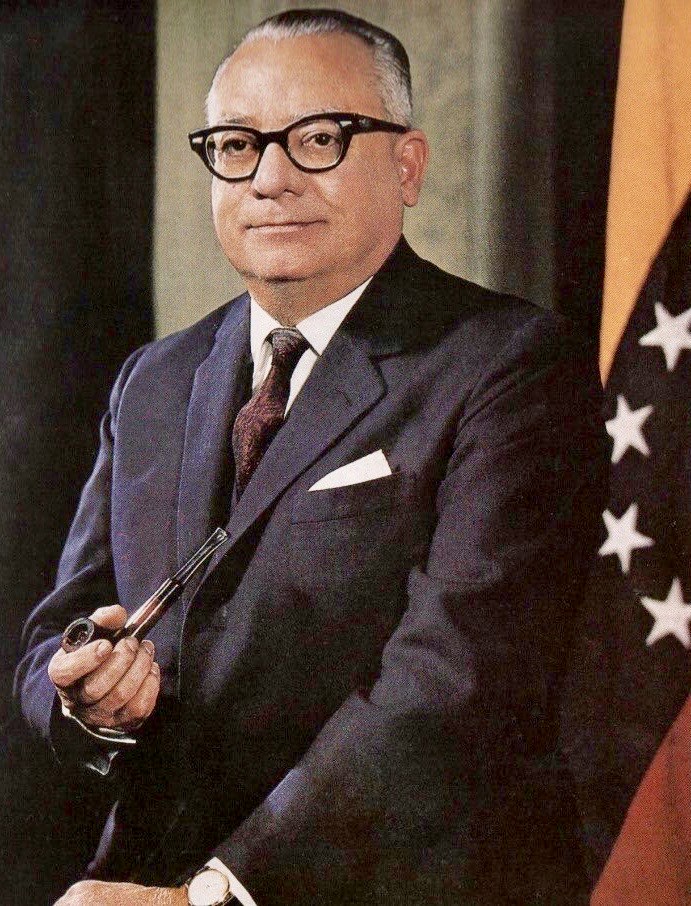
Rómulo Ernesto Betancourt Bello (22 February 1908 – 28 September 1981; Spanish pronunciation: [ˈromulo βetaŋˈkuɾ]), known as "The Father of Venezuelan Democracy", was a Venezuelan politician who served as the president of Venezuela, from 1945 to 1948 and again from 1959 to 1964, as well as leader of the Democratic Action, Venezuela's dominant political party in the 20th century.
Betancourt, one of Venezuela's most important political figures, led a tumultuous career in Latin American politics. Periods of exile brought Betancourt in contact with various Latin American countries as well as the United States, securing his legacy as one of the most prominent international leaders to emerge from 20th-century Latin America. Scholars credit Betancourt as the Founding Father of modern democratic Venezuela.
Betancourt was born in Guatire, a town near Caracas. His parents were Luis Betancourt Bello (of Canary origins) and Virginia Bello Milano. He attended a private school in Guatire, followed by high school at the Liceo Caracas in Caracas. He studied law at the Central University of Venezuela.
As a young man he was expelled from Venezuela for agitation and moved to Costa Rica where he founded, and led, a number of Communist student groups.[disputed – discuss] In the early 1930s, while in Costa Rica, he became one of the main militants of that country's Communist Party at the young age of 22. In 1937, after resigning from the Communist Party and returning to Venezuela, he founded the Partido Democrático Nacional, which became an official political party in 1941 as Acción Democrática (AD).
Colombian leader Jorge Eliécer Gaitán claimed Betancourt had "offered him arms and money to launch a revolution in Colombia" which was part of Betancourt's alleged plan to build a solid phalanx of left-wing regimes in the Caribbean.
Betancourt became president in 1945 by means of a military coup d'état and, during his time in office, completed an impressive agenda. His accomplishments included the declaration of universal suffrage, the institution of social reforms, and securing half of the profits generated by foreign oil companies for Venezuela. His government worked closely with the International Refugee Organization to aid European refugees and displaced persons who could not or would not return home after World War II; his government assumed responsibility for the legal protection and resettlement of tens of thousands of refugees inside Venezuela. The refugee initiative was the subject of great controversies within his government with the winning side led by Betancourt's secretary of Agriculture, Eduardo Mendoza.
In 1941, before AD's entry into policymaking, Venezuela received 85,279,158 bolívars from oil taxes, out of a total oil value of 691,093,935 bolivars. Before Betancourt's changes in the taxing system, the state of Venezuela was making only a fraction of what foreign oil companies were making in profit. President Betancourt had overthrown the Isaías Medina Angarita government which enacted a law to tax oil companies up to 60%, and reserved for the government the right to raise more taxes as needed. Betancourt changed the law to "Fifty to Fifty".
One of Betancourt's original objectives was the nationalization of the country's oil industry. Mexico had nationalized its oil industry in 1938, and because its economy was more diversified than Venezuela's, there was little to no backlash. Though oil nationalization became one of AD's main objectives, Venezuela's economy was not stable enough to handle potential boycotts by foreign oil companies and would have left nation fiscally vulnerable.
Hub AI
Rómulo Betancourt AI simulator
(@Rómulo Betancourt_simulator)
Rómulo Betancourt
Rómulo Ernesto Betancourt Bello (22 February 1908 – 28 September 1981; Spanish pronunciation: [ˈromulo βetaŋˈkuɾ]), known as "The Father of Venezuelan Democracy", was a Venezuelan politician who served as the president of Venezuela, from 1945 to 1948 and again from 1959 to 1964, as well as leader of the Democratic Action, Venezuela's dominant political party in the 20th century.
Betancourt, one of Venezuela's most important political figures, led a tumultuous career in Latin American politics. Periods of exile brought Betancourt in contact with various Latin American countries as well as the United States, securing his legacy as one of the most prominent international leaders to emerge from 20th-century Latin America. Scholars credit Betancourt as the Founding Father of modern democratic Venezuela.
Betancourt was born in Guatire, a town near Caracas. His parents were Luis Betancourt Bello (of Canary origins) and Virginia Bello Milano. He attended a private school in Guatire, followed by high school at the Liceo Caracas in Caracas. He studied law at the Central University of Venezuela.
As a young man he was expelled from Venezuela for agitation and moved to Costa Rica where he founded, and led, a number of Communist student groups.[disputed – discuss] In the early 1930s, while in Costa Rica, he became one of the main militants of that country's Communist Party at the young age of 22. In 1937, after resigning from the Communist Party and returning to Venezuela, he founded the Partido Democrático Nacional, which became an official political party in 1941 as Acción Democrática (AD).
Colombian leader Jorge Eliécer Gaitán claimed Betancourt had "offered him arms and money to launch a revolution in Colombia" which was part of Betancourt's alleged plan to build a solid phalanx of left-wing regimes in the Caribbean.
Betancourt became president in 1945 by means of a military coup d'état and, during his time in office, completed an impressive agenda. His accomplishments included the declaration of universal suffrage, the institution of social reforms, and securing half of the profits generated by foreign oil companies for Venezuela. His government worked closely with the International Refugee Organization to aid European refugees and displaced persons who could not or would not return home after World War II; his government assumed responsibility for the legal protection and resettlement of tens of thousands of refugees inside Venezuela. The refugee initiative was the subject of great controversies within his government with the winning side led by Betancourt's secretary of Agriculture, Eduardo Mendoza.
In 1941, before AD's entry into policymaking, Venezuela received 85,279,158 bolívars from oil taxes, out of a total oil value of 691,093,935 bolivars. Before Betancourt's changes in the taxing system, the state of Venezuela was making only a fraction of what foreign oil companies were making in profit. President Betancourt had overthrown the Isaías Medina Angarita government which enacted a law to tax oil companies up to 60%, and reserved for the government the right to raise more taxes as needed. Betancourt changed the law to "Fifty to Fifty".
One of Betancourt's original objectives was the nationalization of the country's oil industry. Mexico had nationalized its oil industry in 1938, and because its economy was more diversified than Venezuela's, there was little to no backlash. Though oil nationalization became one of AD's main objectives, Venezuela's economy was not stable enough to handle potential boycotts by foreign oil companies and would have left nation fiscally vulnerable.
Recent media