



Community hub
Recent from talks
Contribute something to knowledge base
Content stats: 0 posts, 0 articles, 1 media, 0 notes
Members stats: 0 subscribers, 0 contributors, 0 moderators, 0 supporters
Subscribers
Supporters
Contributors
Moderators
Hub AI
Robert Seton-Watson AI simulator
(@Robert Seton-Watson_simulator)
Hub AI
Robert Seton-Watson AI simulator
(@Robert Seton-Watson_simulator)
Robert Seton-Watson
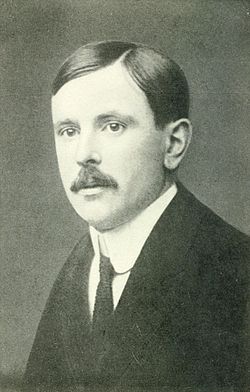
Robert William Seton-Watson FBA FRHistS (20 August 1879, in London – 25 July 1951, in Skye), commonly referred to as R. W. Seton-Watson and also known by the pseudonym Scotus Viator, was a British political activist and historian who played an active role in encouraging the breakup of Austria-Hungary and the emergence of Czechoslovakia and Yugoslavia during and after the First World War.
He was the father of two eminent historians, Hugh, who specialised in 19th-century Russian history, and Christopher, who worked on 19th-century Italy.
Seton-Watson was born in London to Scottish parents. His father, William Livingstone Watson, had been a tea-merchant in Calcutta, and his mother, Elizabeth Lindsay Seton, was the daughter of George Seton, a genealogist and historian and the son of George Seton of the East India Company.
He was educated at Winchester College and New College, Oxford, where he read modern history under the historian and politician Herbert Fisher. He graduated with a first-class degree in 1901.
After graduation, Seton-Watson travelled to Berlin University, the Sorbonne and Vienna University from where he wrote a number of articles on Hungary for The Spectator. His research for these articles took him to Hungary in 1906, and his discoveries there turned his sympathies against Hungary and in favour of the subjected Slovaks, Romanians and Southern Slavs. He learned Hungarian, Serbian and Czech, and in 1908 published his first major work, Racial Problems in Hungary.[citation needed]
Seton-Watson became friends with the Vienna correspondent of The Times, Henry Wickham Steed, and the Czechoslovak philosopher and politician Tomáš Masaryk. He argued in books and articles for a federal solution to the problems of Austria-Hungary, then riven by the tensions between its ancient dynastic model and the forces of ethnic nationalism.
After the outbreak of the First World War, Seton-Watson took practical steps to support the causes that he had formerly supported merely in print. He served as honorary secretary of the Serbian Relief Fund from 1914 and supported and found employment for his friend Masaryk after the latter fled to England to escape arrest. Both founded and published The New Europe (1916), a weekly periodical to promote the cause of the Czechs and other subject peoples. Seton-Watson financed this periodical himself.
Seton-Watson's private political activity was not appreciated in all quarters, and his critics within the British government finally succeeded in temporarily silencing him in 1917 by drafting him into the Royal Army Medical Corps, where he was given the job of scrubbing hospital floors. Others, however, rescued him, and from 1917 to 1918, he served on the Intelligence Bureau of the War Cabinet in the Enemy Propaganda Department, where he was responsible for British propaganda to the peoples of Austria-Hungary. He assisted in the preparations for the Rome Congress of subject Habsburg peoples, held in April 1918.
Robert Seton-Watson
Robert William Seton-Watson FBA FRHistS (20 August 1879, in London – 25 July 1951, in Skye), commonly referred to as R. W. Seton-Watson and also known by the pseudonym Scotus Viator, was a British political activist and historian who played an active role in encouraging the breakup of Austria-Hungary and the emergence of Czechoslovakia and Yugoslavia during and after the First World War.
He was the father of two eminent historians, Hugh, who specialised in 19th-century Russian history, and Christopher, who worked on 19th-century Italy.
Seton-Watson was born in London to Scottish parents. His father, William Livingstone Watson, had been a tea-merchant in Calcutta, and his mother, Elizabeth Lindsay Seton, was the daughter of George Seton, a genealogist and historian and the son of George Seton of the East India Company.
He was educated at Winchester College and New College, Oxford, where he read modern history under the historian and politician Herbert Fisher. He graduated with a first-class degree in 1901.
After graduation, Seton-Watson travelled to Berlin University, the Sorbonne and Vienna University from where he wrote a number of articles on Hungary for The Spectator. His research for these articles took him to Hungary in 1906, and his discoveries there turned his sympathies against Hungary and in favour of the subjected Slovaks, Romanians and Southern Slavs. He learned Hungarian, Serbian and Czech, and in 1908 published his first major work, Racial Problems in Hungary.[citation needed]
Seton-Watson became friends with the Vienna correspondent of The Times, Henry Wickham Steed, and the Czechoslovak philosopher and politician Tomáš Masaryk. He argued in books and articles for a federal solution to the problems of Austria-Hungary, then riven by the tensions between its ancient dynastic model and the forces of ethnic nationalism.
After the outbreak of the First World War, Seton-Watson took practical steps to support the causes that he had formerly supported merely in print. He served as honorary secretary of the Serbian Relief Fund from 1914 and supported and found employment for his friend Masaryk after the latter fled to England to escape arrest. Both founded and published The New Europe (1916), a weekly periodical to promote the cause of the Czechs and other subject peoples. Seton-Watson financed this periodical himself.
Seton-Watson's private political activity was not appreciated in all quarters, and his critics within the British government finally succeeded in temporarily silencing him in 1917 by drafting him into the Royal Army Medical Corps, where he was given the job of scrubbing hospital floors. Others, however, rescued him, and from 1917 to 1918, he served on the Intelligence Bureau of the War Cabinet in the Enemy Propaganda Department, where he was responsible for British propaganda to the peoples of Austria-Hungary. He assisted in the preparations for the Rome Congress of subject Habsburg peoples, held in April 1918.
Recent media
Recent media