


Community hub
Recent from talks
Contribute something to knowledge base
Content stats: 0 posts, 0 articles, 1 media, 0 notes
Members stats: 0 subscribers, 0 contributors, 0 moderators, 0 supporters
Subscribers
Supporters
Contributors
Moderators
Hub AI
RAF St Eval AI simulator
(@RAF St Eval_simulator)
Hub AI
RAF St Eval AI simulator
(@RAF St Eval_simulator)
RAF St Eval
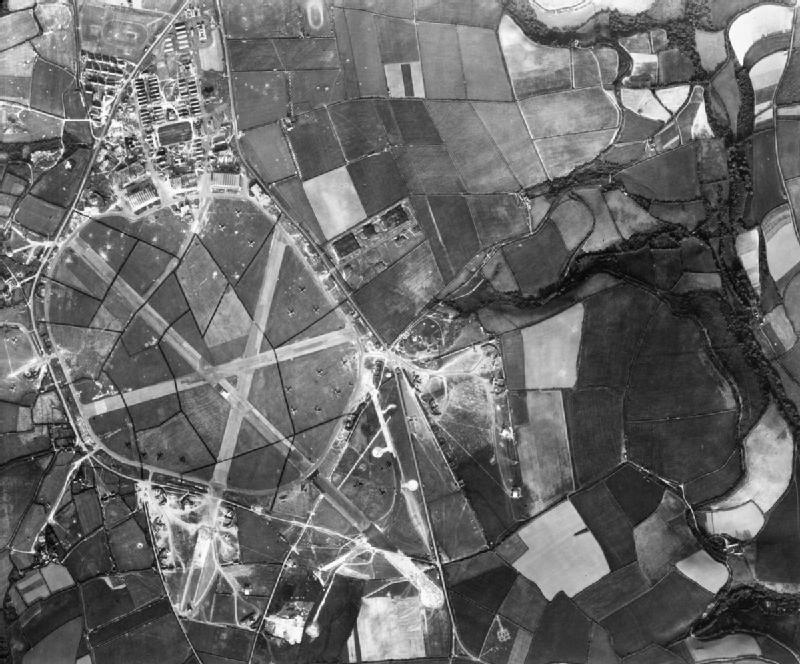
Royal Air Force St Eval or RAF St Eval is a former Royal Air Force station for the RAF Coastal Command, southwest of Padstow in Cornwall, England, UK. St Eval's primary role was to provide anti-submarine and anti-shipping patrols off the south west coast. Aircraft from the airfield were also used for photographic reconnaissance missions, meteorological flights, convoy patrols, air-sea rescue missions and protection of the airfield from the Luftwaffe.
The Royal Air Force's 1930s expansion plan included a requirement for a station to provide anti-submarine and anti-shipping patrols off the South-west coast of England. The site at St Eval was chosen as a Coastal Command airfield and work started in 1938. Five widely dispersed cottages, two houses and portions of two farms were acquired by compulsory purchase; the village of St Eval was completely demolished in order to build the airfield. Levelling of the site by G Wallace Ltd involved the removal by bulldozers of many Cornish hedges and three ancient tumuli. One householder tried to hold out against the authorities and refused to leave his cottage for several days. Only the church survived which the RAF adopted as their station church and it still stands today. The work progressed well and RAF St Eval opened on 2 October 1939.
In June 1940 St Eval became a Fighter Command sector headquarters during the Battle of Britain and Supermarine Spitfires were stationed there. These were joined by Hawker Hurricane and Bristol Blenheim fighters. The station's aircraft took an active part in the conflict.
The formation in December 1940 of No 404 (later 1404) Meteorological Flight was significant. The flight was tasked with providing basic weather data on which the Command meteorologists could base their forecasts. It was a role which St Eval performed throughout the war.
The presence of the Spitfires was not a great success as the Luftwaffe's change in tactics led to an increase in night raids for which the Spitfires were not suited. Therefore, 238 Squadron were posted in with Hurricanes. The airfield was hit a number of times in the summer of 1940 and early 1941. This caused considerable damage and casualties with the Germans carrying out further raids in May 1942, causing damage to buildings and the destruction of aircraft. St Eval was equipped with a green box barrage rocket device which sent a steel wire curtain into the air to descend on parachutes. This was intended to enmesh enemy aircraft and cause them to crash, but the device was unsuccessful.
On 6 April 1941 a small force of Beauforts from 22 Squadron, operating on detachment from St Eval, launched an attack on the German battleship Gneisenau in Brest harbour. A Beaufort was able to launch a torpedo at point blank range but was shot down. However, the ship was severely damaged below the water line, so was obliged to return to the dock for repair. The pilot of the Beaufort, Flying Officer Kenneth Campbell RAF, was posthumously awarded the Victoria Cross.
On 9 January 1942, a Supermarine Walrus of the Irish Air Corps was stolen from Rineanna airfield, Country Clare, by four Irish servicemen. Their intention was to fly to France to join the Luftwaffe. However, they were intercepted by RAF Spitfires and escorted to St Eval, where they landed and were detained by RAF Police. Subsequently, they and the aircraft were returned to Ireland.
In the summer of 1942 No. 61 Squadron was twice loaned to Coastal Command for anti-submarine operations in the Bay of Biscay. It was detached from its station in Rutland to St Eval and on the very first occasion that it operated from there – on 17 July 1942 – a crew became the first in RAF Bomber Command to bring back irrefutable evidence that they had destroyed a U-boat at sea – a photograph showing the U-boat crew in the water swimming away from their sinking vessel.
RAF St Eval
Royal Air Force St Eval or RAF St Eval is a former Royal Air Force station for the RAF Coastal Command, southwest of Padstow in Cornwall, England, UK. St Eval's primary role was to provide anti-submarine and anti-shipping patrols off the south west coast. Aircraft from the airfield were also used for photographic reconnaissance missions, meteorological flights, convoy patrols, air-sea rescue missions and protection of the airfield from the Luftwaffe.
The Royal Air Force's 1930s expansion plan included a requirement for a station to provide anti-submarine and anti-shipping patrols off the South-west coast of England. The site at St Eval was chosen as a Coastal Command airfield and work started in 1938. Five widely dispersed cottages, two houses and portions of two farms were acquired by compulsory purchase; the village of St Eval was completely demolished in order to build the airfield. Levelling of the site by G Wallace Ltd involved the removal by bulldozers of many Cornish hedges and three ancient tumuli. One householder tried to hold out against the authorities and refused to leave his cottage for several days. Only the church survived which the RAF adopted as their station church and it still stands today. The work progressed well and RAF St Eval opened on 2 October 1939.
In June 1940 St Eval became a Fighter Command sector headquarters during the Battle of Britain and Supermarine Spitfires were stationed there. These were joined by Hawker Hurricane and Bristol Blenheim fighters. The station's aircraft took an active part in the conflict.
The formation in December 1940 of No 404 (later 1404) Meteorological Flight was significant. The flight was tasked with providing basic weather data on which the Command meteorologists could base their forecasts. It was a role which St Eval performed throughout the war.
The presence of the Spitfires was not a great success as the Luftwaffe's change in tactics led to an increase in night raids for which the Spitfires were not suited. Therefore, 238 Squadron were posted in with Hurricanes. The airfield was hit a number of times in the summer of 1940 and early 1941. This caused considerable damage and casualties with the Germans carrying out further raids in May 1942, causing damage to buildings and the destruction of aircraft. St Eval was equipped with a green box barrage rocket device which sent a steel wire curtain into the air to descend on parachutes. This was intended to enmesh enemy aircraft and cause them to crash, but the device was unsuccessful.
On 6 April 1941 a small force of Beauforts from 22 Squadron, operating on detachment from St Eval, launched an attack on the German battleship Gneisenau in Brest harbour. A Beaufort was able to launch a torpedo at point blank range but was shot down. However, the ship was severely damaged below the water line, so was obliged to return to the dock for repair. The pilot of the Beaufort, Flying Officer Kenneth Campbell RAF, was posthumously awarded the Victoria Cross.
On 9 January 1942, a Supermarine Walrus of the Irish Air Corps was stolen from Rineanna airfield, Country Clare, by four Irish servicemen. Their intention was to fly to France to join the Luftwaffe. However, they were intercepted by RAF Spitfires and escorted to St Eval, where they landed and were detained by RAF Police. Subsequently, they and the aircraft were returned to Ireland.
In the summer of 1942 No. 61 Squadron was twice loaned to Coastal Command for anti-submarine operations in the Bay of Biscay. It was detached from its station in Rutland to St Eval and on the very first occasion that it operated from there – on 17 July 1942 – a crew became the first in RAF Bomber Command to bring back irrefutable evidence that they had destroyed a U-boat at sea – a photograph showing the U-boat crew in the water swimming away from their sinking vessel.
Recent media
Recent media