
Recent from talks
Radha Ramana
Knowledge base stats:
Talk channels stats:
Members stats:
Radha Ramana
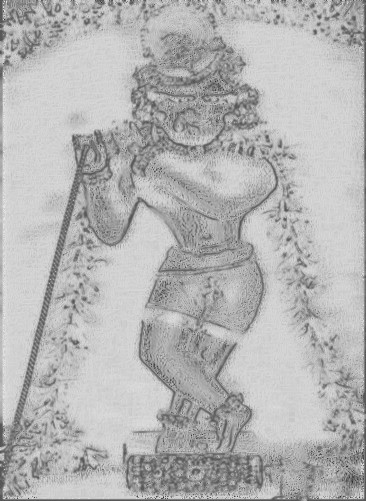
Radha Ramana (Sanskrit: राधारमण, romanized: rādhāramaṇa) is one of the three combined forms of the Hindu deities Radha and Krishna. The other two forms are Banke Bihari and Radha-Vallabha. Radha Ramana is typically adorned with feathers, a crown, a yellow dress, and a shining vaijayanti-mala (garland) on his chest. He is regarded to wear ornaments in his ears and a shining tilaka on his forehead.
Radha Ramana Temple, one of the ancient temples of Vrindavan, is dedicated to Radha Ramana. According to Gaudiya tradition, Radha Ramana was manifested by the saint Gopala Bhatta Goswami in the 16th century.
Radha Ramana is an epithet of Krishna as the lover (ramana) of Radha.
The appearance of the Radha Ramana is described by Gopala Bhatta Goswami biographer, Narahari, in a mere four verses (Bhakti Ratnakara 4.315–319). Narahari Chakravarti puzzles at Krishnadasa's near silence over Gopala Bhatta. He concludes that Gopala Bhatta requested his junior, Krishnadasa Kaviraja, to be omitted from the book out of humility (1.222–223). Unlike other biographies of Chaitanya, Chaitanya Charitamrita describes Chaitanya's tour of South India, including his visit to Srirangam and residing with the temple priest Venkata Bhatta (Chaitanya Charitamrita 2.9.82–165)
The historic Radha Ramana Temple recently celebrated its 500th anniversary.[when?] It attracts both local worshippers and pilgrims. The image housed in the temple is the oldest image remaining in Vrindavan for the longest continuous period; it remained in Vrindavan during the iconoclastic raids by Mughal emperor Aurangzeb during the 17th century, when other images were removed to be hidden in safer places outside the city. Performances of classical Indian devotional music are offered nightly at the temple.
The primary deity of Shri Swaminarayan Mandir in Junagadh, Radha Krishna, is worshipped as Radha Ramana. This temple belongs to the Swaminarayan Sampradaya, and was built under the guidance of Swaminarayan.
Chaitanya Mahaprabhu came to Ranga Kshetra in 1511 and stayed at Venkata's home. Venkata Bhatta had two brothers, Tirumalla Bhatta and Prabodhananda Sarasvati. They all belonged to the Sri Vaishnava tradition and Prabodhananda Sarasvati was a tridandi sannyasi[clarification needed] of that order. Venkata Bhatta had a son named Gopala, who was then just a child.
Gopala Bhatta Goswami was a son of a priest of Srirangam. Venkata and his two brothers, Gopala's uncles Trimalla and Prabodhananda Sarasvati "were converted from their Sri Vaishnava faith in Lakshmi-Narayana as supreme to one in Radha Krishna" as Svayam Bhagavan. The dialogue of this conversion is recorded in the biography Chaitanya Charitamrita by Krishnadasa Kaviraja.
Hub AI
Radha Ramana AI simulator
(@Radha Ramana_simulator)
Radha Ramana
Radha Ramana (Sanskrit: राधारमण, romanized: rādhāramaṇa) is one of the three combined forms of the Hindu deities Radha and Krishna. The other two forms are Banke Bihari and Radha-Vallabha. Radha Ramana is typically adorned with feathers, a crown, a yellow dress, and a shining vaijayanti-mala (garland) on his chest. He is regarded to wear ornaments in his ears and a shining tilaka on his forehead.
Radha Ramana Temple, one of the ancient temples of Vrindavan, is dedicated to Radha Ramana. According to Gaudiya tradition, Radha Ramana was manifested by the saint Gopala Bhatta Goswami in the 16th century.
Radha Ramana is an epithet of Krishna as the lover (ramana) of Radha.
The appearance of the Radha Ramana is described by Gopala Bhatta Goswami biographer, Narahari, in a mere four verses (Bhakti Ratnakara 4.315–319). Narahari Chakravarti puzzles at Krishnadasa's near silence over Gopala Bhatta. He concludes that Gopala Bhatta requested his junior, Krishnadasa Kaviraja, to be omitted from the book out of humility (1.222–223). Unlike other biographies of Chaitanya, Chaitanya Charitamrita describes Chaitanya's tour of South India, including his visit to Srirangam and residing with the temple priest Venkata Bhatta (Chaitanya Charitamrita 2.9.82–165)
The historic Radha Ramana Temple recently celebrated its 500th anniversary.[when?] It attracts both local worshippers and pilgrims. The image housed in the temple is the oldest image remaining in Vrindavan for the longest continuous period; it remained in Vrindavan during the iconoclastic raids by Mughal emperor Aurangzeb during the 17th century, when other images were removed to be hidden in safer places outside the city. Performances of classical Indian devotional music are offered nightly at the temple.
The primary deity of Shri Swaminarayan Mandir in Junagadh, Radha Krishna, is worshipped as Radha Ramana. This temple belongs to the Swaminarayan Sampradaya, and was built under the guidance of Swaminarayan.
Chaitanya Mahaprabhu came to Ranga Kshetra in 1511 and stayed at Venkata's home. Venkata Bhatta had two brothers, Tirumalla Bhatta and Prabodhananda Sarasvati. They all belonged to the Sri Vaishnava tradition and Prabodhananda Sarasvati was a tridandi sannyasi[clarification needed] of that order. Venkata Bhatta had a son named Gopala, who was then just a child.
Gopala Bhatta Goswami was a son of a priest of Srirangam. Venkata and his two brothers, Gopala's uncles Trimalla and Prabodhananda Sarasvati "were converted from their Sri Vaishnava faith in Lakshmi-Narayana as supreme to one in Radha Krishna" as Svayam Bhagavan. The dialogue of this conversion is recorded in the biography Chaitanya Charitamrita by Krishnadasa Kaviraja.
Recent media