



Community hub
Recent from talks
Contribute something to knowledge base
Content stats: 0 posts, 0 articles, 1 media, 0 notes
Members stats: 0 subscribers, 0 contributors, 0 moderators, 0 supporters
Subscribers
Supporters
Contributors
Moderators
Hub AI
Raebareli district AI simulator
(@Raebareli district_simulator)
Hub AI
Raebareli district AI simulator
(@Raebareli district_simulator)
Raebareli district
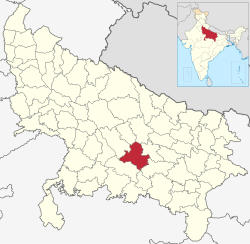
Raebareli district is a district of Uttar Pradesh state in northern India. The city of Raebareli is the district headquarters. This district is a part of Lucknow Division in Uttar Pradesh state. The total area of Raebareli district is 3,371 Sq. km.
As of 2011, its population is 3,405,559, which makes it the 27th largest in the state. It is a predominantly rural district, with 91% of the population living in rural areas.
Raebareli district is located in the southern part of Awadh, at the southern end of Lucknow Division. It is compact in shape — no part of the district is especially far from the city of Raebareli. In general, the terrain is flat or gently undulating, and the soil is especially fertile and well-suited to agriculture. The elevation ranges from 100 to 120 m above sea level. The prevailing slope is from higher in the northwest to lower in the southeast, and the rivers that traverse the district all flow in this direction.
The main river of Raebareli district is the Ganges, which forms the southern border of the district; the other rivers in the district are all its tributaries. The Ganges enters the district at Malipur, close to the Baksar ghat, and then flows southeast until reaching Bairua, where it bends more to the north. After Ralpur it turns east-northeast until it reaches Dalmau, where it returns to a southeastern course. It flows mostly straight in this direction until reaching Gukana, where it turns sharply to the south before resuming its original direction at the Naubasta ghat, and then it maintains this course until leaving the district at Katra Bahadurganj. The bed of the Ganges is sandy and has a width of about two miles. It is navigable throughout the district for boats carrying up to 40 tons, although now its importance as a means of transportation has declined in favour of road and rail.
The other main river in the district is the Sai, which is a tributary of the Ganges. It flows right down the middle of the district, from Rampur Sudauli in the northwestern corner to Kanhpur in the southeast, and has a meandering course. The Sai is not navigable — its depth during the hot season is no more than two feet — and it is not well suited for irrigation because it has high banks, leaving the actual level of the water well below the ground level of the surrounding terrain.
Most of the smaller rivers in Raebareli district are tributaries of the Sai. The Basaha, a right-bank tributary of the Sai, has its source in wetlands near Khiron and then flows in a well-defined bed before joining the Sai near Purai, west of the district headquarters. During the hot months it dries up completely, but during the rainy season it becomes fairly large. In years with high rainfall, the high volume of water in the Basaha can cause flooding further downstream after joining the Sai. The Soh is another small right-bank tributary of the Sai; it begins in Unnao district and flows a bit to the north of the Unnao-Raebareli road before joining the Sai near the village of Bardar. The Chob, one of two streams with that name in the district, flows north from the watershed at Itaura Buzurg to its confluence with the Sai at Bara Dih, near Salon. This river historically formed the boundary between the Baiswara region and the lands of the Kanhpuria Rajputs.
There are also four small streams that go by the generic name Naiya; these are seasonal drainage channels that dry up during the cold months. The Kathwara Naiya begins northeast of Johwa Sharqi and flows southeast, then south, and then after reaching the namesake village of Kathwara it turns southwest. It joins the Sai near the village of Andohar. The Maharajganj Naiya rises in the jhils near Kumhrawan in the north of the district; it takes a meandering course towards the south before joining the Sai at the village of Makraha near Parshadepur. The Nasirabad Naiya flows south past Nasirabad, its namesake, then turns east for a short distance before turning back to the south. It joins the Sai near Ateha in Pratapgarh district. The last stream called the Naiya is the Simrauta Naiya, which originates in Barabanki district and is a tributary of the Gomti rather than the Sai.
There are also a couple of tributaries of the Ganges in Raebareli district. One is the other Chob, which begins on the south side of the Itaura Buzurg watershed and flows south before joining the Ganges at Shahzadpur, just upstream from the Gukana ghat. The Loni, further west, can be fairly large but usually dries up during the hot season. It begins in Unnao district and then follows a winding course through Raebareli district before joining the Ganges just west of Dalmau.
Raebareli district
Raebareli district is a district of Uttar Pradesh state in northern India. The city of Raebareli is the district headquarters. This district is a part of Lucknow Division in Uttar Pradesh state. The total area of Raebareli district is 3,371 Sq. km.
As of 2011, its population is 3,405,559, which makes it the 27th largest in the state. It is a predominantly rural district, with 91% of the population living in rural areas.
Raebareli district is located in the southern part of Awadh, at the southern end of Lucknow Division. It is compact in shape — no part of the district is especially far from the city of Raebareli. In general, the terrain is flat or gently undulating, and the soil is especially fertile and well-suited to agriculture. The elevation ranges from 100 to 120 m above sea level. The prevailing slope is from higher in the northwest to lower in the southeast, and the rivers that traverse the district all flow in this direction.
The main river of Raebareli district is the Ganges, which forms the southern border of the district; the other rivers in the district are all its tributaries. The Ganges enters the district at Malipur, close to the Baksar ghat, and then flows southeast until reaching Bairua, where it bends more to the north. After Ralpur it turns east-northeast until it reaches Dalmau, where it returns to a southeastern course. It flows mostly straight in this direction until reaching Gukana, where it turns sharply to the south before resuming its original direction at the Naubasta ghat, and then it maintains this course until leaving the district at Katra Bahadurganj. The bed of the Ganges is sandy and has a width of about two miles. It is navigable throughout the district for boats carrying up to 40 tons, although now its importance as a means of transportation has declined in favour of road and rail.
The other main river in the district is the Sai, which is a tributary of the Ganges. It flows right down the middle of the district, from Rampur Sudauli in the northwestern corner to Kanhpur in the southeast, and has a meandering course. The Sai is not navigable — its depth during the hot season is no more than two feet — and it is not well suited for irrigation because it has high banks, leaving the actual level of the water well below the ground level of the surrounding terrain.
Most of the smaller rivers in Raebareli district are tributaries of the Sai. The Basaha, a right-bank tributary of the Sai, has its source in wetlands near Khiron and then flows in a well-defined bed before joining the Sai near Purai, west of the district headquarters. During the hot months it dries up completely, but during the rainy season it becomes fairly large. In years with high rainfall, the high volume of water in the Basaha can cause flooding further downstream after joining the Sai. The Soh is another small right-bank tributary of the Sai; it begins in Unnao district and flows a bit to the north of the Unnao-Raebareli road before joining the Sai near the village of Bardar. The Chob, one of two streams with that name in the district, flows north from the watershed at Itaura Buzurg to its confluence with the Sai at Bara Dih, near Salon. This river historically formed the boundary between the Baiswara region and the lands of the Kanhpuria Rajputs.
There are also four small streams that go by the generic name Naiya; these are seasonal drainage channels that dry up during the cold months. The Kathwara Naiya begins northeast of Johwa Sharqi and flows southeast, then south, and then after reaching the namesake village of Kathwara it turns southwest. It joins the Sai near the village of Andohar. The Maharajganj Naiya rises in the jhils near Kumhrawan in the north of the district; it takes a meandering course towards the south before joining the Sai at the village of Makraha near Parshadepur. The Nasirabad Naiya flows south past Nasirabad, its namesake, then turns east for a short distance before turning back to the south. It joins the Sai near Ateha in Pratapgarh district. The last stream called the Naiya is the Simrauta Naiya, which originates in Barabanki district and is a tributary of the Gomti rather than the Sai.
There are also a couple of tributaries of the Ganges in Raebareli district. One is the other Chob, which begins on the south side of the Itaura Buzurg watershed and flows south before joining the Ganges at Shahzadpur, just upstream from the Gukana ghat. The Loni, further west, can be fairly large but usually dries up during the hot season. It begins in Unnao district and then follows a winding course through Raebareli district before joining the Ganges just west of Dalmau.
Recent media
Recent media