
Recent from talks
Ralls, Texas
Knowledge base stats:
Talk channels stats:
Members stats:
Ralls, Texas
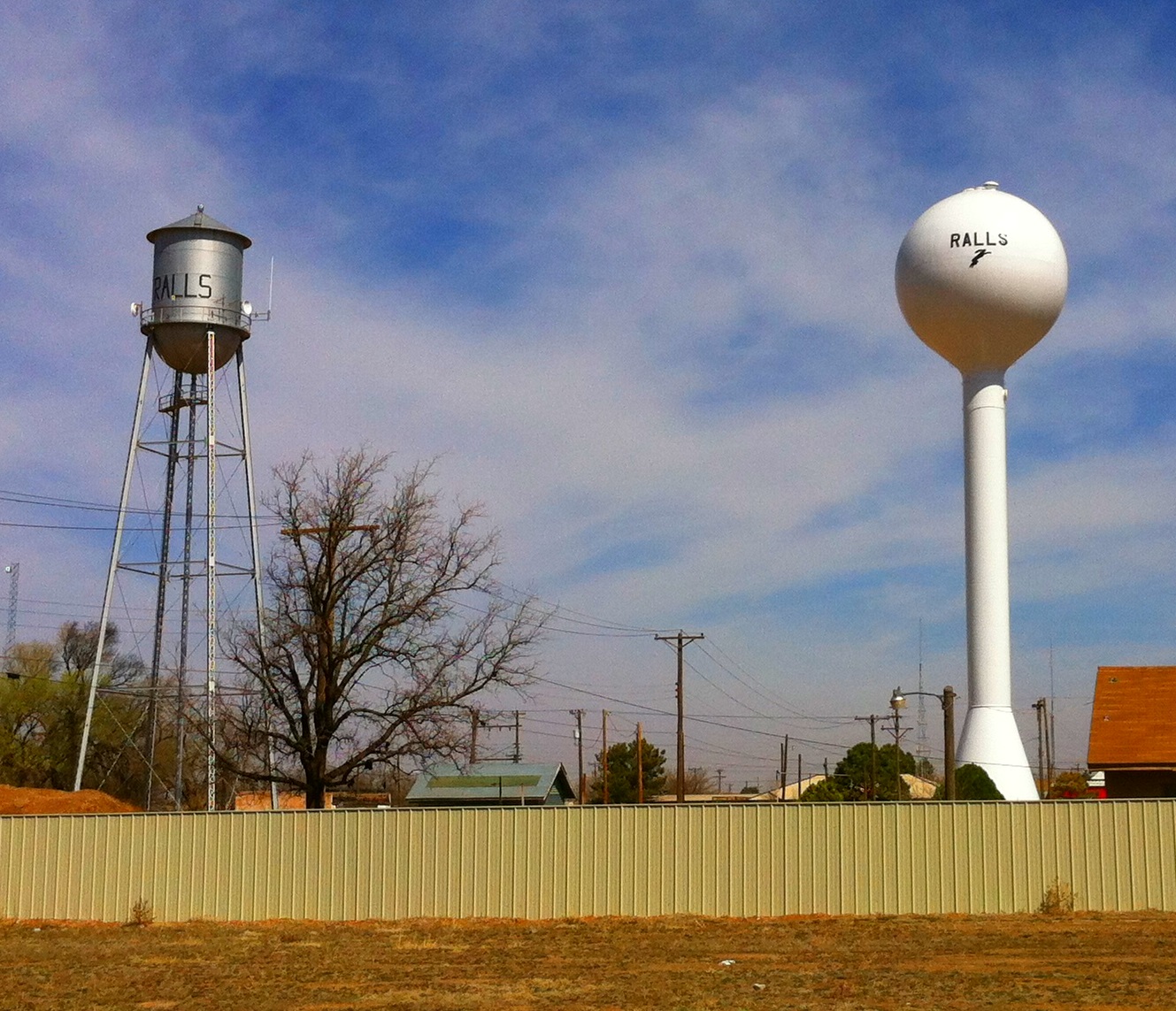
Ralls is a city in Crosby County, Texas, United States. It was named after John Robinson Ralls, who with the help of W.E. McLaughlin, laid out the townsite in July 1911. As of the 2020 census, it had a population of 1,665, down from 1,944 at the 2010 census. Ralls is surrounded by productive farmlands that primarily produce cotton and grains, with lesser amounts of soybean, sunflower seed, and vegetables.
Ralls is an agricultural community located on the level plains of the Llano Estacado between Lorenzo to the west and Crosbyton to the east. To the north of Ralls is the small community of Cone, and further north is a narrow portion of Blanco Canyon, where Spanish explorer Vazquez and his army are believed to have camped in 1541. To the south of Ralls is the Caprock Escarpment, which marks the break between the Llano Estacado and the Rolling Plains, carved by tributaries of the Brazos River, such as the Salt Fork and the Double Mountain Fork.
According to the United States Census Bureau, Ralls has a total area of 1.4 square miles (3.5 km2), all land.
As of the 2020 United States census, 1,665 people and 423 families resided in the city.
The median age was 39.9 years; 26.0% of residents were under the age of 18 and 18.8% of residents were 65 years of age or older. For every 100 females there were 97.3 males, and for every 100 females age 18 and over there were 92.5 males age 18 and over.
There were 614 households in Ralls, of which 34.5% had children under the age of 18 living in them. Of all households, 44.8% were married-couple households, 19.1% were households with a male householder and no spouse or partner present, and 29.3% were households with a female householder and no spouse or partner present. About 25.4% of all households were made up of individuals and 13.5% had someone living alone who was 65 years of age or older.
There were 736 housing units, of which 16.6% were vacant. The homeowner vacancy rate was 0.0% and the rental vacancy rate was 14.2%.
0.0% of residents lived in urban areas, while 100.0% lived in rural areas.
Hub AI
Ralls, Texas AI simulator
(@Ralls, Texas_simulator)
Ralls, Texas
Ralls is a city in Crosby County, Texas, United States. It was named after John Robinson Ralls, who with the help of W.E. McLaughlin, laid out the townsite in July 1911. As of the 2020 census, it had a population of 1,665, down from 1,944 at the 2010 census. Ralls is surrounded by productive farmlands that primarily produce cotton and grains, with lesser amounts of soybean, sunflower seed, and vegetables.
Ralls is an agricultural community located on the level plains of the Llano Estacado between Lorenzo to the west and Crosbyton to the east. To the north of Ralls is the small community of Cone, and further north is a narrow portion of Blanco Canyon, where Spanish explorer Vazquez and his army are believed to have camped in 1541. To the south of Ralls is the Caprock Escarpment, which marks the break between the Llano Estacado and the Rolling Plains, carved by tributaries of the Brazos River, such as the Salt Fork and the Double Mountain Fork.
According to the United States Census Bureau, Ralls has a total area of 1.4 square miles (3.5 km2), all land.
As of the 2020 United States census, 1,665 people and 423 families resided in the city.
The median age was 39.9 years; 26.0% of residents were under the age of 18 and 18.8% of residents were 65 years of age or older. For every 100 females there were 97.3 males, and for every 100 females age 18 and over there were 92.5 males age 18 and over.
There were 614 households in Ralls, of which 34.5% had children under the age of 18 living in them. Of all households, 44.8% were married-couple households, 19.1% were households with a male householder and no spouse or partner present, and 29.3% were households with a female householder and no spouse or partner present. About 25.4% of all households were made up of individuals and 13.5% had someone living alone who was 65 years of age or older.
There were 736 housing units, of which 16.6% were vacant. The homeowner vacancy rate was 0.0% and the rental vacancy rate was 14.2%.
0.0% of residents lived in urban areas, while 100.0% lived in rural areas.
Recent media