Recent from talks
Nothing was collected or created yet.
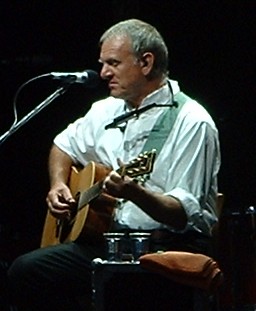
Ralph McTell
View on WikipediaThis article has multiple issues. Please help improve it or discuss these issues on the talk page. (Learn how and when to remove these messages)
|
Key Information
Ralph McTell (born Ralph May; 3 December 1944[1]) is an English singer-songwriter and guitar player who has been an influential figure on the UK folk music scene since the 1960s.[2] McTell is best known for his song "Streets of London" (1969), which has been covered by more than two hundred artists around the world.[3]
McTell modelled his guitar style on American country blues guitar players of the early 20th century, including Blind Blake, Robert Johnson and Blind Willie McTell.[4] These influences led a friend to suggest his professional surname.[5] An accomplished performer on piano and harmonica as well as guitar, McTell issued his first album in 1968 and found acclaim on the folk circuit. He reached his greatest commercial success in 1974 when a new recording of "Streets of London" became a No. 2 hit on the UK Singles Chart.
In the 1980s, he wrote and played songs for two children's television programmes, Alphabet Zoo,[6] which also featured Nerys Hughes, followed by Tickle on the Tum,[7] featuring Jaqui Reddin. He also recorded Keith Hopwood's and Malcolm Rowe's theme song to Cosgrove Hall's adaptation of The Wind in the Willows.[8]
Biography
[edit]McTell's mother, Winifred (née Moss), was born in Hammersmith, London. During the Second World War she was living in Banbury, Oxfordshire, with her sister Olive when she met Frank May. They married in 1943 while Frank was home on leave from the army. Winifred moved to Croydon, Surrey, and McTell was born on 3 December 1944 in Farnborough, Kent. He was named after Ralph Vaughan Williams[9] – Frank had worked as the composer's gardener before the war. A second son, Bruce, was born in 1946. Frank was demobilised, but after a year or so at home, he walked out on his family in 1947.
Winifred was left to support herself and bring up the boys unaided. She told McTell's biographer, "I remember Ralph saying to me quite soon after Frank left us, 'I'll look after you, Mummy'. I guess he'd got used to Frank being away all his short life."[10] But despite their father's desertion and the consequent poverty, Ralph and Bruce May had a happy and fulfilled childhood in Croydon.
McTell's love of music surfaced early. He was given a plastic mouth organ and his grandfather, who played the harmonica, taught and encouraged him. The brothers spent many contented summer holidays at Banbury[11] with their uncle and aunt and their grandparents. Banbury and north Oxfordshire figured throughout McTell's life. Later, he recalled those childhood summers in his song "Barges".
Influences
[edit]Other childhood experiences shaped McTell's songwriting. A young Irishman and his family were the Mays' upstairs neighbours.[10] Needing a father figure, McTell greatly valued the young man's friendship, which later inspired the song "Mr. Connaughton". Similarly, "Mrs Adlam's Angels" recalls his Sunday school teacher:[12] "I loved the ceremonial and the music," he says, "you can hear the influence of hymn tunes in my song structures."[13]
In 1952, two youths attempted to break into a Croydon warehouse: one, Derek Bentley, surrendered to the police but the other, sixteen-year-old Christopher Craig, shot and killed a police officer. Yet at the trial, Bentley was sentenced to death.[14] "My mum knew the Bentleys," McTell recalls. "I was about eight, but even then I could see the horror and injustice of executing a teenager for a murder he didn't commit."[13] Many years later, McTell expressed that sense of injustice in the song "Bentley & Craig".
Teens
[edit]After passing his 11-plus school examination, McTell attended the John Ruskin Grammar School.[15] He hated his time there, and despite being a very bright pupil, he did not do well academically. Many of his fellow pupils were from wealthier backgrounds, and though having many school friends, he felt he didn't fit in.
Musically, his tastes tended towards being an outsider as well. He was captivated by skiffle and American rock'n'roll. Acquiring an old ukulele and a copy of The George Formby Method, he played his first chord. He later recalled, "I was thunderstruck – it was like magic!"[13] Soon, he mastered skiffle classics such as "Don't You Rock Me, Daddy-O", and by his second year at school, he formed a skiffle band.
By the age of 15, McTell was very anxious to leave grammar school and the British Army looked like a way out, so in 1959 he enlisted in the Junior Leaders Battalion of The Queen's Surrey Regiment. Army life proved far worse than school.[16] After six months, he bought himself out[17] and resumed his education at technical college, passing several O level exams and an A level exam in art.
In 1963, McTell was working on a building site, and it is of this time that he wrote, in the mid-1970s, "From Clare to Here". "There was an Irish gang on the site, and the craic, as they call it, relieved the stress of the hard work. I was working with an Irishman called Michael, as so many of them are. And I said to him, 'It must be very strange to be here in London after the place you come from.' And he responded by saying, 'Yes, it's a long way from Clare to here.'"[18]
Discovering African American music
[edit]At college, McTell became interested in the beatnik culture that flourished in the 1950s and early 1960s.[19] Besides reading the works of writers such as Jack Kerouac and Allen Ginsberg, he discovered African American music – jazz, blues and R&B. Inspired by musicians such as Jesse Fuller, Ramblin' Jack Elliott, Robert Johnson and Muddy Waters, he bought a guitar and practiced assiduously.
He and a group of like-minded friends became habitués of London's Soho jazz clubs and regularly went down to Brighton to "...sit on the beach looking windswept and interesting," as McTell put it.[13] Soon he was spending much of his time away from Croydon, supporting himself with temporary work in factories, laundries and hotels.
During his travels, McTell met musicians who were destined to remain lifelong friends, among them Jacqui McShee (later to gain fame in the band Pentangle), Martin Carthy and Wizz Jones. He was persuaded to join a bluegrass-influenced band called the Hickory Nuts,[20] who performed all over England and, despite playing in some dire places for pin money early on, ended up with decent fees and respectable crowds in venues such as Croydon's Fairfield Halls.
Busking
[edit]
By now, McTell had begun travelling abroad, busking around Europe with his guitar. He spent time in France and visited Belgium and Germany. Other trips took him to Italy and through Yugoslavia ("I felt a madness there, even then"[13]) to Greece.
Paris was a city that McTell revisited frequently. Late in 1965 he and a friend from Croydon took a room in a cheap hotel on the Left Bank,[21] earning their rent by busking cinema queues. After braving a bitterly cold Paris winter, McTell met a young American, Gary Petersen, who had studied with the guitarist Reverend Gary Davis. "There was a great anticipation every time I got to play with (Petersen)", McTell recalled. "Each time I learned something new, and through him I learned how to play ragtime properly."[22]
In 1966, McTell met another émigré to Paris, a student from Norway named Nanna Stein.[23] The pair soon became inseparable. Back in England, they lived in a caravan in Cornwall. McTell and Wizz Jones were regular performers on the Cornish circuit, especially at The Folk Cottage in Mitchell. It was Jones who suggested the stage name "McTell", "after Blind Willie McTell, whose 'Statesboro Blues' we both loved".[5]
Cornwall captured McTell's heart – a place whose "unique spirit got to me"[13] – and the county has always remained a place for him to retreat to. By the end of 1966, he and Stein were expecting their first child. They married[24] on 30 November in Norway and returned to live in Croydon with Winifred. Their son, Sam, was born on 21 January 1967.
After an unrewarding spell at teacher training college,[25] McTell decided he had to try to make it full-time in music. As well as his vocal and instrumental talents, he was developing as a songwriter and was in demand in folk clubs and festivals.
Record deal
[edit]During 1967, McTell landed a deal with Transatlantic Records[26] and by the end of the year was recording his first album. Arranged by Tony Visconti and produced by Gus Dudgeon, the album, Eight Frames a Second, was released early in 1968. It came to the attention of the BBC and was featured on radio programmes including Country Meets Folk in August and John Peel's Top Gear. The release of the album meant more live work so McTell's brother Bruce became his manager and booking agent.
His second album Spiral Staircase, recorded for Transatlantic in late 1968, included the first recording of "Streets of London", which was recorded in one take[27] by McTell on guitar and vocals.
The third album, My Side of Your Window, released in 1969, became Melody Maker magazine's Folk Album of the Month.[28] In July, McTell had appeared at Cambridge Folk Festival[29] for the first time and at the end of the year headlined at Hornsey Town Hall.[28]
Into the 1970s
[edit]By 1970, "I'd got a family," McTell recalled in an interview, "and found I had a musical career, somehow."[13] He was getting extensive radio play, and the audiences at his concerts were growing.
By May, he was sufficiently successful to fill the Royal Festival Hall in London. In August, McTell played the huge Isle of Wight Festival alongside Jimi Hendrix, Joan Baez, and Leonard Cohen.[30]
Bruce May had bowed out and McTell was now being managed by impresario Jo Lustig.[31] In October 1970, McTell sold out the Royal Festival Hall again and the album Revisited was released. This remixed compilation was originally intended to introduce McTell to American record-buyers but was released in the UK. It has still not been released on cd, even though all the other Transatlantic albums have been remastered.
Ralph and Nanna's daughter Leah was born on 9 February 1971.[citation needed]
You Well-Meaning Brought Me Here was released on the Famous label in 1971. Among the highlights of this fourth studio album was "The Ferryman", inspired by the Hermann Hesse book Siddhartha. That year also saw McTell's first tour in the United States.[32]
Initially, Paramount Records had been McTell's American label but had not been supportive, and he later signed with Warner Bros. Records. While in the US, McTell hung out with the British folk-rock band Fairport Convention, establishing a lifelong professional relationship as well as personal friendships.
Paramount put a new recording of "Streets of London" on the US release of You Well-Meaning Brought Me Here,[33] and, in April 1972, issued it as a single in the Netherlands, where it charted, climbing slowly to No. 9 in May.[34]
McTell's fifth album, Not Till Tomorrow, was produced by Tony Visconti, and released on Reprise in 1972. His UK concert tour played to packed houses and he met one of his guitar heroes, the Rev Gary Davis.[35] By the end of the year, he'd parted company with Jo Lustig and his brother Bruce was again managing his career.[36]
Although living in Putney, southwest London,[37] Ralph and Nanna bought a derelict cottage in Cornwall during 1972.
The Royal Albert Hall
[edit]During 1973, McTell undertook two major tours. The spring tour culminated in a sell-out concert at London's Royal Festival Hall on 5 May, whilst the winter tour was completed in front of a full house at London's Royal Albert Hall[38] on 30 January 1974.[39] By the end of the year, McTell was in the studio with Visconti again working on his next album. Released early in 1974, Easy won critical acclaim. It was promoted by lengthy tours of Britain and Europe with Danny Thompson and Mike Piggott as backing musicians. Despite the civil unrest and violence in Northern Ireland, the tour included concerts in the province[40] – in fact, McTell continued to play there regularly throughout 'the Troubles'.[41]
'Streets of London' and the band
[edit]McTell re-recorded "Streets of London" with bassist Rod Clements and backing vocalists Prelude.[42] Released as a single (recorded on the Reprise label) on 7 December 1974, it rocketed up the charts to No. 2 in the first week of 1975, became a worldwide million-seller, and won McTell the Ivor Novello Award.[43]
In early 1975, McTell released the album Streets..., which sold strongly and spent twelve weeks in the album charts.[44] Backing musicians on the album included Lindisfarne's Rod Clements, Fairport Convention's Dave Pegg and Jerry Donahue, and Maddy Prior from Steeleye Span, who inspired McTell to write the song "Maddy Dances".[45] He decided to tour with a band to promote the album, but the experiment was not a success.[46] That tour, he recalls, "became a nightmare."[13] It was time for a break.[47][48] McTell went to America with his family where he spent time relaxing and writing. Refreshed, he returned to the UK.[49] His single "Dreams of You", released in November 1975, reached number 36 in the UK charts.[50]
During 1976, McTell topped the bill at Montreux Jazz Festival[51] and played another sold-out concert at The Royal Albert Hall. This was followed by his first tour of Australia and the far east. At McTell's insistence, local buskers were given free tickets for the flagship concert at Sydney Opera House.[51]
Ralph and Nanna's son Tom was born on 7 September 1976.[citation needed]
McTell's eighth album, Right Side Up, was released late in 1976 and the year ended with a packed-out Christmas concert in Belfast where he got standing ovations both before and after the show.
The concerts at the Royal Albert Hall and Sydney Opera House had both been recorded and in 1977, Warner Bros. Records released the live album Ralph, Albert and Sydney.[52]
During the year, McTell met John 'Jonah' Jones, a popular figure on London's music scene.[53] It was the start of a close friendship that lasted until John's death in 2003. After tours in the US and Britain, McTell again appeared at Cambridge Folk Festival.[54]
Quieter times
[edit]Ralph and Nanna's son Billy was born on 19 April 1978. Professionally, it was a quieter year and Ralph spent time with his family in their homes in London and Cornwall.[citation needed]
In March 1979, McTell played The Royal Festival Hall accompanied by Dave Pegg and Dave Mattacks of Fairport Convention, and Nigel Smith and Mike Piggott.[citation needed]
McTell had written a number of new songs and went into the studio with backing musicians including Richard Thompson, Dave Pegg and Simon Nicol.[55] The resulting album, Slide Away The Screen was released by Warner Bros. Records.
The recording contract with Warner Bros. Records expired in 1980 so McTell and Bruce May set up Mays Records[56] as an 'own brand' label. It would be a year or more until they had an album to release but McTell continued to tour.
During 1981, McTell, Dave Pegg, Dave Mattacks and Richard Thompson formed an impromptu band called The GPs.[57] They performed half-a-dozen concerts but contractual restrictions meant the band could not be developed further.
The first release on Mays Records was the 1981 single "England", a song later adopted as the theme for a television travelogue presented by comedian Billy Connolly, a long-standing friend of McTell. Mays Records' first album release was Water of Dreams, which featured "Bentley & Craig", the song that led to McTell's support of the campaign to grant Derek Bentley a posthumous pardon.[58]
Television
[edit]In 1982, McTell's career took an unexpected change of direction. Granada Television commissioned Alphabet Zoo, a series of children's programmes built around songs written and performed by McTell.[59] Although initially reluctant to accept the offer, the fact that one of his heroes, Woody Guthrie, had composed dozens of songs for children, convinced him it was worthwhile.[60] The first series, broadcast in 1983, was a success. A second series followed and Mays Records released two albums of the material – Songs From Alphabet Zoo and Best of Alphabet Zoo.
During 1983, McTell presented his own music series on BBC Radio 2.[7] His guests included Billy Connolly, Georgie Fame, Simon Nicol with Dave Swarbrick, and Mike Harding.
In 1984, McTell fronted another children's TV programme, called Tickle on the Tum, again built around his songs. McTell featured in three series alongside guests including John Wells, Willie Rushton, Kenny Lynch, Penelope Keith[7] and Nerys Hughes. Mays Records released The Best of – Tickle on the Tum in 1986. The first series was released on DVD by Revelation Films in 2010.[61]
McTell was still playing concerts between his television commitments and he toured during 1984 at home and in Canada and the United States. After composing the music for a Skol lager advertising campaign,[62] he decided to concentrate on his musical career and turned down further television work.
Commercialism
[edit]Bruce May negotiated a deal with Telstar Records, a company that pushed its products heavily with major advertising and hyping campaigns. McTell was persuaded to record an album that mixed his own material and 'classic songs' such as "Penny Lane", "Morning Has Broken" and "Scarborough Fair". The result, At the End of a Perfect Day, released late in 1985, was one of McTell's least satisfactory recordings. It was "a totally commercial venture and a miserable failure," he said later; "...while I was reluctant to do it, the possibility of getting the kind of back-up that Telstar were offering was too good to miss."[63]
The next year McTell was back on form with Bridge of Sighs. Released on Mays Records in 1987,[64] the album gathered together a lot of hitherto unfinished songs. It included "The Girl from the Hiring Fair" (originally written for Fairport Convention,[65] and in whose core repertoire it remains to this day), and "The Setting", influenced by Seán Ó Faoláin.
Homage
[edit]As well as tours in his own right, McTell secured a prestigious support slot in 1987 opening the shows on The Everly Brothers' UK tour.[66]
After tours in Europe, the US and Australia,[67] McTell was back in the studio in February 1988 to record the album Blue Skies Black Heroes. Released on his own Leola Music label, the album was a homage to the blues and ragtime musicians who had so influenced his playing.
"Nearly all my guitar heroes are black, American, usually blind and most of 'em dead," McTell said.[13] All the tracks on Blue Skies Black Heroes were recorded as live takes, four with Danny Thompson on bass. The follow-up tour that summer saw McTell on the road with a veritable arsenal of guitars.
1988 also saw the release of a compilation album, The Very Best of Ralph McTell. Issued by Start, it was McTell's first album to appear on CD.
McTell was a regular visitor to, and occasional performer at, Fairport Convention's annual music festival in the village of Cropredy, near Banbury. The location inspired him to pen the ballad "Red and Gold" about the English Civil War, which has become another staple of Fairport's repertoire.[68]
At the end of 1988, Bruce May ceased to be McTell's manager, the post being taken by Mick McDonagh.[69]
Castle compilations
[edit]In 1989, McTell signed a deal with the label Castle Communications to produce a compilation of his love songs.[70] For contractual reasons, some songs had to be re-recorded in Dave Pegg's Woodworm Studio in Barford St. Michael. The resulting album, A Collection of His Love Songs, was subtitled 'Affairs of the Heart'.
To support the album's release, McTell undertook an extensive tour in the autumn and early winter. The tour was well-supported with PR material and was managed on the road by John 'Jonah' Jones.
The next year, 1990, Castle released Stealin' Back, another collection of McTell's blues and jug band numbers.
In 1991, McTell shared the billing with Donovan on a tour of Germany.[71] He also toured in his own right in the UK.
A second Castle compilation was released in 1992 to celebrate McTell's 25 years of recording.[72] Silver Celebration featured a selection of tracks including "The Ferryman", "From Clare to Here" and "Streets of London". A very extensive Silver Celebration tour occupied much of the year, again managed by 'Jonah' Jones.
Castle had by now obtained the rights to the Transatlantic catalogue,[73] and released a "Best of" CD with 24 tracks from McTell's earliest albums. Castle subsequently licensed the early McTell back-catalogue to other labels, resulting in the release of several CD compilations under such titles as The Best of Ralph McTell or Streets of London.
The Boy with a Note
[edit]McTell completed a major project when in 1992, the BBC commissioned[74] and broadcast The Boy with a Note – 'an evocation of the life of Dylan Thomas in words and music'. It was re-recorded and released on McTell's Leola label as an album. McTell is very proud of this ambitious piece. "Two or three years went into that," he said. "It's grown-up work."[13]
During 1993, McTell toured Australia and the Far East, and back home he undertook The Black And White Tour. Road Goes on Forever Records released The Complete Alphabet Zoo, presenting the songs from the two television series in alphabetical order. McTell and Mick McDonagh parted company.[75]
In 1994 McTell took part in a concert at the Royal Albert Hall to commemorate the life of Ken Woolard.[76] Ken was the founder of Cambridge Folk Festival and McTell assembled a band, Good Men in the Jungle, to play at that summer's festival.[77] He also celebrated his fiftieth year by giving up smoking.[citation needed]
Slide Away The Screen was released as a CD by Road Goes on Forever Records with three previously unreleased songs added.
Sand in Your Shoes was recorded at Woodworm, by now relocated in Barford St Michael near Banbury. The album came out on the Transatlantic label during 1995.
McTell performed his song "Bentley & Craig" at a special service for Derek Bentley held in Croydon cemetery with the Bentley family.[78] Bentley's sister Iris died before he was pardoned and, at her request, McTell performed at her funeral a few years later.[citation needed]
In 1995 McTell performed songs from The Boy with a Note at the Year of Literature Festival[78] in Swansea, in South Wales.
Tickety Boo
[edit]In 1996, McTell presented BBC radio's coverage of Sidmouth Festival and toured the UK, Europe, and the US.[79]
McTell's long-standing sound engineer, Gordon 'Doon' Graham, had captured many of McTell's concert performances on the desk, and an album of live material from 1976 to 1995 was released on Leola as Songs for Six Strings Vol II.
Early in 1997, McTell began his association with Tickety Boo, the company which produced Billy Connolly's 'World Tour of...' television series. "In The Dreamtime", the song played over the closing credits to Billy Connolly's World Tour of Australia, later featured on McTell's album Red Sky.
In the same year, McTell was the subject of a major feature in The Independent newspaper.[80] An authorised biography of McTell, entitled Streets of London, was published by Northdown Publishing.[81] McTell's concert at Croydon Town Hall was filmed, and released on videocassette as Live at the Town Hall by Leola in 1998.
By now, Leola had taken most of McTell's management arrangements in-house. Two sell-out concerts in London's Purcell Room were recorded by McTell's tour manager and sound engineer, Donard Duffy, and released on Leola as a two-CD set. Entitled Travelling Man, the double album came out in time for McTell's 1999 spring tour. A two-page feature about McTell appeared in The Guardian newspaper in May 1999.[13]
New century
[edit]McTell had been busy writing during the previous couple of years and the result was Red Sky. Recorded at Woodworm and released in 2000 on the Leola label, the album contained 19 listed tracks plus "Tickety-boo" as an instrumental hidden track.
McTell's output was not restricted to songs, however. He had been working on an autobiography for some years and the first volume, entitled Angel Laughter, was published by Heartland Publishing in 2000.[82]
To promote Angel Laughter, McTell undertook a tour of bookshops and libraries.[citation needed]
In 2001, McTell undertook a special tour of the UK. Billed as 'The National Tour', it gave McTell a chance to present concerts featuring his newly acquired National Steel resonator guitar. Two live recordings from the National Tour made their way onto the 2002 Leola album National Treasure.
On Sunday 22 February 2002, McTell appeared to a sellout audience at Liverpool's Empire Theatre. The event was marked as a tribute to the late George Harrison who had died the previous November. The date would have been George's 59th birthday. McTell appeared alongside Steve 'Cockney Rebel' Harley, Darren Wharton (Thin Lizzy), Sir Paul McCartney and many others to raise £36,000 for the 3 main cancer charities.[citation needed]
Heartland published Summer Lightning, the second volume of McTell's autobiography, in 2002.[83] Another highlight of the year was the Lifetime Achievement Award for Songwriting presented to McTell at the annual BBC Radio 2 Folk Awards.[84] By then, McTell had written and recorded more than 200 songs.
McTell had been touring extensively at home and abroad for many years so in 2003 he decided to take a break from the road. He split the year between his London and Cornwall homes and spent the time writing, travelling and spending time with his grandchildren.[citation needed]
Early in 2004, McTell co-headlined on Steeleye Span's tour of Australia and New Zealand as well as touring in the UK, Ireland and continental Europe.
McTell appeared at the fortieth Cambridge Folk Festival[85] (the performance was broadcast on BBC Four television) and also played at the fiftieth Sidmouth Festival.[86] He made a guest appearance at Fairport's Cropredy Convention in August.
The Journey
[edit]
McTell celebrated his 60th birthday with a concert at London's Royal Festival Hall in November 2004. The entire show was filmed and released on DVD in 2005 as The London Show.
Leola published Time's Poems – The Song Lyrics of Ralph McTell towards the end of 2005. Dedicated "to Woody Guthrie, the man who started it all for me", Time's Poems contains "...all the songs I could find in notebooks, on scraps of paper and old tapes, on records and CDs".[87]
In 2006, McTell's 'Walk Into The Morning' tour was a sellout success.[citation needed]
For his 'up close' tour in September 2006, McTell performed a set billed as 'Dylan, Guthrie and The Country Blues', featuring his covers of songs by Woody Guthrie, Bob Dylan and black American blues artists such as Big Bill Broonzy. He also recorded an album of the material, titled Gates of Eden. McTell described the music on this CD as "…the beginning of my own journey… these songs are almost sacred to me".[88]
A boxed set of four CDs (accompanied by an extended essay on McTell's songs by Paul Jenkins) was released in October 2006.[89] Compiled by David Suff from recordings made between 1965 and 2006, The Journey was promoted with several radio interviews and a major tour that included two 'gala' concerts at London's Union Chapel. The box set's packaging was designed by John Haxby, who also took the cover photograph.
A solo tour of Australia early in 2007 was followed by 'The Journey Continues' tour in the UK. In August 2007, Sanctuary Records recognised the 40th anniversary of McTell's first recording contract by re-releasing his three Transatlantic albums as CDs with bonus tracks.
As Far As I Can Tell
[edit]In October 2007, McTell released an 'audio book' titled As Far As I Can Tell. The three CDs included readings from the autobiography interspersed with new recordings of the songs they inspired.[90] The As Far As I Can Tell treble CD was promoted by a tour that included a concert at St Mary's church in Banbury,[91] a location that featured in the first volume of autobiography.
A compilation CD comprising McTell's own selection of songs, including the 'hit' version of "Streets of London", was released in December 2007 on the Highpoint label as The Definitive Collection.
During 2008, McTell combined the two volumes of his autobiography into a single volume under the title As Far As I Can Tell[92] for publication to coincide with his autumn tour. The new edition featured additional chapters illustrated by photos from the May family album.
On 9 October 2008, McTell appeared on BBC1 TV's nationally broadcast magazine programme The One Show in a pre-recorded package about the song "Streets of London". The interview was filmed in Paris and conducted by Myleene Klass.
The appearance on The One Show was the springboard for two 'official' McTell internet videos.[93][94] Made by Leola Music Ltd and published on YouTube, the videos featured McTell talking about his work and about "Streets of London", with concert footage shot at the Institute of Contemporary Arts.
The Institute of Contemporary Arts concert footage was released during 2008 as a full-length DVD titled McTell on The Mall.
McTell embarked on his most extensive UK tour for many years in October 2008, visiting thirty venues throughout England.[95] The concert at Birmingham Town Hall was unusual because McTell, who rarely appears with a supporting act, shared the bill with The Dylan Project.
Story songs
[edit]
McTell released his first downloadable album in July 2009, titled Streets of London and Other Story Songs,[96] comprising twelve tracks from his back-catalogue.
McTell's summer 2009 festival appearances included a solo set at Fairport's Cropredy Convention on Saturday 15 August.[97] He also joined Fairport Convention onstage during their set later the same evening.
In October 2009, McTell was honoured by the UK Parliament’s All Party Folk Music Group at a special award ceremony in the House of Commons, to celebrate his lifetime's contribution to folk music.[98] This was only the second time such an award had been made, the previous recipient having been Tom Paxton.[99]
In early 2010, McTell's Leola Music record label released Affairs of the Heart, a four-CD box set of love songs in a presentation package. In keeping with its theme, the album was released on Valentine's Day, 14 February. There were no previously-unrecorded songs among the fifty-six tracks on the set. Two tracks were specially re-recorded but the remaining fifty-four were digital remixes of previous recordings. Comedian Rory McGrath contributed extensive sleeve notes in the set's accompanying booklet. The sleeve design and set packaging concept were by designer Peter Thaine.[100][101]
During 2010, McTell recorded an album of new songs, his first for ten years, and released in October as Somewhere Down the Road. He kept an online diary of the album’s progress which described assembling the material, the recording sessions and preparing for release.[102] McTell’s UK autumn tour was branded with the same title.
On 21 November 2010, McTell released a seasonal song, "The Things You Wish Yourself", as a download-only single.[citation needed]
Tribute
[edit]McTell was invited to record his own interpretation of a Bob Dylan song for the BBC Radio 2 celebration of Dylan's 70th birthday in May 2011.[103] Don’t Think Twice It’s Alright was also the title of McTell's own six-song tribute to Dylan, which was released as a downloadable EP.[citation needed]
McTell embarked on a 36-date UK autumn tour in September 2011, culminating in a concert at London's Cadogan Hall on 11 December. On the first night of the tour, McTell launched his new Songs For Six Strings boxed set.[104]
In April and May 2012, McTell undertook a short tour of Australia. McTell's 2012 UK tour, branded “An English Heartbeat”, commenced in October, and saw the release of a CD of guitar instrumentals called Sofa Noodling.[105] In an interview published ahead of his 2013 "One More for the Road" tour, McTell said, "It could be the last time I do a big tour... this is the beginning of slowing things down."[106]
The spring of 2014 saw McTell touring the Celtic nations of the British Isles, and the release of a CD compilation of Celt-themed songs, Celtic Cousins.[107] A high point of the tour was a performance of McTell's tribute to Dylan Thomas, The Boy With a Note, in Thomas's adopted home town of Laugharne in South Wales. Later in the year, McTell marked the centenary of the start of the first world war with a four-song EP, The Unknown Soldier.[108]
McTell celebrated his 70th birthday with a concert at the Theatre Royal, Drury Lane, London, on 7 December 2014. A DVD of the concert was released in 2015.
About Time
[edit]In 2015, McTell played more than 30 solo shows over the year. Towards the end of the year, McTell started a recording project with one of his earliest performing partners, Wizz Jones. The resulting CD was released in June 2016 with the appropriate title About Time.[109] McTell's fifty years as a recording artist was marked by Martin Guitars with a 'signature' Ralph McTell guitar, built to McTell's specification and marketed as the Martin RM50.[110]
McTell played a special show at the Royal Albert Hall in May 2016. Billed as a 'Loyal Command Performance', the setlist was voted for by McTell's fans, and McTell performed the 20 songs that received the most votes.[111] Summer highlights included McTell's first appearance at the Glastonbury Festival and a return to Fairport's Cropredy Convention. In the autumn McTell undertook an extensive tour of the United Kingdom and Ireland. The sixth and final CD of McTell's Songs for Six Strings boxed set was released during the tour.
Recent work
[edit]During 2017, McTell and Jones toured their About Time album, which was so well received that they recorded and issued a follow-up album, About Time Too.[112] Ahead of his solo autumn tour, McTell invited applicants to submit recordings of original music, from which McTell would select performers to open for him in an 'open mic' format at the shows. McTell then chose one act to open his London Palladium concert in October.[113]
Since 2014, McTell had played an annual benefit concert for the UK homeless charity, Crisis at Christmas, and in 2017 McTell invited The Crisis Choir to sing "Streets of London" with him at his Palladium concert. McTell also recorded his song with The Crisis Choir and guest vocalist Annie Lennox, for release in the lead up to Christmas. The song charted at No. 94 in the UK singles chart (for downloads, CDs and streams), and at No. 1 in the Official Physical Singles Chart (for CD sales).[citation needed]
In September 2018, McTell made his debut on BBC's music show Later... with Jools Holland, on which he performed two songs, including the Bob Dylan-inspired "West 4th Street and Jones". In a short interview segment with Holland, McTell announced a new tour and album for 2019.[citation needed] The album, Hill of Beans, comprising 11 tracks including "West 4th Street and Jones", was released in September.
On 8 June 2024, McTell was a special guest for Richard Thompson, on the final night of his UK tour, at the Royal Albert Hall.[114][115]
McTell appeared as a client, along with music therapist Matthew, in BBC's The Repair Shop, in April 2025, to repair a leather life-size figure of Kenny the Kangaroo, which is referenced in the Best Of Alphabet Zoo Music For Pleasure from 1983.[116]
Discography
[edit]Main albums released in UK
[edit]- Eight Frames a Second Transatlantic 1968 (LP)
- Spiral Staircase (Transatlantic LP, TRA 177, 1969)
- My Side of Your Window (Transatlantic LP, TRA 209, 1969)
- Revisited Transatlantic 1970 (LP) (Remixed compilation)
- You Well-Meaning Brought Me Here (Famous Music LP, SFMA 5753, 1971)
- Not Till Tomorrow (Reprise LP, K 44210, 1972)
- Easy (Reprise LP, K 54013, 1974)
- Streets... (Warner Bros. LP, K 56105, 1975)
- Right Side Up (Warner Bros. LP, K 56296, 1976)
- Ralph, Albert & Sydney Warner Bros. 1977 (LP) (Live album)
- Slide Away the Screen (Warner Bros. LP, K 56599, 1979)
- Water of Dreams (Mays Records LP, TG 005, 1982)
- Songs from Alphabet Zoo Mays 1983 (LP)
- Best of Alphabet Zoo Mays 1983 (LP)
- At the End of a Perfect Day Telstar 1985 (LP)
- The Best of – Tickle on the Tum Mays 1987 (LP)
- Bridge of Sighs Mays 1986 (LP)
- The Very Best of Ralph McTell Start 1988 (LP) (CD) (Compilation)
- Blue Skies Black Heroes Leola 1988 (LP) (CD)
- A Collection of His Love Songs Castle 1989 (Double LP) (CD) (Compilation)
- Stealin' Back Castle 1990 (CD)
- Silver Celebration Castle 1992 (CD) (Compilation)
- The Boy with a Note Leola 1992 (CD)
- Sand in Your Shoes Transatlantic 1995 (CD)
- Songs for Six Strings Vol II Leola 1996 (CD) (Live)
- Live at the Town Hall Leola 1998 (VHS) (Live)
- Travelling Man Leola 1999 (Double CD) (Live)
- Red Sky Leola 2000 (CD)
- National Treasure Leola 2002 (CD)
- The London Show Leola 2005 (DVD) (Live)
- Gates of Eden Leola 2006 (CD)
- The Journey – Recordings 1965–2006 Leola 2006 (4-CD Box set)
- As Far as I Can Tell Leola 2007 (Treble CD) (Audiobook)
- The Definitive Collection Highpoint 2007 (CD) (Compilation)
- McTell on The Mall Leola 2008 (DVD) (Live)
- Streets of London and Other Story Songs Leola 2009 (Download) (Compilation)
- Affairs of the Heart Leola 2010 (4-CD Box set) (Compilation)
- Somewhere Down the Road Leola 2010 (CD)
- Don't Think Twice It's Alright Leola 2011 (Download)
- Songs for Six Strings (1st - E) Leola 2011 (CD) (Live)
- Songs for Six Strings (2nd - B) Leola 2012 (CD) (Live)
- Sofa Noodling Leola 2012 (CD) (Instrumental)
- Songs for Six Strings (3rd - G) Leola 2013 (CD) (Live)
- Celtic Cousins Leola 2014 (CD) (Compilation)
- Songs for Six Strings (4th - D) Leola 2014 (CD) (Live)
- The Unknown Soldier Leola 2014 (CD) (EP)
- Live at Troubador Festival 1997 Troubador Records 2014
- 70th Birthday Concert Leola 2015 (DVD) (Live)
- Songs for Six Strings (5th - A) Leola 2015 (CD) (Live)
- About Time Leola 2016 (CD) (Ralph McTell and Wizz Jones)
- Songs for Six Strings (6th - E) Leola 2016 (CD) (Live)
- About Time Too Leola 2017 (CD) (Ralph McTell and Wizz Jones)
- Hill of Beans Leola 2019 (CD)
Significant album reissues
[edit]- Love Grows Mays 1982 – LP remix of Slide Away the Screen with different tracks
- The Complete Alphabet Zoo Road Goes on Forever 1993 – CD with extra tracks
- Slide Away the Screen and Other Stories Road Goes on Forever 1994 – CD with extra tracks
- Streets... Leola 1995 – CD with extra tracks
- Ralph, Albert & Sydney (Songs for Six Strings Vol 1) Leola 1997 – CD with extra tracks
- Easy Leola 1999 – CD with extra tracks
- Right Side Up Leola 2001 – CD with extra track
- Water of Dreams Leola 2003 – CD with extra tracks
- Eight Frames a Second Transatlantic 2007 – CD with extra tracks
- Spiral Staircase Transatlantic 2007 – CD with extra tracks
- My Side of Your Window Transatlantic 2007 – CD with extra tracks
Budget label compilations
[edit]- Streets Of London Transatlantic 1975 (labelled as "Budget Priced" on sleeve)
- The Ralph McTell Collection Volume 1 Transatlantic 1976 (labelled as "Special Price" on sleeve)
- The Ralph McTell Collection Volume 2 Transatlantic 1976 (labelled as "Special Price" on sleeve)
- Ralph McTell Pickwick 1978
- The Ralph McTell Collection Pickwick 1978 (Double LP of tracks from Transatlantic releases)
- Best Of Alphabet Zoo Music For Pleasure 1983
- A Collection Of His Love Songs Castle Communications 1989 (Double LP)
Other albums featuring significant contributions by McTell
[edit]- Just Guitars (various artists), CBS 1984 (LP) (live)
- Tickle on the Tum: Stories and Songs (various artists), St Michael 1984 (Cassette)
- Saturday Rolling Around (The GP's), Woodworm 1992 (CD) (live)
- Musical Tour of Scotland (Billy Connolly), Tickety-Boo 1995 (CD)
- One for Jonah (various artists) FooPoo 2004 (CD) (live)
- Tickle on the Tum: The Complete Series One (various artists), Revelation Films 2010 (DVD)
References
[edit]- ^ Hockenhull, Chris. "Streets of London: The Official Biography of Ralph McTell", p. 8. Northdown, 1997. ISBN 1-900711-02-8.
- ^ Farquarson, Andy. "Streets Ahead", The Guardian, 14 May 1999.
- ^ Nelligan, Tom. "Ralph McTell – Still Weathering the Storm", Dirty Linen, April–May 1996.
- ^ Grossman, Stefan. "Ralph McTell – European Fingerpicker", Guitar Player, August 1976.
- ^ a b Hockenhull, p. 40.
- ^ Hockenhull, p. 107.
- ^ a b c Hockenhull, p. 109.
- ^ Hockenhull, p. 111.
- ^ Hockenhull, p. 8.
- ^ a b Hockenhull, p. 9.
- ^ Hockenhull, p. 12.
- ^ Hockenhull, p. 14.
- ^ a b c d e f g h i j k Farquarson, "Streets Ahead".
- ^ BBC. "On This Day – 1953: Derek Bentley hanged for murder". Retrieved 9 May 2009.
- ^ Hockenhull, p. 16.
- ^ Russell, Rosalind. "Ralph McTell – The Soldier Who Didn’t Want to be a Hero", Disc & Music Echo, 11 September 1971.
- ^ Nelligan, "Ralph McTell – Still Weathering the Storm".
- ^ "From Clare to Here" (live), Live at Troubador Festival 1997
- ^ Hockenhull, p. 20.
- ^ Hockenhull, p. 25.
- ^ Hockenhull, p. 29.
- ^ Hockenhull, p. 31.
- ^ Hockenhull, p. 32.
- ^ Hockenhull, p. 36.
- ^ Hockenhull, p. 42.
- ^ Hockenhull, p. 44.
- ^ Hockenhull, p. 47.
- ^ a b Hockenhull, p. 52.
- ^ Hockenhull, p. 49.
- ^ Means, Andrew. "I Don’t Give a Monkey About Stardom", Melody Maker, 29 August 1970.
- ^ Hockenhull, p. 53.
- ^ Dallas, Karl. "Ralph McTell: On the Streets of New York", Melody Maker, 18 October 1971.
- ^ "Ralph McTell: You Well-Meaning Brought Me Here", Billboard, 9 October 1971.
- ^ Top 40. "13 Mei 1972 – Nederlandse Top 40". Retrieved 8 May 2009.
- ^ Hockenhull, p. 68.
- ^ Hockenhull, p. 69.
- ^ Robertson, Peter. "Plenty to Sing About", Home and Ideas, November 1994.
- ^ Irwin, Colin. "McTell: Taking it Easy", Melody Maker, 26 January 1974.
- ^ Gilbert, Jerry. "Live Sounds – Ralph McTell", Sounds, 9 February 1974.
- ^ Irwin, "McTell: Taking it Easy".
- ^ Hockenhull, p. 81.
- ^ Irwin, Colin. "McTell: Eighth Year Lucky", Melody Maker, 28 December 1974.
- ^ BBC. "Sold on Song: Streets of London". Retrieved 9 May 2009.
- ^ Hockenhull, p. 86.
- ^ Irwin, Colin. "McTell: Now Exploring New Streets", Melody Maker, 8 February 1975.
- ^ Dallas, Karl. "McTell: Rock 'n' Roll Suicide", Melody Maker, 29 March 1975.
- ^ Dallas, Karl. "What’s so Bad About Being a Success?", Melody Maker, 19 April 1975.
- ^ Doherty, Harry. "The Anti-Star", Melody Maker, 11 December 1976.
- ^ Charone, Barbara. "The Return of Ralph McTell", Sounds, 1 November 1975.
- ^ "Ralph McTell; full Official Chart History". Official Charts Company. Retrieved 6 December 2024.
- ^ a b Hockenhull, p. 89.
- ^ "Ralph, Albert & Sydney", She, January 1978.
- ^ Hockenhull, p. 90.
- ^ Hockenhull, p. 93.
- ^ Hockenhull, p. 96.
- ^ Hockenhull, p. 100.
- ^ Hockenhull, p. 98.
- ^ Hockenhull, p. 102.
- ^ Cable, Michael. "Now They Call Him Mellow Fellow", TV Times, 14–20 May 1983.
- ^ Swaine, Matt. "Fingerstyle Secrets", Guitarist, January 2000.
- ^ Revelation Films. “Tickle on the Tum Series 1” Archived 7 October 2011 at the Wayback Machine. Retrieved 29 August 2010.
- ^ Webb, Nicholas. "Ralph McTell", Guitarist, November 1984.
- ^ Hockenhull, p. 114.
- ^ "New Albums". Music Week. 17 January 1987. p. 20. ISSN 0265-1548.
- ^ Hockenhull, p. 116.
- ^ Hockenhull, p. 117.
- ^ Hefner, Robert. "McTelling it With a Magical Spirit", The Canberra Times, 10 February 1987.
- ^ Hockenhull, p. 120.
- ^ Hockenhull, p. 118.
- ^ Hockenhull, p. 121.
- ^ Hockenhull, p. 124.
- ^ "Combining 25 Years of Music and Marriage", Hello!, 21 March 1992.
- ^ Hockenhull, p. 149.
- ^ Hockenhull, p. 128.
- ^ Hockenhull, p. 136.
- ^ Hockenhull, p. 138.
- ^ Hockenhull, p. 139.
- ^ a b Hockenhull, p. 148.
- ^ Gewertz, David. "Once 'Defeated' McTell to Give Hub Another Try", Boston Herald, 15 September 1996.
- ^ Harper, Colin. "And the Dude Played on", The Independent, 13 September 1997.
- ^ Hockenhull, "Streets of London".
- ^ McTell, Ralph. "Angel Laughter: Autobiography Volume One". Amber Waves, 2000. ISBN 1-902684-02-8.
- ^ McTell, Ralph. "Summer Lightning: Autobiography Volume Two". Amber Waves, 2002. ISBN 1-902684-03-6.
- ^ BBC. "Radio 2 Folk Awards: Previous Winners". Retrieved 9 May 2009.
- ^ BBC. "Cambridge Festival Diary". Retrieved 9 May 2009.
- ^ BBC. "Cash crisis puts festival at risk". Retrieved 9 May 2009.
- ^ McTell, Ralph. "Time's Poems: The Song Lyrics of Ralph McTell", p. 15. Leola, 2005. ISBN 0-9549540-0-9.
- ^ McTell, Ralph. "Gates of Eden" CD inlay, 2006.
- ^ Hunt, Ken. "The Journey – Ralph McTell", fRoots, October 2006.
- ^ Proper Music. “As Far as I Can Tell (3CD)” Archived 21 October 2014 at the Wayback Machine. Retrieved 16 October 2014.
- ^ Gibbon, Tom. "Escape From the Streets of London", Banbury Guardian, 18 October 2007.
- ^ McTell, Ralph. "As Far As I Can Tell: A post-war childhood in south London". Leola, 2008. ISBN 978-0-9549540-2-4.
- ^ "Ralph McTell Cornwall Interview" on YouTube. Retrieved 9 May 2009.
- ^ "Ralph McTell Television Interview & Concert Footage" on YouTube. Retrieved 9 May 2009.
- ^ Leola Music Ltd. Press Release, October 2008.
- ^ "Streets of London and Other Story Songs". iTunes. Archived from the original on 4 March 2015. Retrieved 27 September 2014.
- ^ "Ralph McTell @ Fairport’s Cropredy Convention 2009" on YouTube. Retrieved 30 December 2009.
- ^ BBC. "Ralph McTell and the All Party Parliamentary Folk Music Group". Accessed 30 December 2009.
- ^ Uncut. “US Folk Legend To Get UK Parliamentary Honour”. Retrieved 15 October 2014.
- ^ Spiral Earth. “Ralph McTell - Affairs of the Heart 4 CD set” Archived 2 March 2010 at the Wayback Machine. Retrieved 15 October 2014.
- ^ Proper Music Distribution. “Properganda Blog: New Releases Mon 15/02/10”. Retrieved 24 February 2010.
- ^ Ralph McTell. "Diary of a CD: Occasional Notes on a New Recording” Archived 31 August 2010 at the Wayback Machine. Retrieved 29 August 2010. (Webpage inactive October 2014.)
- ^ BBC. "The Freewheelin' Bob Dylan – A Folk Tribute". Accessed 29 May 2011.
- ^ Ralph McTell official website. “Songs for Six Strings”. Retrieved 16 October 2014.
- ^ Ralph McTell official website “Sofa Noodling”. Retrieved 16 October 2014.
- ^ Ralph, Albert & Sydney "One More for the Road". Retrieved 20 December 2013.
- ^ Ralph McTell official website. “Celtic Cousins”. Retrieved 16 October 2014.
- ^ Proper Music. “The Unknown Soldier” Archived 13 November 2014 at the Wayback Machine. Retrieved 1 November 2014.
- ^ Ralph McTell official website. “About Time”. Retrieved 20 June 2016.
- ^ Westside-mi. "Ralph McTell RM50 Martin Guitar" Archived 20 June 2016 at the Wayback Machine. Retrieved 20 June 2016.
- ^ Ralph McTell official website. “Ralph's Loyal Command Performance Top 50”. Retrieved 16 January 2017.
- ^ "About Time Too – Ralph McTell". Ralphmctell.co.uk. Retrieved 30 October 2025.
- ^ Ralph McTell official website. “Live at the London Palladium…. YOU!!!” Archived 2 January 2018 at the Wayback Machine. Retrieved 1 January 2018.
- ^ Perry, Andrew (9 June 2024). "Richard Thompson, Royal Albert Hall, review: Fairport guitarist turns 75 with heartfelt family affair". The Daily Telegraph. Retrieved 10 June 2024.
- ^ Perry, Andrew (9 June 2024). "Richard Thompson, Royal Albert Hall, review: Fairport guitarist turns 75 with heartfelt family affair". Msn.com.
- ^ "BBC One - The Repair Shop, Series 14, Episode 12". BBC. Retrieved 30 October 2025.
External links
[edit]Ralph McTell
View on GrokipediaRalph McTell (born Ralph May; 3 December 1944) is an English singer-songwriter and guitarist known for his intricate fingerstyle guitar playing and poignant storytelling in folk music.[1]
McTell debuted with the album Eight Frames a Second in 1968 and has since released approximately 50 albums over a career spanning more than five decades.[1][2]
His signature song, "Streets of London," originally recorded in 1969 but re-released as a single in 1974, peaked at number 2 on the UK Singles Chart, sold over a million copies, and earned him the Ivor Novello Award for Best Song Musically and Lyrically.[1][3][4]
In 2002, McTell received the Lifetime Achievement Award at the BBC Radio 2 Folk Awards, recognizing his enduring influence on the UK folk scene through virtuoso performances and narrative-driven compositions inspired by American blues traditions.[1][2]
Early Life
Childhood and Family Background
Ralph McTell was born Ralph May on December 3, 1944, in Farnborough, Kent, England, to Winifred May (née Moss) and her husband Frank.[5] His mother, originally from Hammersmith, London, had relocated to Banbury, Oxfordshire, during World War II, where she met and married Frank May in 1943 while he was on army leave.[6] The family soon moved to Croydon, Surrey, where McTell was raised alongside his younger brother, Bruce.[5] McTell's early years were marked by familial disruption when his father abandoned the family in 1947, leaving Winifred to raise the two boys alone amid post-war economic hardship.[7] Winifred supported them through factory work, instilling a sense of self-reliance in her sons as they navigated a modest household without paternal involvement.[5] This environment of absence and struggle, detailed in McTell's autobiography Angel Laughter, contributed to a formative resilience shaped by direct observation of urban working-class life.[8] Formal education played a limited role in McTell's development; at age 16, he enlisted as a boy soldier in the British Army to escape schooling, serving briefly before pursuing other paths that emphasized practical independence over institutional learning.[9] This early departure from structured education underscored a pattern of self-directed adaptation forged in response to family instability and resource constraints.[10]Initial Musical Interests
McTell demonstrated an early fascination with music during childhood, constructing a rudimentary one-string guitar from available materials and receiving a similar one-string fiddle made from a cigar box from his grandfather.[11] He began experimenting with a plastic harmonica around age seven, teaching himself basic tunes such as "Hot Cross Buns" and composing a simple melody by age eight or nine, which garnered praise from a neighbor.[5] These self-directed efforts reflected a preference for intuitive play over formal instruction, as he later joined school and church choirs but abandoned them upon finding their structured approach less engaging.[11] Entering his teenage years, McTell's interests shifted toward more accessible popular forms after leaving school at age 15 following a brief army enlistment.[11] Around age 17 in 1961, he acquired his first guitar—a Harmony Sovereign—sparked by hearing Jack Elliott's album Jack Takes the Floor at college, which introduced him to raw folk and skiffle-style guitar playing.[5] Prior exposure to skiffle, popularized through radio broadcasts and peers during the late 1950s UK craze led by artists like Lonnie Donegan, prompted him to master classics such as "Don't You Rock Me, Daddy-O" and experiment with ukulele accompaniment.[5] Self-taught on guitar through persistent trial and error, McTell focused on fingerstyle techniques, eschewing sheet music or lessons in favor of emulating rough, ready sounds from records.[5] This period marked his initial forays into songwriting and local performances, including forming a skiffle group during secondary school to play rudimentary sets, fostering a discipline of daily practice amid like-minded friends.[6] These activities, predating deeper folk immersions, laid the groundwork for his personal musical rigor without professional aspirations.[5]Influences and Development
Discovery of Folk and Blues Traditions
In the late 1950s and early 1960s, Ralph McTell, then known as Ralph May, developed a profound interest in American folk and blues traditions while living in Croydon, south of London, where he immersed himself in recordings and performances that introduced him to the raw emotional depth and technical complexity of these genres.[12] This period marked his shift from casual guitar playing to a focused emulation of African American roots music, particularly the Piedmont-style country blues characterized by intricate fingerpicking and syncopated rhythms.[12] Key early exposures included works by Lead Belly and Reverend Gary Davis, whose guitar-driven interpretations of songs by Woody Guthrie, Bessie Smith, and others captivated McTell through a single performer's renditions, sparking his dedication to transcribing and replicating their alternating bass and melodic patterns.[9] By the early 1960s, McTell's engagement deepened amid London's burgeoning folk and blues revival scene, where clubs like Les Cousins and Bunjies hosted performances echoing American traditions, fostering an environment of shared obsession among emerging musicians including Eric Clapton and Keith Richards.[12] [13] He modeled his guitar technique on pioneers such as Blind Willie McTell—adopting the surname as his stage name in homage to the bluesman's fluid, ragtime-influenced Piedmont style—Mississippi John Hurt, and Robert Johnson, prioritizing the emulation of their self-accompaniment methods over mere replication of melodies.[12] This hands-on study involved painstaking analysis of 78 rpm records and live emulations, transforming his playing from rudimentary strumming to advanced fingerstyle proficiency that integrated blues progressions with folk narrative forms.[14] McTell's pivot to dedicated scholarship in these traditions was causal in honing his craft, as the harmonic sophistication and rhythmic drive of Reverend Gary Davis's gospel-blues arrangements, for instance, compelled him to prioritize technical mastery over commercial appeal, laying the groundwork for his later songwriting without diluting the authentic grit of the source material.[12] [9] In London's post-war cultural milieu, influenced by American imports and Irish immigrant folk elements, this immersion via vinyl and club circuits provided empirical access to causal elements of blues authenticity—such as call-and-response structures and modal tunings—distinct from contemporaneous British skiffle dilutions.[12]Key Artistic Formations
McTell synthesized influences from traditional British folk with American country blues to forge a hybrid acoustic guitar style emphasizing intricate fingerpicking and melodic independence. His foundational inspirations included early 20th-century blues practitioners such as Blind Blake, Robert Johnson, and Blind Willie McTell—from whom he adopted his stage surname—alongside folk-blues figures like Ramblin' Jack Elliott, whose recordings prompted him to take up the guitar seriously at age 17. This integration manifested in an approach prioritizing rhythmic drive and tonal clarity, blending the narrative introspection of British traditions with the improvisational flair of Delta and Piedmont blues.[15][5] Key encounters within the UK folk circuit further shaped his emerging identity, particularly through admiration for innovators like Davey Graham and Bert Jansch. McTell regarded Graham as the premier British guitarist for pioneering eclectic fusions that influenced subsequent players, noting that "without Davy it’s hard to imagine... a Bert Jansch." Jansch, in turn, represented an aspirational benchmark, with McTell seeking to emulate aspects of his virtuoso style during initial recording efforts, despite their divergent paths—Jansch's post-Graham evolution marking a divide in British acoustic playing between pre- and post-Jansch eras. These figures informed McTell's transitional refinement of acoustic expression amid the 1960s folk revival, without direct mentorship but through shared scene immersion and record study.[15][16] Fingerpicking techniques developed via self-taught experimentation, focusing on ear transcription from blues records and assigning discrete roles to digits—thumb for bass, index for G-string, middle for B, and ring for high E—to achieve fluid polyphony. Adaptations like clawhammer rhythm (5-4-3-6-2-4-3 pattern), gleaned from contemporaries interpreting American sources such as Elizabeth Cotten's "Freight Train," enhanced his hybrid's percussive texture, honed through persistent practice to counter physical limitations from manual work. This methodical evolution underscored a commitment to feel over rote replication, yielding a versatile acoustic idiom suited to solo performance.[15]Career Beginnings
Busking Era
In late 1965, Ralph McTell, then known as Ralph May, traveled to Paris with a friend from Croydon and rented a cheap room in a Left Bank hotel, where they supported themselves by busking outside cinema queues during the winter months.[6] The conditions were harsh, with bitterly cold weather deterring most street performers and exposing McTell to the struggles of those sleeping rough, which underscored the precarious nature of such survival strategies.[17] Earnings were minimal and inconsistent, often limited to small change from passersby, reflecting the economic demands of a nomadic lifestyle reliant on daily public generosity rather than steady income.[18] Returning to London in the spring of 1966 after enduring the Parisian winter, McTell continued busking on the city's streets, adapting his performances to urban crowds and refining his guitar and harmonica techniques through immediate audience responses.[19] This phase involved performing a growing repertoire of folk and blues-influenced material, where direct feedback from pedestrians—ranging from applause to indifference—honed his ability to capture attention and convey narratives effectively in real-time settings.[20] The variable daily hauls demanded resourcefulness, as poor weather or sparse foot traffic could yield negligible returns, compelling performers to prioritize high-traffic locations and engaging delivery to maximize rapport and tips.[17] Throughout this mid-1960s period of European and British street performing, McTell's experiences emphasized the grind of physical endurance and adaptive skill-building over any idealized notions, with the unfiltered public interaction serving as a rigorous proving ground for his storytelling style amid the uncertainties of itinerant life.[20]Entry into Recording
In 1967, following years of busking and performing in folk clubs, Ralph McTell secured a recording contract with Transatlantic Records, a label known for championing British folk and progressive artists during the era.[21] This deal facilitated his transition from informal street performances to studio production, allowing him to capture his original compositions in a professional setting.[22] By late 1967, McTell entered the studio to record his debut album, Eight Frames a Second, which Transatlantic released in early 1968.[23] The LP featured 12 tracks of acoustic-driven folk material, showcasing McTell's fingerpicking guitar style and lyrical focus on personal observation, recorded with an emphasis on natural sound fidelity typical of the label's folk output.[24] Despite the label's niche support for emerging talents, Eight Frames a Second achieved limited commercial traction, reflecting the modest market for introspective folk recordings at the time amid broader rock and pop dominance.[1] Transatlantic's investment in McTell continued with subsequent releases, but early efforts like this debut prioritized artistic development over immediate sales, aligning with the independent ethos of 1960s UK folk labels.[25]Breakthrough and Peak Years
Composition and Release of "Streets of London"
Ralph McTell composed "Streets of London" during the winter of 1965 in Paris, drawing inspiration from observations of homeless individuals and the theme of urban alienation, particularly in London.[17] The song's melody preceded the lyrics, which were developed over an existing tune, initially featuring three verses before a fourth was added.[17] Its early live performances, including a debut in a club setting, elicited an initial silence from audiences followed by strong applause, indicating a gradual build in appeal.[17] The track was first recorded for McTell's 1969 album Spiral Staircase, produced by Gus Dudgeon, but the album itself failed to chart, and "Streets of London" was not issued as a single in the United Kingdom at that time.[17] It had been excluded from his prior 1968 release Eight Frames a Second. A re-recording appeared on the 1971 U.S. album You Well-Meaning Brought Me Here, yet it garnered no commercial success.[17] A third version, recorded in 1974 and released as a single on Warner Bros.' Reprise label, marked the song's breakthrough, peaking at number 2 on the UK Singles Chart in early 1975.[26][17] This success earned McTell the 1975 Ivor Novello Award for Best Song, though he has expressed ambivalence about its dominance, describing it as a "blip" in his career that positioned him as a perceived one-hit wonder despite his broader output.[17][27]1970s Performances and Collaborations
In 1972, McTell undertook an extensive UK tour supported by the Natural Acoustic Band, a short-lived acoustic ensemble that accompanied him at venues including the Rainbow Theatre in London on October 27, the Free Trade Hall in Manchester on October 9, and the City Hall in Glasgow on November 1.[28] This collaboration marked a brief expansion of his solo folk performances into a band format, aligning with the growing visibility of "Streets of London" following its initial recording, though the group disbanded after the tour.[28] McTell made his debut at the Royal Albert Hall on January 30, 1974, as part of a tour featuring Prelude as special guests, drawing significant crowds and solidifying his status in larger concert halls.[28] He returned to the venue on May 25, 1976, for a performance captured on the live album Ralph, Albert & Sydney, which also included material from his August 8, 1976, show at the Sydney Opera House during an Australian tour.[29] These appearances highlighted his transition to international stages amid peak folk interest. Festival engagements included a slot at the Isle of Wight Festival on August 30, 1970, alongside acts like Jimi Hendrix, and the Caerphilly Festival on October 29, 1973.[30][28] Further collaborations featured guitarist Paul Brett on a 1973 tour covering sites such as Cambridge Guildhall on October 7 and Nottingham Theatre Royal on November 9, as well as folk duo Gaye and Terry Woods supporting select 1975 dates, including Plymouth Guildhall on February 23.[28] These partnerships, often with acoustic folk contemporaries, enhanced McTell's live profile through shared bills and mutual promotion in the UK folk circuit.[28]Mid-to-Late Career Evolution
Challenges and Commercial Shifts
Following the commercial peak of "Streets of London," which reached number 2 on the UK Singles Chart in January 1975 and sold up to 90,000 copies per day at its height, McTell faced significant personal and professional hurdles. Overwhelmed by sudden fame, he experienced a six-month songwriting drought and announced plans to halt recording and touring for at least two years, intending to relocate to California with his family to escape public scrutiny, autograph demands, and promotional obligations.[31] This decision reflected his discomfort with the music industry's expectations, leading him to adopt a low profile for approximately two years to "let the dust settle" and reclaim creative control.[31] Record label Warner Reprise exerted pressure for a follow-up hit, viewing "Streets of London" as an anomaly that demanded replication for sustained commercial viability, though McTell resisted shifting toward more formulaic output despite the label's support for non-chart artists like Randy Newman.[32] Typecasting emerged as a core challenge, with McTell noting that audiences and programmers expected subsequent material to mirror the hit's style, marginalizing other songs and limiting broader recognition beyond the single's success.[5] His emphasis on sincerity—personal, humanistic themes over generic pop conventions—was critiqued as ill-suited to an industry where such authenticity rarely translated to fortune, contributing to stalled momentum.[5] In response to these pressures, McTell experimented with production shifts, incorporating folk rock elements inspired by American country rock and groups like Fairport Convention, including augmented instrumentation such as twelve-string guitars and collaborations with musicians like Richard Thompson and Jerry Donahue under producer Dave Pegg at Chipping Norton Studios.[32] He also attempted touring with an electric backing band, an effort to expand his sound that ultimately faltered, failing to progress beyond initial rehearsals and yielding no lasting commercial or artistic breakthrough.[33] These adaptations provided some exposure through association with established players but risked diluting his core acoustic folk identity, resulting in quieter periods of output and reflection rather than renewed hits, as subsequent albums like those post-1975 achieved lower sales rankings compared to Streets... (estimated at over 300,000 units).[34] McTell later described the hit as merely "a blip in my graph," underscoring a realistic view of the industry's hit-driven transience while prioritizing long-term artistic integrity over chasing replication.[35]1980s-1990s Projects and Reflections
In the 1980s, McTell directed creative energies toward accessible, family-oriented media, composing and performing songs for children's television series produced by Granada Television. He co-starred in Alphabet Zoo from 1983 to 1984 alongside Nerys Hughes, delivering folk-infused tracks that supported educational content on letters and animals.[36] This initiative preceded Tickle on the Tum, which ran from 1984 to 1988 and featured McTell as the central performer in short episodes blending music, puppetry, and narrative elements designed for young audiences.[37] These programs represented adaptive outlets that preserved his acoustic guitar technique and storytelling ethos without demanding the commercial pressures of adult-oriented albums. The decade unfolded amid a deliberate reduction in output and touring, following the 1978 birth of his son Billy, which enabled McTell to emphasize family responsibilities over high-volume performances and enabled time divided between homes in London and Cornwall.[6] By the mid-to-late 1980s, he curtailed fresh songwriting, opting instead for interpretive contributions that echoed his foundational folk influences while navigating an industry favoring synthesized pop over acoustic traditions.[38] Transitioning into the 1990s, McTell pursued self-directed ventures, culminating in the 1992 release of The Boy with a Note, a spoken-word and musical tribute to Dylan Thomas's life, incorporating narrations by Nerys Hughes, Bob Kingdom, Maggie Reilly, and McTell himself alongside original compositions.[39] This independent production underscored a strategic embrace of biographical evocations and multimedia formats, allowing reflective homage to literary forebears without reliance on major labels. Mid-decade, he reengaged with original material via Sand in Your Shoes in 1995, marking a measured resurgence in personal lyricism grounded in lived observation.[38]Contemporary Period
2000s Albums and Tours
Ralph McTell released Red Sky, a studio album, in 2000 through Leola Music, marking continued creative output into the new millennium. In 2006, he issued The Journey: Recordings 1965-2006, a four-CD box set compiling early home recordings, unreleased tracks, and selections up to recent material, emphasizing his extensive archival material.[40] This retrospective highlighted the breadth of his career-spanning work rather than commercial singles. In 2002, McTell received the Lifetime Achievement Award for Songwriting at the BBC Radio 2 Folk Awards, presented by playwright Willy Russell, recognizing his enduring contributions to folk songwriting.[41] McTell maintained an active touring schedule throughout the decade, including the Red Sky Autumn Tour in 2000 with performances at venues such as Worksop Regal on October 4 and Blackburn King George's Hall on October 8.[42] Subsequent tours, like the 2005 Autumn Tour and Streets of Oz series with multiple Australian dates, focused on delivering full catalog performances, drawing on classics alongside deeper cuts to engage longtime audiences.[43] These outings underscored a shift toward intimate, narrative-driven shows prioritizing artistic depth over mainstream hits.Activities from 2010-2025
In 2010, McTell released Somewhere Down the Road, comprising 14 original songs and marking his first solo studio album in a decade.[44] The record highlighted his narrative songwriting on themes of travel and reflection, supported by acoustic arrangements.[45] McTell partnered with longtime collaborator Wizz Jones for About Time in 2016, an album blending folk-blues tracks with dual guitars, banjo, and harmonica.[46] They followed with About Time Too in 2017, extending the partnership through additional recordings and joint performances that emphasized their shared busking roots and improvisational style.[47] These releases sustained McTell's output amid selective touring, adapting to smaller venues while preserving intimate, unamplified elements reminiscent of early street performances. Throughout the 2010s and into the 2020s, McTell maintained an active schedule of UK and international tours, including appearances at festivals like Port Fairy Folk Festival in Australia on March 9–10, 2024.[48] In 2024, coinciding with his 80th birthday on December 3, he performed celebratory shows, such as at TradFest in Dublin on January 25 and Cadogan Hall in London with guitarist Albert Lee.[49][50] A dedicated 80th birthday concert occurred at Southbank Centre on June 21, 2024, followed by a solo set at Royal Festival Hall on January 4, 2025, where observers noted his enduring vocal clarity despite age-related pacing adjustments in longer performances.[51][52] McTell's productivity extended into 2025 with the "Time Drift of the Road" tour, his most extensive Irish itinerary to date, featuring 20 dates from April 24 in Wexford to May 18 in Sligo, including National Concert Hall in Dublin on May 1.[53][54] This series underscored his commitment to live engagement, incorporating storytelling and audience interaction akin to busking traditions, while leveraging digital ticketing and streaming for broader reach.[55] Further UK dates, such as Cadogan Hall on December 11, 2025, affirmed ongoing touring vigor into his 81st year.[56]Musical Style and Contributions
Guitar Technique and Instrumental Approach
Ralph McTell's guitar technique centers on sophisticated fingerstyle playing, drawing directly from the Piedmont-style country blues of early 20th-century American artists including Blind Blake, Blind Boy Fuller, Lead Belly, and Blind Willie McTell.[13] [57] This foundation incorporates ragtime blues elements acquired through mentorship from Gary Petersen, a disciple of Reverend Gary Davis, emphasizing thumb independence for bass lines alongside index and middle finger melodies to achieve rhythmic drive and melodic intricacy.[58] Self-taught by transcribing and replicating recordings, McTell's approach highlights precise articulation and dynamic variation, enabling controlled volume shifts and tonal shading that underscore emotional depth without reliance on effects or amplification.[17] McTell integrates alternate tunings to broaden sonic palettes, as in Open D for "The Setting," where lowered strings allow resonant drones and simplified chord forms that facilitate cascading fingerpicked arpeggios and harmonic overtones.[59] For "Clown," he detunes both the lowest and highest strings from E to D—yielding a configuration akin to partial modal tuning— which amplifies percussive snaps from string slaps and enhances rhythmic propulsion through sympathetic vibrations.[33] These choices, evident in studio recordings like those on You Well Meaning Brought All These Things (1970), prioritize structural clarity and acoustic purity over technical ostentation.[17] In contrast to era peers pursuing elaborate flatpicking or speed-focused solos, McTell's method favors economical precision and seamless voice-guitar interplay, fostering a blues-derived intimacy that privileges interpretive nuance and sonic transparency in live and recorded performances.[13] This restraint, rooted in emulative mastery rather than innovation for spectacle, manifests in tracks such as "Streets of London" (recorded 1969, reissued 1975), where capoed fingerstyle patterns maintain lucid phrasing amid subtle dynamic swells.[17]Songwriting Themes and Narrative Style
McTell's songwriting frequently centers on the unvarnished realities of ordinary individuals navigating economic hardship, displacement, and impermanence, drawing from direct personal encounters rather than abstract ideals. Songs such as "Streets of London" portray the alienation and poverty of urban vagrants through concrete images like "worn-out shoes" and solitary figures amid affluence, emphasizing causal factors like addiction and social isolation over vague sympathy.[10] Similarly, "From Clare to Here" captures the transience of Irish laborers in England, evoking homesickness and laborious exile via specifics of building sites and distant family ties, rooted in McTell's observations of immigrant workers.[60] These motifs reflect a commitment to depicting human struggle through empirical realism, privileging lived causation—such as unemployment's toll or migration's disruptions—without descending into didacticism.[10] His narrative approach employs a storyteller's restraint, constructing vignettes that unfold via observed details and subtle implication rather than overt moralizing, allowing listeners to infer broader truths from personal anecdotes. In tracks like "Stranger to the Season," the quiet despair of joblessness emerges through everyday scenes of idleness and faded prospects, blending grit with understated resilience drawn from autobiographical roots, as McTell has noted much of his work stems from such intimate sources.[10] [60] This style avoids sentimental excess, favoring multi-layered poetry—employing symbols like chalk dust for transience or green mists for longing—that invites repeated reflection on the interplay of hardship and human endurance.[61] A characteristic balance pervades his oeuvre, juxtaposing stark realism against glimmers of optimism grounded in personal insight, as in songs exploring fatherhood or fleeting joys amid adversity, which counterbalance themes of loss without artificial uplift. McTell's sidelong gaze at societal margins—focusing on the overlooked like miners or the mentally afflicted—prioritizes authentic portrayal over advocacy, fostering empathy through narrative immersion rather than exhortation.[60] [10]Reception and Impact
Awards and Recognitions
In 2002, McTell received the Lifetime Achievement Award for Songwriting at the BBC Radio 2 Folk Awards, recognizing his extensive body of work comprising over 200 songs by that point.[41] In January 2024, during the Tradfest music festival in Dublin, McTell was presented with a Lifetime Achievement Award alongside American singer-songwriter Janis Ian, honoring their contributions to folk music.[62][63]Critical Assessments and Public Perception
Critics have praised McTell's songwriting for its poetic depth and narrative clarity, often highlighting his ability to craft introspective, character-driven folk songs that evoke empathy without sentimentality. His guitar technique, characterized by intricate fingerpicking influenced by blues and traditional folk, has been lauded as a cornerstone of his appeal, earning him recognition as a master craftsman within the British folk tradition. AllMusic describes his compositions as romantic and poetic, securing his place in the folk pantheon through skillful execution, even as broader commercial recognition eluded him.[64] However, assessments frequently note McTell's career as hampered by an over-reliance on the enduring success of "Streets of London," which overshadowed his broader catalog and limited mainstream breakthroughs. Released in 1969 but peaking at No. 2 in the UK charts in 1975 after covers amplified its reach, the song's ubiquity led to perceptions of McTell as a one-hit wonder, a label he has actively countered by emphasizing his prolific output across six decades. Reviewers point to a consistent but unflashy style—prioritizing lyrical storytelling over radical innovation—as contributing to his niche status amid peers like Bob Dylan or Donovan, who achieved greater pop crossover. The BBC observes that while the "one-hit-wonder" tag burdens many, McTell's folk-rooted persistence mitigates it, yet it underscores his relative commercial anonymity outside core audiences.[65][17] Public perception positions McTell as an elder statesman of UK folk, revered in festival circuits and among aficionados for his humility and longevity, as evidenced by sold-out shows like his 2019 Royal Festival Hall performance. Yet, to wider audiences, he remains tied to "Streets of London" as a poignant but singular anthem on homelessness, fostering underappreciation of albums like Not Till Tomorrow (1972), deemed overlooked classics by enthusiasts. This duality—folk veneration versus pop marginalization—reflects a career of steady artistry without the disruptive fame that propelled contemporaries.[66][67]Enduring Legacy and Cultural Influence
McTell's composition "Streets of London," first recorded in 1969, exemplifies his lasting imprint on folk music through its empathetic depiction of urban alienation and transient lives, a theme that resonated widely enough to inspire over 200 covers by diverse artists including Joan Baez, Harry Belafonte, Sinéad O'Connor, and Cliff Richard.[68][69] These renditions, spanning folk revivalists to mainstream interpreters, highlight the song's structural simplicity and narrative potency, which facilitated its adaptation across genres while preserving McTell's core focus on observational realism over abstraction. The track's persistence in repertoires, even into the 21st century, evidences a causal link to folk's endurance as a medium for social commentary, distinct from the stylized introspection of contemporaries like Bob Dylan. Beyond individual hits, McTell's oeuvre influenced later songwriters by prioritizing grounded, character-driven storytelling—drawing from blues traditions like those of Blind Willie McTell, after whom he named himself—which contrasted with the era's emerging singer-songwriter tropes of self-mythologizing. Critics have positioned him alongside figures like Jake Thackeray as a "national bard," crediting his work with sustaining folk's emphasis on acoustic authenticity amid the 1980s shift toward synthesizer-driven pop and electronic production.[70][12] This preservationist role is empirically traceable in the genre's resistance to full commercialization, as McTell's unamplified style informed acoustic purists who rejected digital augmentation for live intimacy. Empirical markers of resurgence include sustained festival bookings, such as headlining slots at the Sidmouth Folk Festival on August 6, 2024, and the Port Fairy Folk Festival in July 2024, where audiences spanning generations affirm folk's intergenerational appeal.[71][72] Streaming platforms further quantify this, with McTell's catalog maintaining active plays on services like Spotify, reflecting a niche but persistent listener base that favors his originals over covers, thus perpetuating his direct contributions to acoustic folk's cultural niche.[38] His five-decade tenure as a folk stalwart underscores a legacy of quiet persistence, where empirical uptake via live events and digital access counters broader music industry trends toward ephemerality.[73]Personal Life
Family Dynamics and Personal Challenges
McTell's early family life was marked by instability following his father's abandonment when he was three years old, leaving his mother, Winifred, to raise him and his younger brother Bruce alone in Croydon, Surrey.[5] Winifred, who had relocated from London after marrying Frank May in 1943, supported the family through determined employment amid post-war hardships.[5] The absence of his father, later described by McTell as abusive prior to his departure, contributed to a challenging upbringing without paternal influence.[8] In 1966, McTell met Nanna Solveig, a Norwegian student, while busking in Paris; the couple married shortly thereafter, with their son Sam born on 21 January 1967.[6] They went on to have four children together, eventually settling in Cornwall, where family responsibilities shaped their domestic life over more than five decades of marriage.[74] Nanna's understanding of the demands of McTell's musical pursuits provided a stable partnership, enduring until her death on 6 October 2024 following a prolonged illness.[75] McTell has attributed the guitar's disciplinary influence to steering him away from potential waywardness during his youth, amid the backdrop of familial disruption.[76] This self-reliant focus on music offered a counterbalance to the uncertainties of his early home environment, fostering personal resilience without reliance on external structures.[76]Perspectives on Art and Society
McTell has expressed a preference for songwriting that emphasizes universal human experiences over introspective or self-focused narratives, advocating for lyrics that foster connection rather than isolation. In discussing his compositional approach, he critiqued overly obscure or pretentious artistry, stating, "I hate the ones who keep wrapping it up in mystery, and using big words and obfuscating," favoring instead multi-layered works that reward repeated engagement through clear tension and resolution.[77] This aligns with his emphasis on empirical observation in crafting songs, where personal effort—likened to "chipping away at a block of stone"—yields narratives grounded in observable realities rather than abstract indulgence.[77] Regarding societal observations, McTell has commented on urban alienation, drawing from direct experiences of street life to highlight disconnection among individuals, as in his reflections on works addressing "these other alienated people."[60] He attributes personal agency to overcoming such conditions, underscoring individualism through storytelling that prompts self-reflection without prescribing collective solutions. While acknowledging music's potential to influence social awareness—occasionally addressing "glaringly wrong" issues when they demand response—McTell maintains a consistent disinterest in overt activism, asserting, "I don’t want to be a sloganeer. I seek to be artistic in my output rather than overtly political."[78][60] His politics, rooted in childhood perspectives, surface sparingly in song only when empirical injustices compel it, prioritizing narrative subtlety over rhetorical mobilization.[78] McTell has voiced reservations about commercial pressures in music, viewing excessive promotion as antithetical to sincerity; he noted frustration when broadcasters reduce his oeuvre to a single hit, despite its deeper intent beyond "pop record" appeal.[60][5] This stance reflects a broader critique of industry dynamics that prioritize hype over substantive craft, reinforcing his commitment to art as a personal, truth-oriented pursuit amid societal commercialization.[5] In later reflections, he described music's role as increasingly vital for individual resilience, serving as a "melodic vehicle to tell a story" that transcends transient trends.[79]Discography
Primary Studio Albums
Ralph McTell's primary studio albums, released mainly in the UK, commenced with folk-oriented works on the independent Transatlantic label and evolved through major-label affiliations with Reprise and Warner Bros. before shifting to self-managed independents like Mays and Leola, reflecting his sustained career in acoustic singer-songwriter traditions.[80] The following table enumerates his original studio releases chronologically, excluding live recordings, compilations, and reissues:| Year | Title | Label | Catalogue | Notable Aspects |
|---|---|---|---|---|
| 1968 | Eight Frames a Second | Transatlantic | TRA165 | Debut album establishing McTell's early fingerpicking style and narrative songs.[80] |
| 1969 | Spiral Staircase | Transatlantic | TRA177 | Includes the first recording of signature track "Streets of London."[80][64] |
| 1969 | My Side of Your Window | Transatlantic | TRA209 | Explores introspective themes with acoustic arrangements.[80] |
| 1971 | You Well-Meaning Brought Me Here | Famous | SFMA5753 | Transition to a larger label, emphasizing storytelling lyrics.[80] |
| 1972 | Not Till Tomorrow | Reprise | K44210 | Features polished production and covers alongside originals.[80] |
| 1974 | Easy | Reprise | K54013 | Showcases McTell's guitar technique in relaxed folk compositions.[80] |
| 1975 | Streets... | Warner Bros. | K56105 | Builds on commercial success with thematic depth in urban observations.[80] |
| 1976 | Right Side Up | Warner Bros. | K56296 | Released in both stereo and quadraphonic formats.[80] |
| 1979 | Slide Away the Screen | Warner Bros. | K56599 | Late major-label effort with experimental elements in song structure.[80] |
| 1982 | Water of Dreams | Mays | TG005 | Independent release focusing on dreamlike narratives.[80] |
| 1983 | Songs from Alphabet Zoo | Mays | TG007 | Children's album with whimsical, educational tracks.[80] |
| 1986 | Bridge of Sighs | Mays | TPG009 | Returns to personal reflection amid career resurgence.[80] |
| 1988 | Blue Skies Black Heroes | Leola | TPG10 | Dual LP/CD format, honoring historical figures in folk tradition.[80] |
| 1990 | Stealin' Back... | Essential | ESSCD137 | CD-era album revisiting blues influences.[80] |
| 1992 | The Boy with a Note | Leola | TPGCD11 | Autobiographical leanings in songwriting.[80] |
| 1995 | Sand in Your Shoes | Transatlantic | TRACD119 | Return to original label with mature thematic breadth.[80] |
| 2000 | Red Sky | Leola | TPGCD18 | Millennial reflections on time and place.[80] |
| 2002 | National Treasure | Leola | TPGCD21 | Primarily studio with two live bonus tracks.[80] |
| 2006 | Gates of Eden | Leola | TPGCD26 | Evocative covers and originals tied to literary inspirations.[80] |
| 2010 | Somewhere Down the Road | Leola | TPGCD31 | Contemplates life's journey in acoustic format.[80] |
| 2019 | Hill of Beans | Leola | TPGCD50 | Produced by Tony Visconti, featuring 11 original tracks.[80][81] |
