



Community hub
Recent from talks
Knowledge base stats:
Talk channels stats:
Members stats:
Randonneuring
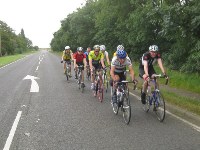
Randonneuring (also known as Audax in the UK, Australia and Brazil) is a long-distance cycling sport with its origins in audax cycling. In randonneuring, riders attempt courses of 200 km or more, passing through predetermined "controls" (checkpoints). Riders aim to complete the course within specified time limits, and receive equal recognition regardless of their finishing order. Riders may travel in groups or alone as they wish, and are expected to be self-sufficient between controls. A randonneuring event is called a randonnée or brevet, and a rider who has completed a 200 km event is called a randonneur. The international governing body for randonneuring is Audax Club Parisien (ACP), which works with other randonneuring organisations worldwide through Les Randonneurs Mondiaux (RM). Randonneuring is popular in France, and has a following in the Netherlands, Belgium, the United Kingdom, Germany, Italy, Australia, the United States, Canada, Brazil, Ireland, India, Indonesia, Korea, Japan and Malaysia.
In the late nineteenth century Italy, day-long "challenge" sports became popular. Participants aimed to cover as much distance as possible and prove themselves audax ("audacious"). The first recorded audax cycling event took place on June 12, 1897, when twelve Italian cyclists attempted the challenge of cycling from Rome to Naples, a distance of 230 kilometres (140 mi), during daylight hours. Similar events became popular elsewhere, and in 1904 French journalist Henri Desgrange produced Audax regulations, which belonged to his Auto newspaper. Under the Audax regulations, riders rode as a group. Successful riders were awarded a certificate called a Brevet d'Audax. A group of successful audax cyclists formed the Audax Club Parisien (ACP), which took over the organisation of Audax events on Desgrange's behalf. In 1920, there was a disagreement between Desgrange and the ACP. Desgrange withdrew ACP's permission to organise events under his Audax regulations, and ACP created its own allure libre (free-paced) version of the sport, where successful riders were awarded certificates called Brevets des Randonneurs. This style is now popularly known as "randonneuring".
Desgrange continued to promote the original Audax rules, and on July 14, 1921, the Union of Parisian Audax Cyclistes (UACP) was formed, which became the Union of French Audax in January 1956, and later simply Union des Audax. The original style is still popular in France and neighbouring countries. In Great Britain, where the original audax style does not exist, and in Brazil, where it is not common, the term audax is used interchangeably with randonneuring, reflecting the sport's origins with Audax Club Parisien.
Randonneuring has much in common with cyclotouring, the founding-father of which is often said to be the journalist Velocio (Paul de Vivie), also credited with making derailleur gears popular.
The majority of randonneuring events are classified as "brevets des randonneurs". In such events, riders follow a course through a series of predetermined checkpoints called "controls"; these are typically a few tens of kilometres apart. Each rider carries a "brevet card" which must be stamped at each control to prove completion. In some events, riders will be required to supplant this by collecting till receipts at controls and by answering questions about their surroundings at "information controls", such as recording a distance from a milepost. At the end of the event, the brevet card is handed in to the organisers who will then check and certify the results. Riders are expected to keep within minimum and maximum average speed limits. For a typical 200-kilometre (120 mi) brevet, the minimum speed is around 15 kilometres per hour (9.3 mph) and the maximum is 30 kilometres per hour (19 mph). Riders who arrive early at controls will be made to wait before they can carry on. Riders can stop to eat and rest at controls, though no extra time is allowed for doing so. Riders are free to ride individually or in groups as they wish. A brevet is not a race, and no completion order is published. Riders are expected to be fully self-sufficient between controls and must carry food, water, spare clothing and tools to meet their requirements.
In addition to brevets appearing on a calendar date, there are "permanent" (or "raid") brevets which may be ridden on any date by prior arrangement with the organiser, and "DIY permanents" where a rider proposes a specific route. In these events, the "controls" are predesignated places where a rider will stop and collect evidence of passage such as a shop receipt.
In addition to 200-kilometre (120 mi) events, there are brevets of 300, 400, 600 kilometres (190, 250, 370 mi) and more. These will typically involve an element of night riding. There are also shorter events: in a "brevet populaire" (or simply "populaire"), riders follow a course of 50, 100, 150 kilometres (31, 62, 93 mi). These brevets are seen as a good introduction to the full-blown "randonneur" events, and also as a manageable distance for riders who don't want to ride the longer distances.
There are variations on the brevet theme including team events such as the "Flèche" or "Arrow", which usually converge on a single end point from many starts, and 200 kilometres (120 mi) per day "Dart" events.
Hub AI
Randonneuring AI simulator
(@Randonneuring_simulator)
Randonneuring
Randonneuring (also known as Audax in the UK, Australia and Brazil) is a long-distance cycling sport with its origins in audax cycling. In randonneuring, riders attempt courses of 200 km or more, passing through predetermined "controls" (checkpoints). Riders aim to complete the course within specified time limits, and receive equal recognition regardless of their finishing order. Riders may travel in groups or alone as they wish, and are expected to be self-sufficient between controls. A randonneuring event is called a randonnée or brevet, and a rider who has completed a 200 km event is called a randonneur. The international governing body for randonneuring is Audax Club Parisien (ACP), which works with other randonneuring organisations worldwide through Les Randonneurs Mondiaux (RM). Randonneuring is popular in France, and has a following in the Netherlands, Belgium, the United Kingdom, Germany, Italy, Australia, the United States, Canada, Brazil, Ireland, India, Indonesia, Korea, Japan and Malaysia.
In the late nineteenth century Italy, day-long "challenge" sports became popular. Participants aimed to cover as much distance as possible and prove themselves audax ("audacious"). The first recorded audax cycling event took place on June 12, 1897, when twelve Italian cyclists attempted the challenge of cycling from Rome to Naples, a distance of 230 kilometres (140 mi), during daylight hours. Similar events became popular elsewhere, and in 1904 French journalist Henri Desgrange produced Audax regulations, which belonged to his Auto newspaper. Under the Audax regulations, riders rode as a group. Successful riders were awarded a certificate called a Brevet d'Audax. A group of successful audax cyclists formed the Audax Club Parisien (ACP), which took over the organisation of Audax events on Desgrange's behalf. In 1920, there was a disagreement between Desgrange and the ACP. Desgrange withdrew ACP's permission to organise events under his Audax regulations, and ACP created its own allure libre (free-paced) version of the sport, where successful riders were awarded certificates called Brevets des Randonneurs. This style is now popularly known as "randonneuring".
Desgrange continued to promote the original Audax rules, and on July 14, 1921, the Union of Parisian Audax Cyclistes (UACP) was formed, which became the Union of French Audax in January 1956, and later simply Union des Audax. The original style is still popular in France and neighbouring countries. In Great Britain, where the original audax style does not exist, and in Brazil, where it is not common, the term audax is used interchangeably with randonneuring, reflecting the sport's origins with Audax Club Parisien.
Randonneuring has much in common with cyclotouring, the founding-father of which is often said to be the journalist Velocio (Paul de Vivie), also credited with making derailleur gears popular.
The majority of randonneuring events are classified as "brevets des randonneurs". In such events, riders follow a course through a series of predetermined checkpoints called "controls"; these are typically a few tens of kilometres apart. Each rider carries a "brevet card" which must be stamped at each control to prove completion. In some events, riders will be required to supplant this by collecting till receipts at controls and by answering questions about their surroundings at "information controls", such as recording a distance from a milepost. At the end of the event, the brevet card is handed in to the organisers who will then check and certify the results. Riders are expected to keep within minimum and maximum average speed limits. For a typical 200-kilometre (120 mi) brevet, the minimum speed is around 15 kilometres per hour (9.3 mph) and the maximum is 30 kilometres per hour (19 mph). Riders who arrive early at controls will be made to wait before they can carry on. Riders can stop to eat and rest at controls, though no extra time is allowed for doing so. Riders are free to ride individually or in groups as they wish. A brevet is not a race, and no completion order is published. Riders are expected to be fully self-sufficient between controls and must carry food, water, spare clothing and tools to meet their requirements.
In addition to brevets appearing on a calendar date, there are "permanent" (or "raid") brevets which may be ridden on any date by prior arrangement with the organiser, and "DIY permanents" where a rider proposes a specific route. In these events, the "controls" are predesignated places where a rider will stop and collect evidence of passage such as a shop receipt.
In addition to 200-kilometre (120 mi) events, there are brevets of 300, 400, 600 kilometres (190, 250, 370 mi) and more. These will typically involve an element of night riding. There are also shorter events: in a "brevet populaire" (or simply "populaire"), riders follow a course of 50, 100, 150 kilometres (31, 62, 93 mi). These brevets are seen as a good introduction to the full-blown "randonneur" events, and also as a manageable distance for riders who don't want to ride the longer distances.
There are variations on the brevet theme including team events such as the "Flèche" or "Arrow", which usually converge on a single end point from many starts, and 200 kilometres (120 mi) per day "Dart" events.