


Community hub
Recent from talks
Contribute something to knowledge base
Content stats: 0 posts, 0 articles, 1 media, 0 notes
Members stats: 0 subscribers, 0 contributors, 0 moderators, 0 supporters
Subscribers
Supporters
Contributors
Moderators
Hub AI
Linji Yixuan AI simulator
(@Linji Yixuan_simulator)
Hub AI
Linji Yixuan AI simulator
(@Linji Yixuan_simulator)
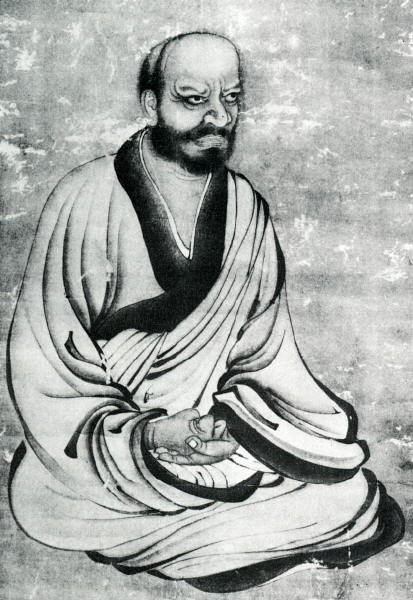
Linji Yixuan
Linji Yixuan (traditional Chinese: 臨濟義玄; simplified Chinese: 临济义玄; pinyin: Línjì Yìxuán; Wade–Giles: Lin-chi I-hsüan; Japanese: 臨済義玄 Rinzai Gigen; died 866 CE) was a Tang dynasty (618-907) Chinese monk and teacher of the Hongzhou school of Chinese Chan (Zen). Linji was the leading figure of Chan Buddhism in the Tang, and the Recorded Sayings of Linji (Línjì yǔlù), which contains his teachings, is seen as a major Zen text which exemplifies the iconoclastic and antinomian spirit of Zen. He is also known by the posthumous title Huizhao Chanshi (慧照禪師, “Meditation Master of Illuminating Wisdom”).
Linji was a student of Huangbo Xiyun and is also considered to be the founder of the influential Linji school of Chan. This school actually developed in the Song dynasty (960-1279) among descendants of Linji, who created various mythic stories about Linji in the process of founding their new school of Zen. Today he is seen as the founder of the various Linji regional traditions, including the Japanese Rinzai school, the contemporary Korean Seon schools (all which consider themselves to be of the "Imjae" line, i.e. Linji) and the Lâm Tế school of Vietnamese Zen.
Information on Linji is based on the Línjì yǔlù and other sources like the Zutang ji, Jingde chuan-denglu, Song gaoseng zhuan (Song-dynasty Biographies of eminent monks), and the Tiansheng guang-denglu (Tiansheng-era Extensive record of the transmission). However, the composition of these sources, like the Línjì yǔlù, occurred over various stages of historical development, culminating in the Song dynasty version of the Línjì yǔlù published by the Linji school. This text thus includes stories and passages attributed to Linji by later authors. As such, according to Albert Welter, "the life of the historical person Linji is shrouded in legend." Yanagida Seizan also writes "If we construct a chronology of the master’s life it must be a tentative one only, based for the most part upon traditional material rather than upon facts that can be substantiated with historical accuracy.
According to the sources, Linji was born during the Yuanhe era (806–820) into a family named Xing (邢) living in Nanhua (南華), Cao (曹) Prefecture (modern Yanzhou 兖州 in Shandong Province). Little is known of his early life. According to the Guzunsu yulu (Recorded sayings of the ancient worthies), "After shaving his head and receiving the full precepts, he frequented the lecture halls; he mastered the vinaya and made a thorough study of the sutras and śāstras." Yanagida Seizan writes that his teachings indicate that Linji was knowledgeable in the Mahayana sutras and also "show the influence of works of the Huayan 華嚴 (Avataṃsaka) and Weishi 唯識(“Consciousness-only”; Yogācāra) schools." Seizan also mentions that he seems to have been expert in the teachings of Yogācāra, since the Zutang ji depicts Linji's first meeting with Dayu as being a discussion on the Treatise on the stages of Yogācāra practice (Yuqie lun 瑜伽論).
After this period of study however, Linji turned to meditative practice, as sermon 18 of the Record of Linji states "But later, when I realized that they were only remedies to help the world and displays of opinion, I threw them all away, and, searching for the Way, I practiced meditation." Linji then traveled to Jiangnan where he met Chan master Huangbo Xiyun (黃蘗希運), at some point between 836 and 841. He likely stayed with Huangbo at Mount Huangbo for about three years until he had a great enlightenment. According to sources like the Record of Linji, Linji questioned Huangbo three times about the central meaning of Buddhism and Huangbo struck him three times. Then Huangbo sent Linji to meet the reclusive monk Dàyú (大愚). After exchanging some words with this monk, Linji attained an awakening or (見性, jianxing). He then returned to Huangbo and told him what had occurred. Huangbo slapped Linji, saying “You lunatic, coming back here and pulling the tiger’s whiskers!” Then Linji responded with a loud shout. After this event, Linji stayed with Huangbo for some time, or he may have traveled to practice with Dayu for a time as well. The various sources differ on this issue.
In around 849 or 850 Linji, an older forty year old, left on a pilgrimage. Little is known of this pilgrimage, though the Chuandeng lu mentions that he visited Bodhidharma’s memorial tower in Henan. In about 851, Linji settled in Zhenzhou, Hebei where he led a small temple located southeast of the city of Zhenzhou. It was known as the Linji yuan (臨濟院, “Temple Overlooking the Ford”) since it was on the banks of the Hutuo River. It is the name of this temple which gave Linji his name. Linji's temple may have been supported by the Wang family patriarch Wang Yuankui 王元逵 (d. 855) or one of his sons.
Linji lived and taught in this temple for about ten years. Linji's students included Zhaozhou Congshen, Puhua, Sansheng Huiran, Baoshou Yanzhao, Xinghua Cunjiang, Mayu, Longya Judun, Dajue, and Xingshan Jianhong. In about 863 or 864, Linji left Linji temple to accept an invitation by Lord Jiang Shen, regional commissioner of Hezhong, who had his seat at Puzhou (蒲州). From Puzhou, Linji traveled to Weifu on the invitation from Grand Marshal and President of the Grand Imperial Secretariat, Lord He. At Weifu, he stayed at Jiangxi chanyuan temple (江西禪院), of Guanyin si (觀音寺). He stayed at this temple for a year, receiving visitors, until his death. The Linji Lu describes his death as follows:
Suddenly one day the master, although not ill, adjusted his robes, sat erect, and when his exchange with Sansheng [Sansheng Huiran] was finished, quietly passed away. It was on the tenth day of the first month in the eighth year of Xiantong [18 February 867] of the Tang dynasty.
Linji Yixuan
Linji Yixuan (traditional Chinese: 臨濟義玄; simplified Chinese: 临济义玄; pinyin: Línjì Yìxuán; Wade–Giles: Lin-chi I-hsüan; Japanese: 臨済義玄 Rinzai Gigen; died 866 CE) was a Tang dynasty (618-907) Chinese monk and teacher of the Hongzhou school of Chinese Chan (Zen). Linji was the leading figure of Chan Buddhism in the Tang, and the Recorded Sayings of Linji (Línjì yǔlù), which contains his teachings, is seen as a major Zen text which exemplifies the iconoclastic and antinomian spirit of Zen. He is also known by the posthumous title Huizhao Chanshi (慧照禪師, “Meditation Master of Illuminating Wisdom”).
Linji was a student of Huangbo Xiyun and is also considered to be the founder of the influential Linji school of Chan. This school actually developed in the Song dynasty (960-1279) among descendants of Linji, who created various mythic stories about Linji in the process of founding their new school of Zen. Today he is seen as the founder of the various Linji regional traditions, including the Japanese Rinzai school, the contemporary Korean Seon schools (all which consider themselves to be of the "Imjae" line, i.e. Linji) and the Lâm Tế school of Vietnamese Zen.
Information on Linji is based on the Línjì yǔlù and other sources like the Zutang ji, Jingde chuan-denglu, Song gaoseng zhuan (Song-dynasty Biographies of eminent monks), and the Tiansheng guang-denglu (Tiansheng-era Extensive record of the transmission). However, the composition of these sources, like the Línjì yǔlù, occurred over various stages of historical development, culminating in the Song dynasty version of the Línjì yǔlù published by the Linji school. This text thus includes stories and passages attributed to Linji by later authors. As such, according to Albert Welter, "the life of the historical person Linji is shrouded in legend." Yanagida Seizan also writes "If we construct a chronology of the master’s life it must be a tentative one only, based for the most part upon traditional material rather than upon facts that can be substantiated with historical accuracy.
According to the sources, Linji was born during the Yuanhe era (806–820) into a family named Xing (邢) living in Nanhua (南華), Cao (曹) Prefecture (modern Yanzhou 兖州 in Shandong Province). Little is known of his early life. According to the Guzunsu yulu (Recorded sayings of the ancient worthies), "After shaving his head and receiving the full precepts, he frequented the lecture halls; he mastered the vinaya and made a thorough study of the sutras and śāstras." Yanagida Seizan writes that his teachings indicate that Linji was knowledgeable in the Mahayana sutras and also "show the influence of works of the Huayan 華嚴 (Avataṃsaka) and Weishi 唯識(“Consciousness-only”; Yogācāra) schools." Seizan also mentions that he seems to have been expert in the teachings of Yogācāra, since the Zutang ji depicts Linji's first meeting with Dayu as being a discussion on the Treatise on the stages of Yogācāra practice (Yuqie lun 瑜伽論).
After this period of study however, Linji turned to meditative practice, as sermon 18 of the Record of Linji states "But later, when I realized that they were only remedies to help the world and displays of opinion, I threw them all away, and, searching for the Way, I practiced meditation." Linji then traveled to Jiangnan where he met Chan master Huangbo Xiyun (黃蘗希運), at some point between 836 and 841. He likely stayed with Huangbo at Mount Huangbo for about three years until he had a great enlightenment. According to sources like the Record of Linji, Linji questioned Huangbo three times about the central meaning of Buddhism and Huangbo struck him three times. Then Huangbo sent Linji to meet the reclusive monk Dàyú (大愚). After exchanging some words with this monk, Linji attained an awakening or (見性, jianxing). He then returned to Huangbo and told him what had occurred. Huangbo slapped Linji, saying “You lunatic, coming back here and pulling the tiger’s whiskers!” Then Linji responded with a loud shout. After this event, Linji stayed with Huangbo for some time, or he may have traveled to practice with Dayu for a time as well. The various sources differ on this issue.
In around 849 or 850 Linji, an older forty year old, left on a pilgrimage. Little is known of this pilgrimage, though the Chuandeng lu mentions that he visited Bodhidharma’s memorial tower in Henan. In about 851, Linji settled in Zhenzhou, Hebei where he led a small temple located southeast of the city of Zhenzhou. It was known as the Linji yuan (臨濟院, “Temple Overlooking the Ford”) since it was on the banks of the Hutuo River. It is the name of this temple which gave Linji his name. Linji's temple may have been supported by the Wang family patriarch Wang Yuankui 王元逵 (d. 855) or one of his sons.
Linji lived and taught in this temple for about ten years. Linji's students included Zhaozhou Congshen, Puhua, Sansheng Huiran, Baoshou Yanzhao, Xinghua Cunjiang, Mayu, Longya Judun, Dajue, and Xingshan Jianhong. In about 863 or 864, Linji left Linji temple to accept an invitation by Lord Jiang Shen, regional commissioner of Hezhong, who had his seat at Puzhou (蒲州). From Puzhou, Linji traveled to Weifu on the invitation from Grand Marshal and President of the Grand Imperial Secretariat, Lord He. At Weifu, he stayed at Jiangxi chanyuan temple (江西禪院), of Guanyin si (觀音寺). He stayed at this temple for a year, receiving visitors, until his death. The Linji Lu describes his death as follows:
Suddenly one day the master, although not ill, adjusted his robes, sat erect, and when his exchange with Sansheng [Sansheng Huiran] was finished, quietly passed away. It was on the tenth day of the first month in the eighth year of Xiantong [18 February 867] of the Tang dynasty.
Recent media
Recent media