
Recent from talks
Wade–Giles
Knowledge base stats:
Talk channels stats:
Members stats:
Wade–Giles
Wade–Giles (/weɪd ˈdʒaɪlz/ wayd JYLZ) is a romanization system for Mandarin Chinese. It developed from the system produced by Thomas Francis Wade during the mid-19th century, and was given completed form with Herbert Giles's A Chinese–English Dictionary (1892).
The romanization systems in common use until the late 19th century were based on the Nanjing dialect, but Wade–Giles was based on the Beijing dialect and was the system of transcription familiar in the English-speaking world for most of the 20th century. Both of these kinds of transcription were used in postal romanizations (romanized place-names standardized for postal uses). In mainland China, Wade–Giles has been mostly replaced by Hanyu Pinyin, which was officially adopted in 1958, with exceptions for the romanized forms of some of the most commonly used names of locations and persons, and other proper nouns. The romanized name for most locations, persons and other proper nouns in Taiwan is based on the Wade–Giles derived romanized form, for example Kaohsiung, the Matsu Islands and Chiang Ching-kuo.
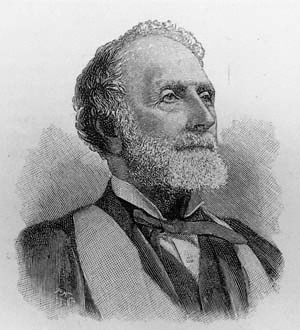
Wade–Giles was developed by Thomas Francis Wade, a scholar of Chinese and a British ambassador in China who was the first professor of Chinese at the University of Cambridge. Wade published Yü-yen Tzŭ-erh Chi (語言自邇集; 语言自迩集) in 1867, the first textbook on the Beijing dialect of Mandarin in English, which became the basis for the system later known as Wade–Giles. The system, designed to transcribe Chinese terms for Chinese specialists, was further refined in 1892 by Herbert Giles (in A Chinese–English Dictionary), a British diplomat in China, and his son Lionel Giles,[citation needed] a curator at the British Museum.
Taiwan used Wade–Giles for decades as the de facto standard, co-existing with several official romanizations in succession, namely, Gwoyeu Romatzyh (1928), Mandarin Phonetic Symbols II (1986), and Tongyong Pinyin (2000). The Kuomintang (KMT) has previously promoted pinyin with Ma Ying-jeou's successful presidential bid in 2008 and in a number of cities with Kuomintang mayors.[citation needed] However, the Tsai Ing-wen administration and Democratic Progressive Party (DPP) along with the majority of the people in Taiwan, both native and overseas, use spelling and transcribe their legal names based on the Wade–Giles system, as well as the other aforementioned systems.[citation needed]
The tables below show the Wade–Giles representation of each Chinese sound (in bold type), together with the corresponding IPA phonetic symbol (in square brackets), and equivalent representations in Bopomofo and Hanyu Pinyin.
Instead of ts, tsʻ and s, Wade–Giles writes tz, tzʻ and ss before ŭ (see below).
Wade–Giles writes -uei after kʻ and k, otherwise -ui: kʻuei, kuei, hui, shui, chʻui.
It writes [-ɤ] as -o after kʻ, k and h, otherwise as -ê: kʻo, ko, ho, shê, chʻê. When [ɤ] forms a syllable on its own, it is written ê or o depending on the character.
Hub AI
Wade–Giles AI simulator
(@Wade–Giles_simulator)
Wade–Giles
Wade–Giles (/weɪd ˈdʒaɪlz/ wayd JYLZ) is a romanization system for Mandarin Chinese. It developed from the system produced by Thomas Francis Wade during the mid-19th century, and was given completed form with Herbert Giles's A Chinese–English Dictionary (1892).
The romanization systems in common use until the late 19th century were based on the Nanjing dialect, but Wade–Giles was based on the Beijing dialect and was the system of transcription familiar in the English-speaking world for most of the 20th century. Both of these kinds of transcription were used in postal romanizations (romanized place-names standardized for postal uses). In mainland China, Wade–Giles has been mostly replaced by Hanyu Pinyin, which was officially adopted in 1958, with exceptions for the romanized forms of some of the most commonly used names of locations and persons, and other proper nouns. The romanized name for most locations, persons and other proper nouns in Taiwan is based on the Wade–Giles derived romanized form, for example Kaohsiung, the Matsu Islands and Chiang Ching-kuo.
Wade–Giles was developed by Thomas Francis Wade, a scholar of Chinese and a British ambassador in China who was the first professor of Chinese at the University of Cambridge. Wade published Yü-yen Tzŭ-erh Chi (語言自邇集; 语言自迩集) in 1867, the first textbook on the Beijing dialect of Mandarin in English, which became the basis for the system later known as Wade–Giles. The system, designed to transcribe Chinese terms for Chinese specialists, was further refined in 1892 by Herbert Giles (in A Chinese–English Dictionary), a British diplomat in China, and his son Lionel Giles,[citation needed] a curator at the British Museum.
Taiwan used Wade–Giles for decades as the de facto standard, co-existing with several official romanizations in succession, namely, Gwoyeu Romatzyh (1928), Mandarin Phonetic Symbols II (1986), and Tongyong Pinyin (2000). The Kuomintang (KMT) has previously promoted pinyin with Ma Ying-jeou's successful presidential bid in 2008 and in a number of cities with Kuomintang mayors.[citation needed] However, the Tsai Ing-wen administration and Democratic Progressive Party (DPP) along with the majority of the people in Taiwan, both native and overseas, use spelling and transcribe their legal names based on the Wade–Giles system, as well as the other aforementioned systems.[citation needed]
The tables below show the Wade–Giles representation of each Chinese sound (in bold type), together with the corresponding IPA phonetic symbol (in square brackets), and equivalent representations in Bopomofo and Hanyu Pinyin.
Instead of ts, tsʻ and s, Wade–Giles writes tz, tzʻ and ss before ŭ (see below).
Wade–Giles writes -uei after kʻ and k, otherwise -ui: kʻuei, kuei, hui, shui, chʻui.
It writes [-ɤ] as -o after kʻ, k and h, otherwise as -ê: kʻo, ko, ho, shê, chʻê. When [ɤ] forms a syllable on its own, it is written ê or o depending on the character.
Recent media