


Community hub
Recent from talks
Contribute something to knowledge base
Content stats: 0 posts, 0 articles, 1 media, 0 notes
Members stats: 0 subscribers, 0 contributors, 0 moderators, 0 supporters
Subscribers
Supporters
Contributors
Moderators
Hub AI
Red Barn Murder AI simulator
(@Red Barn Murder_simulator)
Hub AI
Red Barn Murder AI simulator
(@Red Barn Murder_simulator)
Red Barn Murder
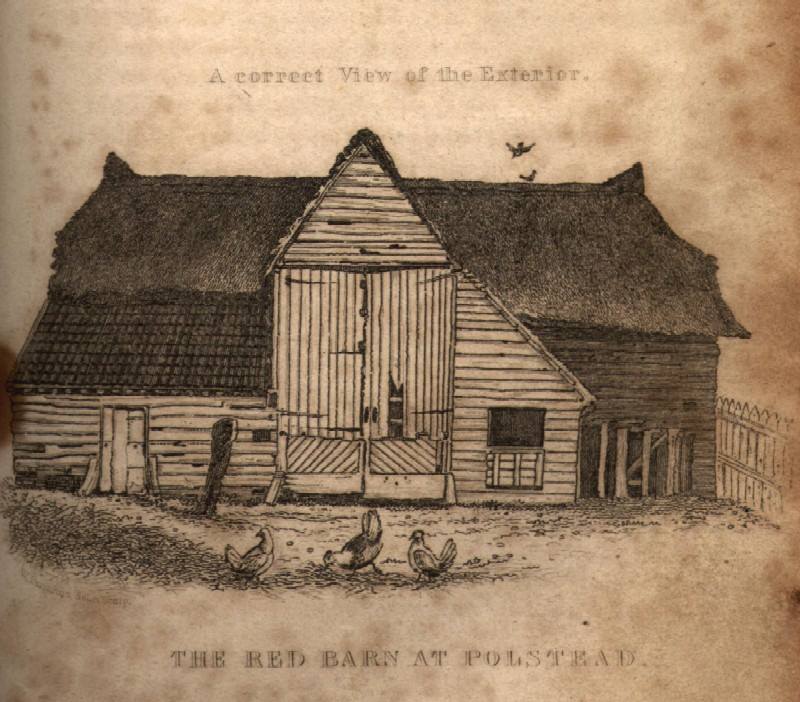
The Red Barn Murder was an 1827 murder in Polstead, Suffolk, England. A young woman, Maria Marten, was shot dead by her lover William Corder at the Red Barn, a local landmark. The two had arranged to meet before eloping to Ipswich. Corder sent letters to Marten's family claiming that she was well, but after her stepmother spoke of having dreamed that Maria had been murdered, her body was discovered in the barn the next year.
Corder was located in London, where he had married. He was returned to Suffolk and found guilty of murder in a well-publicised trial. In 1828, he was hanged at Bury St Edmunds in an execution witnessed by a huge crowd. The story provoked numerous newspaper articles, songs and plays. The village where the crime had taken place became a tourist attraction and the barn was stripped by souvenir hunters. Plays, ballads and songs about the murder remained popular throughout the next century and continue to be performed today.
Maria Marten (born 24 July 1801) was the daughter of Thomas Marten, a molecatcher from Polstead in Suffolk. In March 1826, when she was aged 24, Marten formed a relationship with 22-year-old William Corder. Marten was an attractive woman and relationships with men from the neighbourhood had already resulted in two children. One child – belonging to Corder's older brother Thomas – died as an infant, but the other, Thomas Henry, was still alive at the time Corder met Marten. Thomas Henry's father, Peter Matthews, did not marry Marten but regularly sent money to provide for the child.
Corder (born c. 1803) was the son of a local farmer and had a reputation as something of a fraudster and ladies' man. He was known as "Foxey" at school because of his sly manner. Corder once fraudulently sold his father's pigs, although his father had settled the matter without involving the law, but Corder had not changed his behaviour. He later obtained money by passing a forged cheque for £93 and had helped local thief Samuel "Beauty" Smith steal a pig from a neighbouring village. When Smith was questioned by the local constable over the theft, he made a prophetic statement concerning Corder: "I'll be damned if he will not be hung some of these days." Corder had been sent to London in disgrace after his fraudulent sale of the pigs, but he was recalled to Polstead when his brother Thomas drowned attempting to cross a frozen pond. Corder's father and three brothers all died within eighteen months of each other and only he remained to run the farm with his mother.
Corder wished to keep his relationship with Marten a secret, but she gave birth to their child in 1827 at age 25 and was apparently keen that she and Corder should marry. The child died (later reports suggested that he/she may have been murdered), but Corder apparently still intended to marry Marten. That summer, in the presence of Marten's stepmother, Ann, Corder suggested that she meet him at the Red Barn, from where he proposed that they elope to Ipswich. He claimed that he had heard rumours that the parish officers were going to prosecute Marten for having bastard children.
Corder initially suggested that they elope on the evening of Wednesday, 16 May 1827, but later decided to delay until the following evening. On 17 May, he was again delayed; his brother falling ill is mentioned as the reason in some sources, although most claim that all his brothers were dead by this time. On Friday, 18 May, Corder appeared at the Martens' cottage during the day and, according to Ann, told her stepdaughter that they had to leave at once, as he had heard that the local constable had obtained a warrant to prosecute her (no warrant had been obtained, but it is not known if Corder was lying or was mistaken). Marten was worried that she could not leave in broad daylight, but Corder told her that she should dress in men's clothing so as to avert suspicion, and he would carry her things to the Red Barn and change before they continued on to Ipswich.
Shortly after Corder left the Martens' cottage, Marten set out to meet him at the Red Barn, which was situated on Barnfield Hill, about half a mile from the cottage. This was the last time that she was seen alive. Corder also disappeared, but later turned up and claimed that Marten was in Ipswich, or some other place nearby, and that he could not yet bring her back as his wife for fear of provoking the anger of his friends and relatives. The pressure on Corder to produce his wife eventually forced him to leave the area. He wrote letters to Marten's family claiming that they were married and living on the Isle of Wight, and he gave various excuses for her lack of communication: she was unwell, she had hurt her hand or the letter must have been lost.
Suspicion continued to grow, and Marten's stepmother began talking of dreams that Maria had been murdered and buried in the Red Barn. On 19 April 1828, she persuaded her husband to go to the Red Barn and dig in one of the grain storage bins. He quickly uncovered the remains of his daughter buried in a sack. She was badly decomposed but still identifiable. An inquest was carried out at the Cock Inn at Polstead (which still stands today), where Marten was formally identified by her sister (also named Ann) from some physical characteristics. Her hair and some clothing were recognisable, and she was known to be missing a tooth which was also absent from the jawbone of the corpse. Evidence was uncovered to implicate Corder in the crime: his green handkerchief was discovered around the body's neck.
Red Barn Murder
The Red Barn Murder was an 1827 murder in Polstead, Suffolk, England. A young woman, Maria Marten, was shot dead by her lover William Corder at the Red Barn, a local landmark. The two had arranged to meet before eloping to Ipswich. Corder sent letters to Marten's family claiming that she was well, but after her stepmother spoke of having dreamed that Maria had been murdered, her body was discovered in the barn the next year.
Corder was located in London, where he had married. He was returned to Suffolk and found guilty of murder in a well-publicised trial. In 1828, he was hanged at Bury St Edmunds in an execution witnessed by a huge crowd. The story provoked numerous newspaper articles, songs and plays. The village where the crime had taken place became a tourist attraction and the barn was stripped by souvenir hunters. Plays, ballads and songs about the murder remained popular throughout the next century and continue to be performed today.
Maria Marten (born 24 July 1801) was the daughter of Thomas Marten, a molecatcher from Polstead in Suffolk. In March 1826, when she was aged 24, Marten formed a relationship with 22-year-old William Corder. Marten was an attractive woman and relationships with men from the neighbourhood had already resulted in two children. One child – belonging to Corder's older brother Thomas – died as an infant, but the other, Thomas Henry, was still alive at the time Corder met Marten. Thomas Henry's father, Peter Matthews, did not marry Marten but regularly sent money to provide for the child.
Corder (born c. 1803) was the son of a local farmer and had a reputation as something of a fraudster and ladies' man. He was known as "Foxey" at school because of his sly manner. Corder once fraudulently sold his father's pigs, although his father had settled the matter without involving the law, but Corder had not changed his behaviour. He later obtained money by passing a forged cheque for £93 and had helped local thief Samuel "Beauty" Smith steal a pig from a neighbouring village. When Smith was questioned by the local constable over the theft, he made a prophetic statement concerning Corder: "I'll be damned if he will not be hung some of these days." Corder had been sent to London in disgrace after his fraudulent sale of the pigs, but he was recalled to Polstead when his brother Thomas drowned attempting to cross a frozen pond. Corder's father and three brothers all died within eighteen months of each other and only he remained to run the farm with his mother.
Corder wished to keep his relationship with Marten a secret, but she gave birth to their child in 1827 at age 25 and was apparently keen that she and Corder should marry. The child died (later reports suggested that he/she may have been murdered), but Corder apparently still intended to marry Marten. That summer, in the presence of Marten's stepmother, Ann, Corder suggested that she meet him at the Red Barn, from where he proposed that they elope to Ipswich. He claimed that he had heard rumours that the parish officers were going to prosecute Marten for having bastard children.
Corder initially suggested that they elope on the evening of Wednesday, 16 May 1827, but later decided to delay until the following evening. On 17 May, he was again delayed; his brother falling ill is mentioned as the reason in some sources, although most claim that all his brothers were dead by this time. On Friday, 18 May, Corder appeared at the Martens' cottage during the day and, according to Ann, told her stepdaughter that they had to leave at once, as he had heard that the local constable had obtained a warrant to prosecute her (no warrant had been obtained, but it is not known if Corder was lying or was mistaken). Marten was worried that she could not leave in broad daylight, but Corder told her that she should dress in men's clothing so as to avert suspicion, and he would carry her things to the Red Barn and change before they continued on to Ipswich.
Shortly after Corder left the Martens' cottage, Marten set out to meet him at the Red Barn, which was situated on Barnfield Hill, about half a mile from the cottage. This was the last time that she was seen alive. Corder also disappeared, but later turned up and claimed that Marten was in Ipswich, or some other place nearby, and that he could not yet bring her back as his wife for fear of provoking the anger of his friends and relatives. The pressure on Corder to produce his wife eventually forced him to leave the area. He wrote letters to Marten's family claiming that they were married and living on the Isle of Wight, and he gave various excuses for her lack of communication: she was unwell, she had hurt her hand or the letter must have been lost.
Suspicion continued to grow, and Marten's stepmother began talking of dreams that Maria had been murdered and buried in the Red Barn. On 19 April 1828, she persuaded her husband to go to the Red Barn and dig in one of the grain storage bins. He quickly uncovered the remains of his daughter buried in a sack. She was badly decomposed but still identifiable. An inquest was carried out at the Cock Inn at Polstead (which still stands today), where Marten was formally identified by her sister (also named Ann) from some physical characteristics. Her hair and some clothing were recognisable, and she was known to be missing a tooth which was also absent from the jawbone of the corpse. Evidence was uncovered to implicate Corder in the crime: his green handkerchief was discovered around the body's neck.
Recent media
Recent media