


Community hub
Recent from talks
Contribute something to knowledge base
Content stats: 0 posts, 0 articles, 1 media, 0 notes
Members stats: 0 subscribers, 0 contributors, 0 moderators, 0 supporters
Subscribers
Supporters
Contributors
Moderators
International Red Cross and Red Crescent Movement
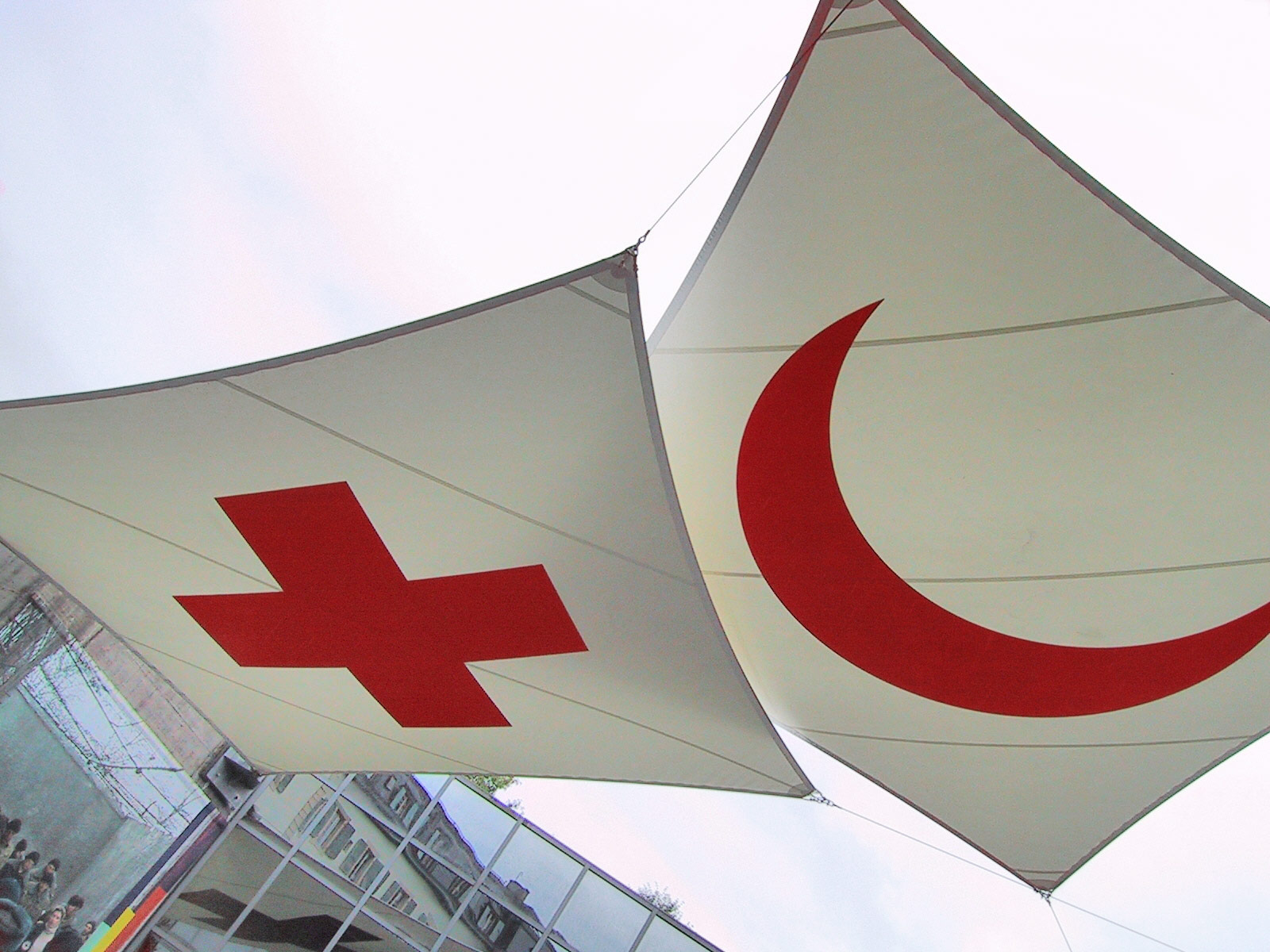
The organized International Red Cross and Red Crescent Movement is a humanitarian movement with approximately 16 million volunteers, members, and staff worldwide. It was founded to protect human life and health, to ensure respect for all human beings, and to prevent and alleviate human suffering.
Until the middle of the nineteenth century, there were no organized or well-established army nursing systems for casualties, nor safe or protected institutions, to accommodate and treat those who were wounded on the battlefield. A devout Calvinist, the Swiss businessman Jean-Henri Dunant traveled to Italy to meet then-French emperor Napoleon III in June 1859 with the intention of discussing difficulties in conducting business in Algeria, which at that time was occupied by France. He arrived in the small town of Solferino on the evening of 24 June after the Battle of Solferino, an engagement in the Austro-Sardinian War. In a single day, about 40,000 soldiers on both sides died or were left wounded on the field. Dunant was shocked by the terrible aftermath of the battle, the suffering of the wounded soldiers, and the near-total lack of medical attendance and basic care. He completely abandoned the original intent of his trip and for several days he devoted himself to helping with the treatment and care of the wounded. He took part in organizing an overwhelming level of relief assistance with the local villagers to aid without discrimination.
Back at his home in Geneva, he decided to write a book entitled A Memory of Solferino, which he published using his own money in 1862. He sent copies of the book to leading political and military figures throughout Europe, and people he thought could help him make a change. His book included vivid descriptions of his experiences in Solferino in 1859, and he explicitly advocated the formation of national voluntary relief organizations to help nurse wounded soldiers in the case of war, inspired by Christian teaching regarding social responsibility and his experience after the battlefield of Solferino. He called for the development of an international treaty to guarantee the protection of medics and field hospitals for soldiers wounded on the battlefield.
In 1863, Gustave Moynier, a Geneva lawyer and president of the Geneva Society for Public Welfare, received a copy of Dunant's book and introduced it for discussion at a meeting of that society. As a result of this initial discussion, the society established an investigatory commission to examine the feasibility of Dunant's suggestions and eventually to organize an international conference about their possible implementation. The members of this committee, which has subsequently been referred to as the "Committee of the Five", aside from Dunant and Moynier were physician Louis Appia, who had significant experience working as a field surgeon; Appia's friend and colleague Théodore Maunoir, from the Geneva Hygiene and Health Commission; and Guillaume-Henri Dufour, a Swiss army general of great renown. Eight days later, the five men decided to rename the committee to the "International Committee for Relief to the Wounded".
From 26 to 29 October 1863, the international conference organized by the committee was held in Geneva to develop possible measures to improve medical services on the battlefield. The conference was attended by 36 individuals: eighteen official delegates from national governments, six delegates from non-governmental organizations, seven non-official foreign delegates, and the five members of the International Committee. The states and kingdoms represented by official delegates were: Swiss Confederation, Austrian Empire, Grand Duchy of Baden, Kingdom of Bavaria, French Empire, Kingdom of Hanover, Kingdom of Italy, Kingdom of the Netherlands, Kingdom of Prussia, Russian Empire, Kingdom of Saxony, Kingdom of Wurtemberg, United Kingdoms of Sweden and Norway, and United Kingdom of Great Britain and Ireland.
Among the proposals written in the final resolutions of the conference, adopted on 29 October 1863, were:
Only a year later, the Swiss government invited the governments of all European countries, as well as the United States, the Empire of Brazil and the Mexican Empire to attend an official diplomatic conference. Sixteen countries sent a total of 26 delegates to Geneva. On 22 August 1864, the conference adopted the first Geneva Convention "for the Amelioration of the Condition of the Wounded in Armies in the Field". Representatives of 12 states and kingdoms signed the convention:
The convention contained ten articles, establishing for the first time legally binding rules guaranteeing neutrality and protection for wounded soldiers, field medical personnel, and specific humanitarian institutions in an armed conflict.
International Red Cross and Red Crescent Movement
The organized International Red Cross and Red Crescent Movement is a humanitarian movement with approximately 16 million volunteers, members, and staff worldwide. It was founded to protect human life and health, to ensure respect for all human beings, and to prevent and alleviate human suffering.
Until the middle of the nineteenth century, there were no organized or well-established army nursing systems for casualties, nor safe or protected institutions, to accommodate and treat those who were wounded on the battlefield. A devout Calvinist, the Swiss businessman Jean-Henri Dunant traveled to Italy to meet then-French emperor Napoleon III in June 1859 with the intention of discussing difficulties in conducting business in Algeria, which at that time was occupied by France. He arrived in the small town of Solferino on the evening of 24 June after the Battle of Solferino, an engagement in the Austro-Sardinian War. In a single day, about 40,000 soldiers on both sides died or were left wounded on the field. Dunant was shocked by the terrible aftermath of the battle, the suffering of the wounded soldiers, and the near-total lack of medical attendance and basic care. He completely abandoned the original intent of his trip and for several days he devoted himself to helping with the treatment and care of the wounded. He took part in organizing an overwhelming level of relief assistance with the local villagers to aid without discrimination.
Back at his home in Geneva, he decided to write a book entitled A Memory of Solferino, which he published using his own money in 1862. He sent copies of the book to leading political and military figures throughout Europe, and people he thought could help him make a change. His book included vivid descriptions of his experiences in Solferino in 1859, and he explicitly advocated the formation of national voluntary relief organizations to help nurse wounded soldiers in the case of war, inspired by Christian teaching regarding social responsibility and his experience after the battlefield of Solferino. He called for the development of an international treaty to guarantee the protection of medics and field hospitals for soldiers wounded on the battlefield.
In 1863, Gustave Moynier, a Geneva lawyer and president of the Geneva Society for Public Welfare, received a copy of Dunant's book and introduced it for discussion at a meeting of that society. As a result of this initial discussion, the society established an investigatory commission to examine the feasibility of Dunant's suggestions and eventually to organize an international conference about their possible implementation. The members of this committee, which has subsequently been referred to as the "Committee of the Five", aside from Dunant and Moynier were physician Louis Appia, who had significant experience working as a field surgeon; Appia's friend and colleague Théodore Maunoir, from the Geneva Hygiene and Health Commission; and Guillaume-Henri Dufour, a Swiss army general of great renown. Eight days later, the five men decided to rename the committee to the "International Committee for Relief to the Wounded".
From 26 to 29 October 1863, the international conference organized by the committee was held in Geneva to develop possible measures to improve medical services on the battlefield. The conference was attended by 36 individuals: eighteen official delegates from national governments, six delegates from non-governmental organizations, seven non-official foreign delegates, and the five members of the International Committee. The states and kingdoms represented by official delegates were: Swiss Confederation, Austrian Empire, Grand Duchy of Baden, Kingdom of Bavaria, French Empire, Kingdom of Hanover, Kingdom of Italy, Kingdom of the Netherlands, Kingdom of Prussia, Russian Empire, Kingdom of Saxony, Kingdom of Wurtemberg, United Kingdoms of Sweden and Norway, and United Kingdom of Great Britain and Ireland.
Among the proposals written in the final resolutions of the conference, adopted on 29 October 1863, were:
Only a year later, the Swiss government invited the governments of all European countries, as well as the United States, the Empire of Brazil and the Mexican Empire to attend an official diplomatic conference. Sixteen countries sent a total of 26 delegates to Geneva. On 22 August 1864, the conference adopted the first Geneva Convention "for the Amelioration of the Condition of the Wounded in Armies in the Field". Representatives of 12 states and kingdoms signed the convention:
The convention contained ten articles, establishing for the first time legally binding rules guaranteeing neutrality and protection for wounded soldiers, field medical personnel, and specific humanitarian institutions in an armed conflict.
Recent media
Recent media