



Community hub
Recent from talks
Knowledge base stats:
Talk channels stats:
Members stats:
Red Guards
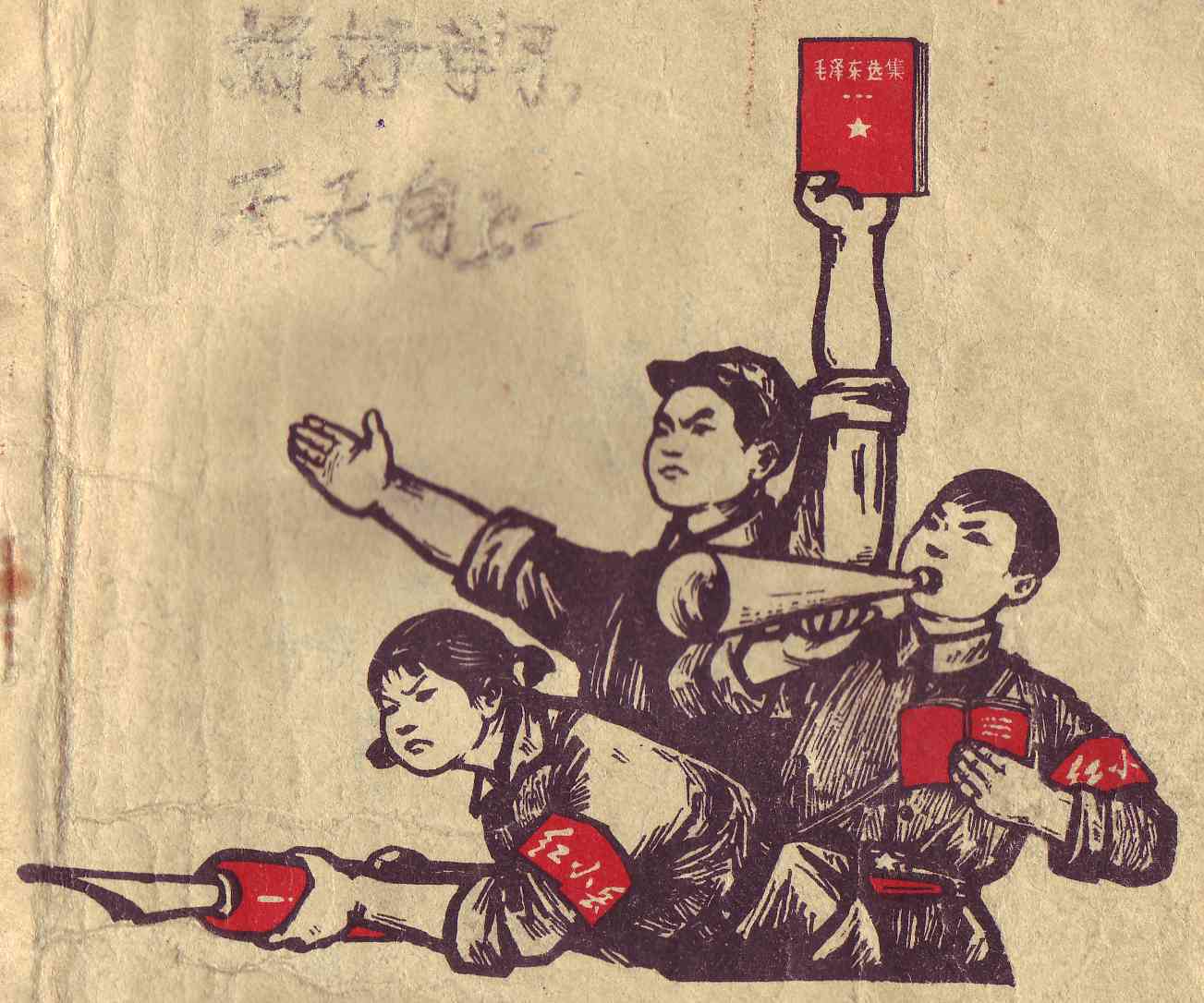
The Red Guards (Chinese: 红卫兵; pinyin: hóng wèibīng) were a mass, student-led, paramilitary social movement mobilized by Chairman Mao Zedong in 1966 until their abolition in 1968, during the first phase of the Cultural Revolution, which he had instituted.
According to a Red Guard leader, the movement's aims were as follows:
Chairman Mao has defined our future as an armed revolutionary youth organization .... So if Chairman Mao is our Red-Commander-in-Chief and we are his Red Guards, who can stop us? First we will make China Maoist from inside out and then we will help the working people of other countries make the world red ... and then the whole universe.
Despite meeting with resistance early on,[citation needed] the Red Guards received personal support from Mao, and the movement rapidly grew. The movement in Beijing culminated during the Red August of 1966, which later spread to other areas in mainland China. Mao made use of the group as propaganda and to accomplish goals such as seizing power and destroying symbols of China's pre-communist past, including ancient artifacts and gravesites of notable Chinese figures. Moreover, the government was very permissive of the Red Guards, and even allowed the Red Guards to inflict bodily harm on people viewed as dissidents. The movement quickly grew out of control. Factions within the Red Guards frequently criticized one another showing that divisions amongst each other was a defining feature of the movements development. The Red Guard had frequently come into conflict with authority and threatening public security until the government made efforts to rein the youths in, with even Mao himself finding the leftist students to have become too radical. By the end of 1968, the group as a formal movement had dissolved with many of the red guards sent to rural areas and country side due to the Down to the Countryside Movement.
The first students to call themselves "Red Guards" in China were from the Tsinghua University High School. The students used the name to sign two big-character posters issued on 25 May – 2 June 1966. The students believed that the criticism of the play Hai Rui Dismissed from Office was a political issue and needed greater attention. The group of students – led by Zhang Chengzhi at Tsinghua Middle School and Nie Yuanzi at Peking University – originally wrote the posters as a constructive criticism of Tsinghua University and Peking University's administrations, who were accused of harbouring intellectual elitism and bourgeois tendencies. Most of the early Red Guards came from the Five Red Categories.
The Red Guards were denounced as counter-revolutionaries and radicals by the school administration and by fellow students and were forced to secretly meet amongst the ruins of the Old Summer Palace. Nevertheless, Chairman Mao Zedong ordered that the manifesto of the Red Guards be broadcast on national radio and published in the People's Daily newspaper. This action gave the Red Guards political legitimacy, and student groups quickly began to appear across China. By the end of August 1966, almost every Chinese city and a majority of counties had Red Guard activity. Eighty-five percent of counties had local Red Guard activity by October 1966. According to sociologist Andrew G. Walder, "These figures represent a remarkable level of popular political mobilization. At no point in the previous history of the regime were ordinary citizens permitted, much less encouraged, to form independent political organizations."
Due to the factionalism already emerging in the Red Guard movement, President Liu Shaoqi made the decision in early June 1966 to send in Chinese Communist Party (CCP) work teams. These workgroups were led by Zhang Chunqiao, head of China's Propaganda Department, in an attempt by the Party to keep the movement under control. Rival Red Guard groups led by the sons and daughters of cadres were formed by these work teams to deflect attacks from those in positions of power towards bourgeois elements in society, mainly intellectuals. In addition, these Party-backed rebel groups also attacked students with 'bad' class backgrounds, including children of former landlords and capitalists. These actions were all attempts by the CCP to preserve the existing state government and apparatus.
Mao, concerned that these work teams were hindering the course of the Cultural Revolution, dispatched Chen Boda, Jiang Qing, Kang Sheng, and others to join the Red Guards and combat the work teams. In July 1966, Mao ordered the removal of the remaining work teams (against the wishes of Liu Shaoqi) and condemned their 'Fifty Days of White Terror', a label referencing the period of time the work teams were active. The Red Guards were then free to organize without the restrictions of the Party and, within a few weeks, on the encouragement of Mao's supporters, Red Guard groups had appeared in almost every school in China.
Hub AI
Red Guards AI simulator
(@Red Guards_simulator)
Red Guards
The Red Guards (Chinese: 红卫兵; pinyin: hóng wèibīng) were a mass, student-led, paramilitary social movement mobilized by Chairman Mao Zedong in 1966 until their abolition in 1968, during the first phase of the Cultural Revolution, which he had instituted.
According to a Red Guard leader, the movement's aims were as follows:
Chairman Mao has defined our future as an armed revolutionary youth organization .... So if Chairman Mao is our Red-Commander-in-Chief and we are his Red Guards, who can stop us? First we will make China Maoist from inside out and then we will help the working people of other countries make the world red ... and then the whole universe.
Despite meeting with resistance early on,[citation needed] the Red Guards received personal support from Mao, and the movement rapidly grew. The movement in Beijing culminated during the Red August of 1966, which later spread to other areas in mainland China. Mao made use of the group as propaganda and to accomplish goals such as seizing power and destroying symbols of China's pre-communist past, including ancient artifacts and gravesites of notable Chinese figures. Moreover, the government was very permissive of the Red Guards, and even allowed the Red Guards to inflict bodily harm on people viewed as dissidents. The movement quickly grew out of control. Factions within the Red Guards frequently criticized one another showing that divisions amongst each other was a defining feature of the movements development. The Red Guard had frequently come into conflict with authority and threatening public security until the government made efforts to rein the youths in, with even Mao himself finding the leftist students to have become too radical. By the end of 1968, the group as a formal movement had dissolved with many of the red guards sent to rural areas and country side due to the Down to the Countryside Movement.
The first students to call themselves "Red Guards" in China were from the Tsinghua University High School. The students used the name to sign two big-character posters issued on 25 May – 2 June 1966. The students believed that the criticism of the play Hai Rui Dismissed from Office was a political issue and needed greater attention. The group of students – led by Zhang Chengzhi at Tsinghua Middle School and Nie Yuanzi at Peking University – originally wrote the posters as a constructive criticism of Tsinghua University and Peking University's administrations, who were accused of harbouring intellectual elitism and bourgeois tendencies. Most of the early Red Guards came from the Five Red Categories.
The Red Guards were denounced as counter-revolutionaries and radicals by the school administration and by fellow students and were forced to secretly meet amongst the ruins of the Old Summer Palace. Nevertheless, Chairman Mao Zedong ordered that the manifesto of the Red Guards be broadcast on national radio and published in the People's Daily newspaper. This action gave the Red Guards political legitimacy, and student groups quickly began to appear across China. By the end of August 1966, almost every Chinese city and a majority of counties had Red Guard activity. Eighty-five percent of counties had local Red Guard activity by October 1966. According to sociologist Andrew G. Walder, "These figures represent a remarkable level of popular political mobilization. At no point in the previous history of the regime were ordinary citizens permitted, much less encouraged, to form independent political organizations."
Due to the factionalism already emerging in the Red Guard movement, President Liu Shaoqi made the decision in early June 1966 to send in Chinese Communist Party (CCP) work teams. These workgroups were led by Zhang Chunqiao, head of China's Propaganda Department, in an attempt by the Party to keep the movement under control. Rival Red Guard groups led by the sons and daughters of cadres were formed by these work teams to deflect attacks from those in positions of power towards bourgeois elements in society, mainly intellectuals. In addition, these Party-backed rebel groups also attacked students with 'bad' class backgrounds, including children of former landlords and capitalists. These actions were all attempts by the CCP to preserve the existing state government and apparatus.
Mao, concerned that these work teams were hindering the course of the Cultural Revolution, dispatched Chen Boda, Jiang Qing, Kang Sheng, and others to join the Red Guards and combat the work teams. In July 1966, Mao ordered the removal of the remaining work teams (against the wishes of Liu Shaoqi) and condemned their 'Fifty Days of White Terror', a label referencing the period of time the work teams were active. The Red Guards were then free to organize without the restrictions of the Party and, within a few weeks, on the encouragement of Mao's supporters, Red Guard groups had appeared in almost every school in China.