
Recent from talks
Relief of Ladysmith
Knowledge base stats:
Talk channels stats:
Members stats:
Relief of Ladysmith
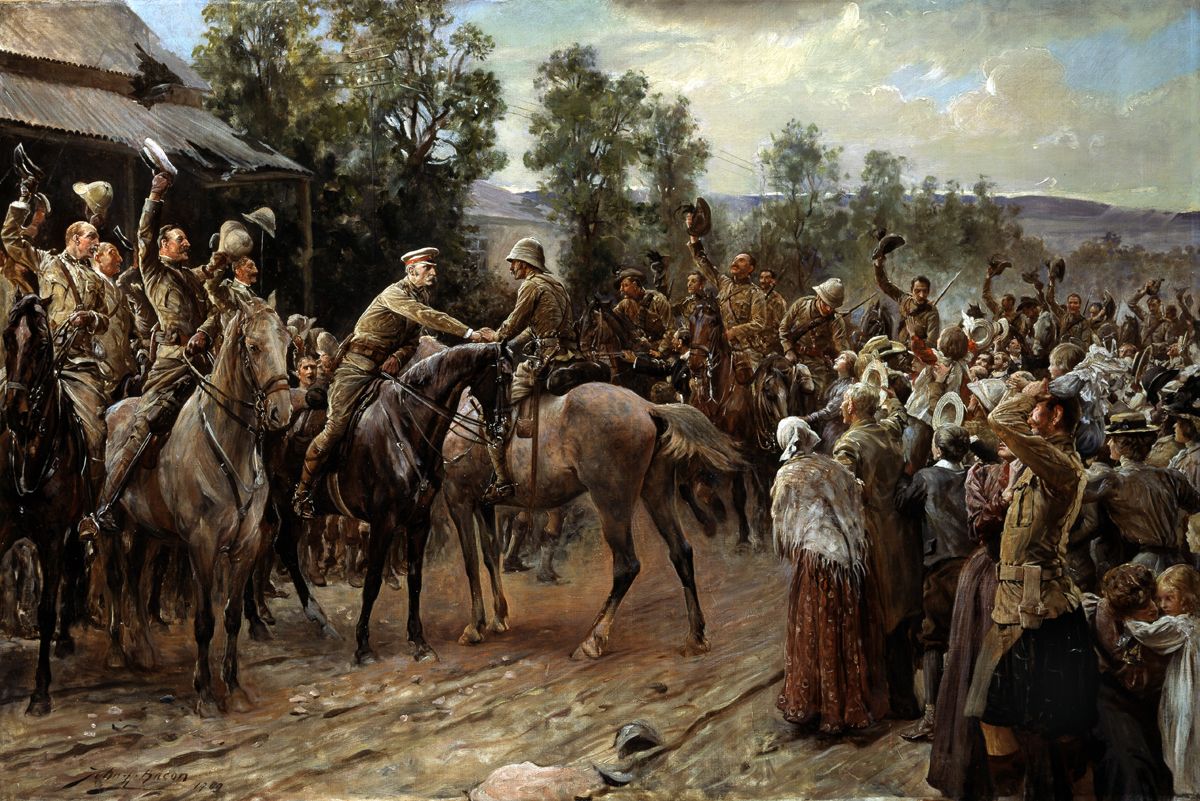
The Relief of Ladysmith consisted of multiple efforts to relieve the city of Ladysmith by General Sir Redvers Buller during the Second Boer War. Buller and the Natal Field Force attempted to relieve the city through multiple offensive actions. The city had been under siege since 2 November, 1899, and Britain had sent General Buller to relieve the city. After consolidating his Forces at Estcourt through most of November and early December, he began his relief of the city. The attempts to relieve the city started on 15 December at the Second Battle of Colenso, in which the British forces were repelled by the Boers on the Tugela River. The next two attempts were repulsed by the Boers (Spion Kop and Vaal Krantz), however at the Battle of Pieters Hill in February 1900, the Boers were eventually beaten from the city and forced to withdraw to Botha's Pass near Newcastle. Buller and his Forces entered the city on February 28, 1900, officially ending the Siege of Ladysmith.
The Colony of Natal was bisected from east to west by the Tugela River which rose in the Drakensberg (to the west) and flowed into the Indian Ocean to the east. The colony was bisected from north to south by the railway line that linked Durban and Johannesburg (completed 1895). The railway line crossed the river at Colenso. Downstream from Colenso the Tugela entered a gorge while upstream from Colenso the hills that overlooked the river continued on the northern bank of the river only – the southern bank was a relatively flat plain many kilometres wide.
Ladysmith lies on the Durban–Johannesburg railway line in a hollow on the Klip River some 20 km north of Colenso (as the crow flies).
When the Second Boer War broke out the Boer forces had 21,000 men under the command of General Piet Joubert ready to invade the Colony of Natal. Ranged against them, the British had 13,000 men under the command of Lieutenant General Sir George White.
The Boers crossed the border into the Colony and after battles at Talana Hill, Elandalaagte and the surrender of a large number of British troops at Nicholsons Nek, White set about defending his position at Ladysmith, some 20 km north of the Tugela river. Winston Churchill asserts that the British Government plan, to which he became privy in later life, was for White to fall back to a position south of the Tugela River.
After the ensuing Battle of Ladysmith on 30 October, the Boers succeeding in entrapping White and some 8,000 British regulars in Ladysmith. The remaining British forces withdrew south of the Tugela and Estcourt, 30 km south of Colenso effectively became the British front and Joubert, in spite of advice to the contrary from Botha failed to push home his advantage and take the port city of Durban.
On the day that the encirclement of Ladysmith was completed, reinforcements headed by General Sir Redvers Buller arrived in Cape Town en route to Natal. Buller remained in Cape Town for three weeks before pressing on to Pietermaritzburg.
On 15 November a raiding party ambushed an armoured train at Chieveley, 11 km south of Colenso taking 70 prisoners including Churchill. After another raiding party was surprised on 23 November at Willow Grange, 10 km to the south of Estcourt, the Boers withdrew to a position behind the Tugela River.
Hub AI
Relief of Ladysmith AI simulator
(@Relief of Ladysmith_simulator)
Relief of Ladysmith
The Relief of Ladysmith consisted of multiple efforts to relieve the city of Ladysmith by General Sir Redvers Buller during the Second Boer War. Buller and the Natal Field Force attempted to relieve the city through multiple offensive actions. The city had been under siege since 2 November, 1899, and Britain had sent General Buller to relieve the city. After consolidating his Forces at Estcourt through most of November and early December, he began his relief of the city. The attempts to relieve the city started on 15 December at the Second Battle of Colenso, in which the British forces were repelled by the Boers on the Tugela River. The next two attempts were repulsed by the Boers (Spion Kop and Vaal Krantz), however at the Battle of Pieters Hill in February 1900, the Boers were eventually beaten from the city and forced to withdraw to Botha's Pass near Newcastle. Buller and his Forces entered the city on February 28, 1900, officially ending the Siege of Ladysmith.
The Colony of Natal was bisected from east to west by the Tugela River which rose in the Drakensberg (to the west) and flowed into the Indian Ocean to the east. The colony was bisected from north to south by the railway line that linked Durban and Johannesburg (completed 1895). The railway line crossed the river at Colenso. Downstream from Colenso the Tugela entered a gorge while upstream from Colenso the hills that overlooked the river continued on the northern bank of the river only – the southern bank was a relatively flat plain many kilometres wide.
Ladysmith lies on the Durban–Johannesburg railway line in a hollow on the Klip River some 20 km north of Colenso (as the crow flies).
When the Second Boer War broke out the Boer forces had 21,000 men under the command of General Piet Joubert ready to invade the Colony of Natal. Ranged against them, the British had 13,000 men under the command of Lieutenant General Sir George White.
The Boers crossed the border into the Colony and after battles at Talana Hill, Elandalaagte and the surrender of a large number of British troops at Nicholsons Nek, White set about defending his position at Ladysmith, some 20 km north of the Tugela river. Winston Churchill asserts that the British Government plan, to which he became privy in later life, was for White to fall back to a position south of the Tugela River.
After the ensuing Battle of Ladysmith on 30 October, the Boers succeeding in entrapping White and some 8,000 British regulars in Ladysmith. The remaining British forces withdrew south of the Tugela and Estcourt, 30 km south of Colenso effectively became the British front and Joubert, in spite of advice to the contrary from Botha failed to push home his advantage and take the port city of Durban.
On the day that the encirclement of Ladysmith was completed, reinforcements headed by General Sir Redvers Buller arrived in Cape Town en route to Natal. Buller remained in Cape Town for three weeks before pressing on to Pietermaritzburg.
On 15 November a raiding party ambushed an armoured train at Chieveley, 11 km south of Colenso taking 70 prisoners including Churchill. After another raiding party was surprised on 23 November at Willow Grange, 10 km to the south of Estcourt, the Boers withdrew to a position behind the Tugela River.
Recent media