
Recent from talks
Religious ecstasy
Knowledge base stats:
Talk channels stats:
Members stats:
Religious ecstasy
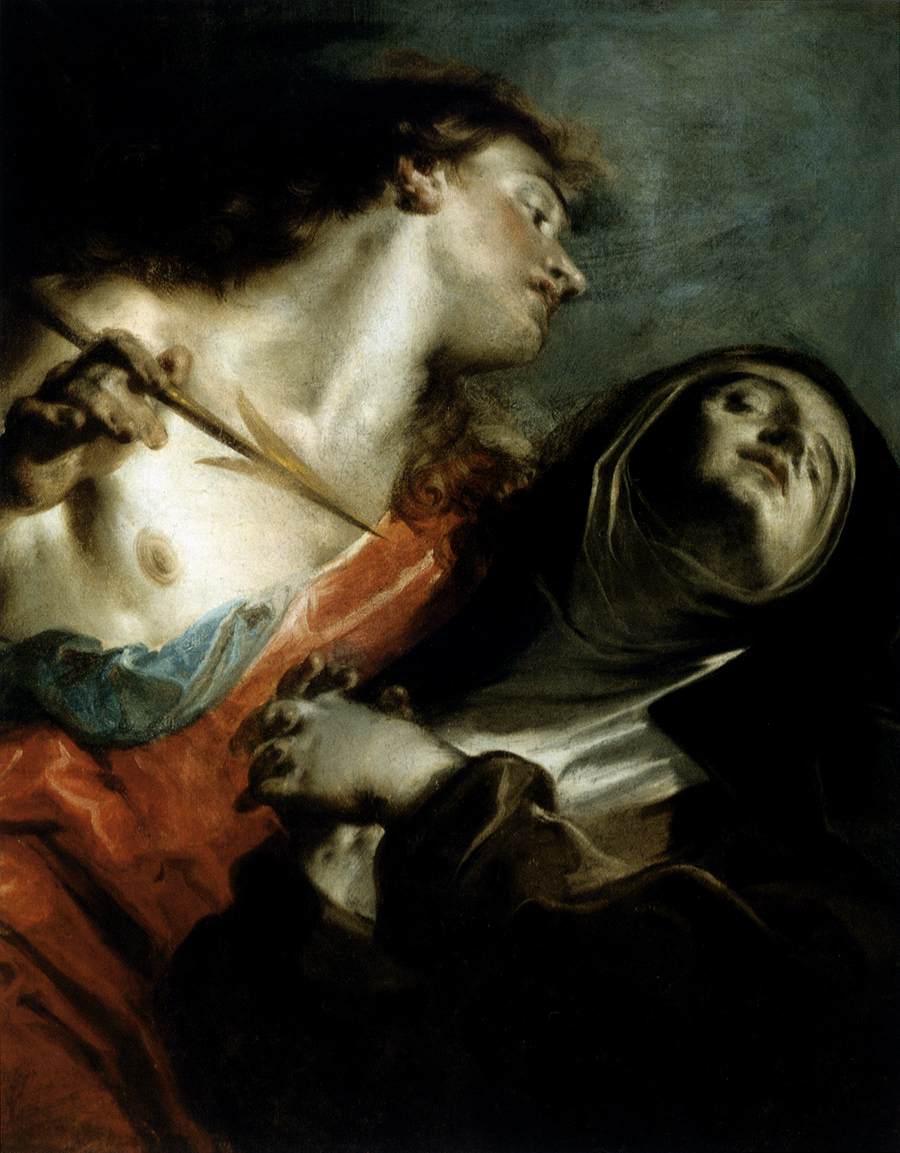
Religious ecstasy is a purported form of altered state of consciousness characterized by greatly reduced external awareness and reportedly expanded interior mental and spiritual awareness, frequently accompanied by visions and emotional (and sometimes physical) euphoria.
Although the experience is usually brief in time, there are records of such experiences lasting several days or even more, and of recurring experiences of ecstasy during a person's lifetime.
In Sufism, the term is referred to as wajd. In Buddhism, piti, usually translated as "joy" or "rapture", is an element of jhana, a state of mental oneness with an object that one focuses on in meditation.
The adjective "religious" means that the experience occurs in connection with religious activities or is interpreted in the context of a religion. Journalist Marghanita Laski writes in her study "Ecstasy in Religious and Secular Experiences", first published in 1961:
Epithets are very often applied to mystical experiences including ecstasies without, apparently, any clear idea about the distinctions that are being made. Thus we find experiences given such names as nature, religious, aesthetic, neo-platonic, etc.. experiences, where in some cases the name seems to derive from a trigger, sometimes from the over belief.
Yoga provides techniques to attain a state of ecstasy called samādhi. According to practitioners, there are various stages of ecstasy, the highest being Nirvikalpa samādhi. Bhakti Yoga in particular places emphasis on ecstasy as being one of the fruits of its practice.
In Buddhism, especially in the Pali Canon, there are eight states of trance also called absorption. The first four states are Rupa or, materially-oriented. The next four are Arupa or non-material. These eight states are preliminary trances which lead up to final saturation. In the Visuddhimagga, great effort and years of sustained meditation are practiced to reach the first absorption, and not all individuals can accomplish it at all.
Ecstasy in ancient Greece, notably in the Dionysian Mysteries, is characterized by ecstatic dance and god-like abilities and removed the inhibition and social constraints of dividing social elements such as gender and wealth. Unlike other mystery religions of the time, Dionysiac rites required no formal initiation and were accessible to all women, regardless of wealth or citizenship. Women were able to express themselves beyond domestic roles and engage in acts typically reserved for men, such as hunting and warfare.
Hub AI
Religious ecstasy AI simulator
(@Religious ecstasy_simulator)
Religious ecstasy
Religious ecstasy is a purported form of altered state of consciousness characterized by greatly reduced external awareness and reportedly expanded interior mental and spiritual awareness, frequently accompanied by visions and emotional (and sometimes physical) euphoria.
Although the experience is usually brief in time, there are records of such experiences lasting several days or even more, and of recurring experiences of ecstasy during a person's lifetime.
In Sufism, the term is referred to as wajd. In Buddhism, piti, usually translated as "joy" or "rapture", is an element of jhana, a state of mental oneness with an object that one focuses on in meditation.
The adjective "religious" means that the experience occurs in connection with religious activities or is interpreted in the context of a religion. Journalist Marghanita Laski writes in her study "Ecstasy in Religious and Secular Experiences", first published in 1961:
Epithets are very often applied to mystical experiences including ecstasies without, apparently, any clear idea about the distinctions that are being made. Thus we find experiences given such names as nature, religious, aesthetic, neo-platonic, etc.. experiences, where in some cases the name seems to derive from a trigger, sometimes from the over belief.
Yoga provides techniques to attain a state of ecstasy called samādhi. According to practitioners, there are various stages of ecstasy, the highest being Nirvikalpa samādhi. Bhakti Yoga in particular places emphasis on ecstasy as being one of the fruits of its practice.
In Buddhism, especially in the Pali Canon, there are eight states of trance also called absorption. The first four states are Rupa or, materially-oriented. The next four are Arupa or non-material. These eight states are preliminary trances which lead up to final saturation. In the Visuddhimagga, great effort and years of sustained meditation are practiced to reach the first absorption, and not all individuals can accomplish it at all.
Ecstasy in ancient Greece, notably in the Dionysian Mysteries, is characterized by ecstatic dance and god-like abilities and removed the inhibition and social constraints of dividing social elements such as gender and wealth. Unlike other mystery religions of the time, Dionysiac rites required no formal initiation and were accessible to all women, regardless of wealth or citizenship. Women were able to express themselves beyond domestic roles and engage in acts typically reserved for men, such as hunting and warfare.
Recent media