
Recent from talks
Renaissance fair
Knowledge base stats:
Talk channels stats:
Members stats:
Renaissance fair
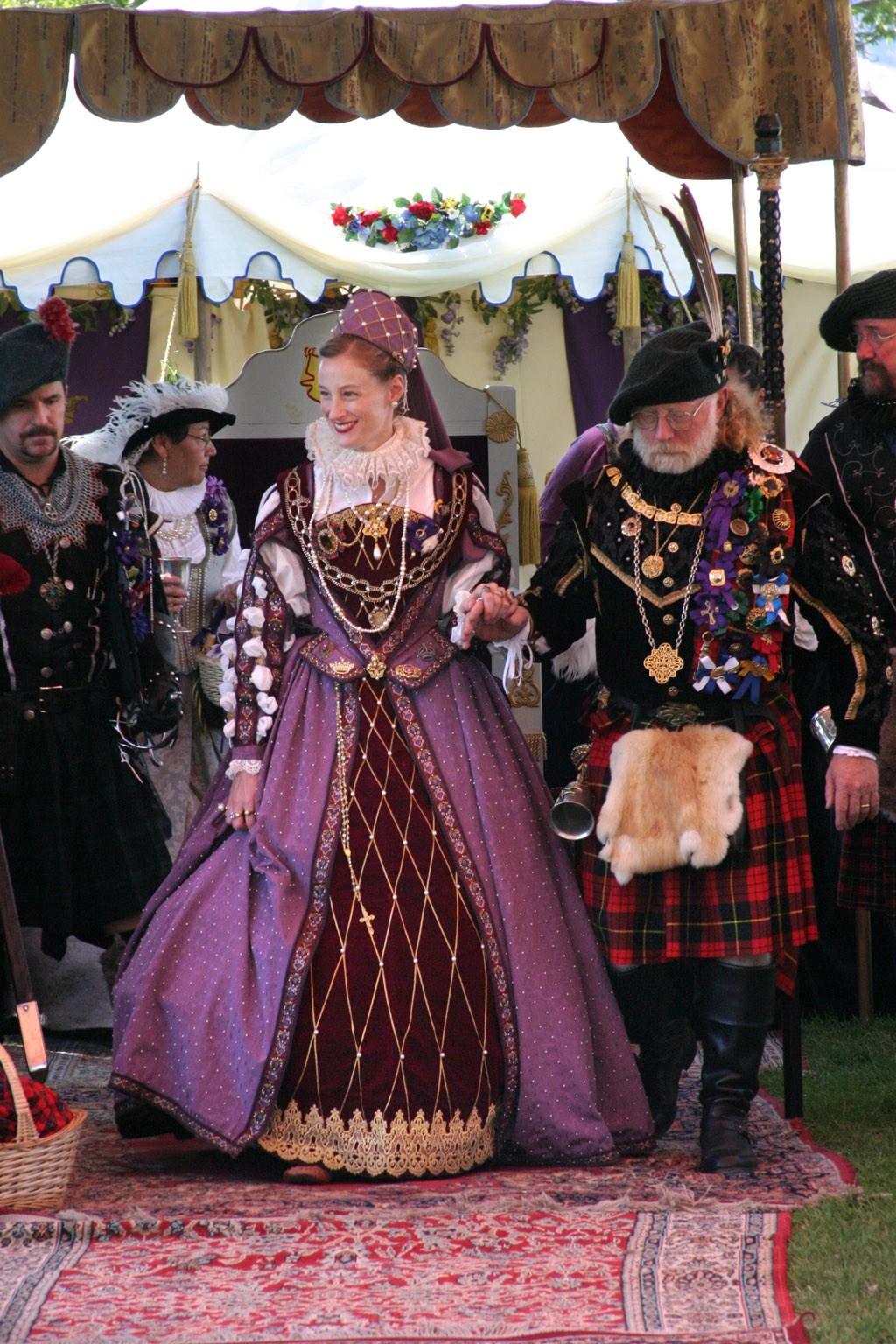
A Renaissance Festival (medieval fair or ren faire) is an outdoor gathering that aims to entertain its guests by recreating a historical setting, most often the English Renaissance.
Renaissance festivals generally include costumed entertainers or fair-goers, musical and theatrical acts, art and handicrafts for sale, and festival food. These fairs are open to the public and typically commercial. Some are permanent theme parks, while others are short-term events in a fairground, winery, or other large spaces. Some Renaissance fairs offer campgrounds for those who wish to stay more than one day.
Many Renaissance fairs are set during the reign of Queen Elizabeth I of England. Some are set earlier, during the reign of Henry VIII, or in other countries, such as France. Others are set outside the era of the Renaissance; these may include earlier medieval periods such as the Viking Age or later periods such as the Golden Age of Piracy. Some engage in deliberate 'time travel' by encouraging participants to wear costumes representing several eras in a broad time period. Renaissance fairs encourage visitors to engage with costumes and audience participation, often renting outfits to fairgoers. Many welcome fantasy elements like wizards and elves.
Most Renaissance fairs are arranged to represent an imagined English village during the reign of Elizabeth I, often thought of as the height of the English Renaissance.
Within a modern Renaissance festival, there are stages or performance areas set up for scheduled shows, such as plays in Shakespearean or commedia dell'arte traditions, as well as anachronistic audience participation in comedy routines. Other performances include dancers, magicians, musicians, jugglers, and singers. Between the stages, the streets ('lanes') are lined with stores ('shoppes') and stalls where independent vendors sell themed handcrafts, clothing, books, and artwork.
Renaissance fairs typically feature a wide variety of foods inspired by both medieval cuisine and typical American fair foods like corn dogs. Some foods, like turkey legs, steak on a stick, and bread bowls have become iconic of Renaissance festivals. Beer, mead, and wine are also common.
Games include typical fair events, such as archery, axe-throwing, and dunk tanks. Rides are typically not machine-powered; various animal rides and human-powered swings are common, as are live animal displays and falconry exhibitions. Larger Renaissance fairs often include a joust as a main attraction. PETA and Born Free USA have protested the use of elephants and camels at the Maryland Renaissance Festival and Arizona Renaissance Festival.
In addition to staged performances, a major attraction of Renaissance fairs are professional and amateur crowds of actors who play historical figures, roaming the fairgrounds and interacting with visitors. Some allow visitors to bring peace-bonded weapons, while others only allow fair employees to wear them. The Renaissance fair subculture's word for costumed guests is 'playtrons,' a portmanteau of the words player and patron. This adds enjoyment to guests' experience by 'getting into the act' as Renaissance Lords and Ladies, peasants, pirates, belly dancers, or fantasy characters. However, many Renaissance fairs discourage interaction between the official cast and so-called 'playtrons.'
Hub AI
Renaissance fair AI simulator
(@Renaissance fair_simulator)
Renaissance fair
A Renaissance Festival (medieval fair or ren faire) is an outdoor gathering that aims to entertain its guests by recreating a historical setting, most often the English Renaissance.
Renaissance festivals generally include costumed entertainers or fair-goers, musical and theatrical acts, art and handicrafts for sale, and festival food. These fairs are open to the public and typically commercial. Some are permanent theme parks, while others are short-term events in a fairground, winery, or other large spaces. Some Renaissance fairs offer campgrounds for those who wish to stay more than one day.
Many Renaissance fairs are set during the reign of Queen Elizabeth I of England. Some are set earlier, during the reign of Henry VIII, or in other countries, such as France. Others are set outside the era of the Renaissance; these may include earlier medieval periods such as the Viking Age or later periods such as the Golden Age of Piracy. Some engage in deliberate 'time travel' by encouraging participants to wear costumes representing several eras in a broad time period. Renaissance fairs encourage visitors to engage with costumes and audience participation, often renting outfits to fairgoers. Many welcome fantasy elements like wizards and elves.
Most Renaissance fairs are arranged to represent an imagined English village during the reign of Elizabeth I, often thought of as the height of the English Renaissance.
Within a modern Renaissance festival, there are stages or performance areas set up for scheduled shows, such as plays in Shakespearean or commedia dell'arte traditions, as well as anachronistic audience participation in comedy routines. Other performances include dancers, magicians, musicians, jugglers, and singers. Between the stages, the streets ('lanes') are lined with stores ('shoppes') and stalls where independent vendors sell themed handcrafts, clothing, books, and artwork.
Renaissance fairs typically feature a wide variety of foods inspired by both medieval cuisine and typical American fair foods like corn dogs. Some foods, like turkey legs, steak on a stick, and bread bowls have become iconic of Renaissance festivals. Beer, mead, and wine are also common.
Games include typical fair events, such as archery, axe-throwing, and dunk tanks. Rides are typically not machine-powered; various animal rides and human-powered swings are common, as are live animal displays and falconry exhibitions. Larger Renaissance fairs often include a joust as a main attraction. PETA and Born Free USA have protested the use of elephants and camels at the Maryland Renaissance Festival and Arizona Renaissance Festival.
In addition to staged performances, a major attraction of Renaissance fairs are professional and amateur crowds of actors who play historical figures, roaming the fairgrounds and interacting with visitors. Some allow visitors to bring peace-bonded weapons, while others only allow fair employees to wear them. The Renaissance fair subculture's word for costumed guests is 'playtrons,' a portmanteau of the words player and patron. This adds enjoyment to guests' experience by 'getting into the act' as Renaissance Lords and Ladies, peasants, pirates, belly dancers, or fantasy characters. However, many Renaissance fairs discourage interaction between the official cast and so-called 'playtrons.'
Recent media