



Community hub
Recent from talks
Knowledge base stats:
Talk channels stats:
Members stats:
Renault 12
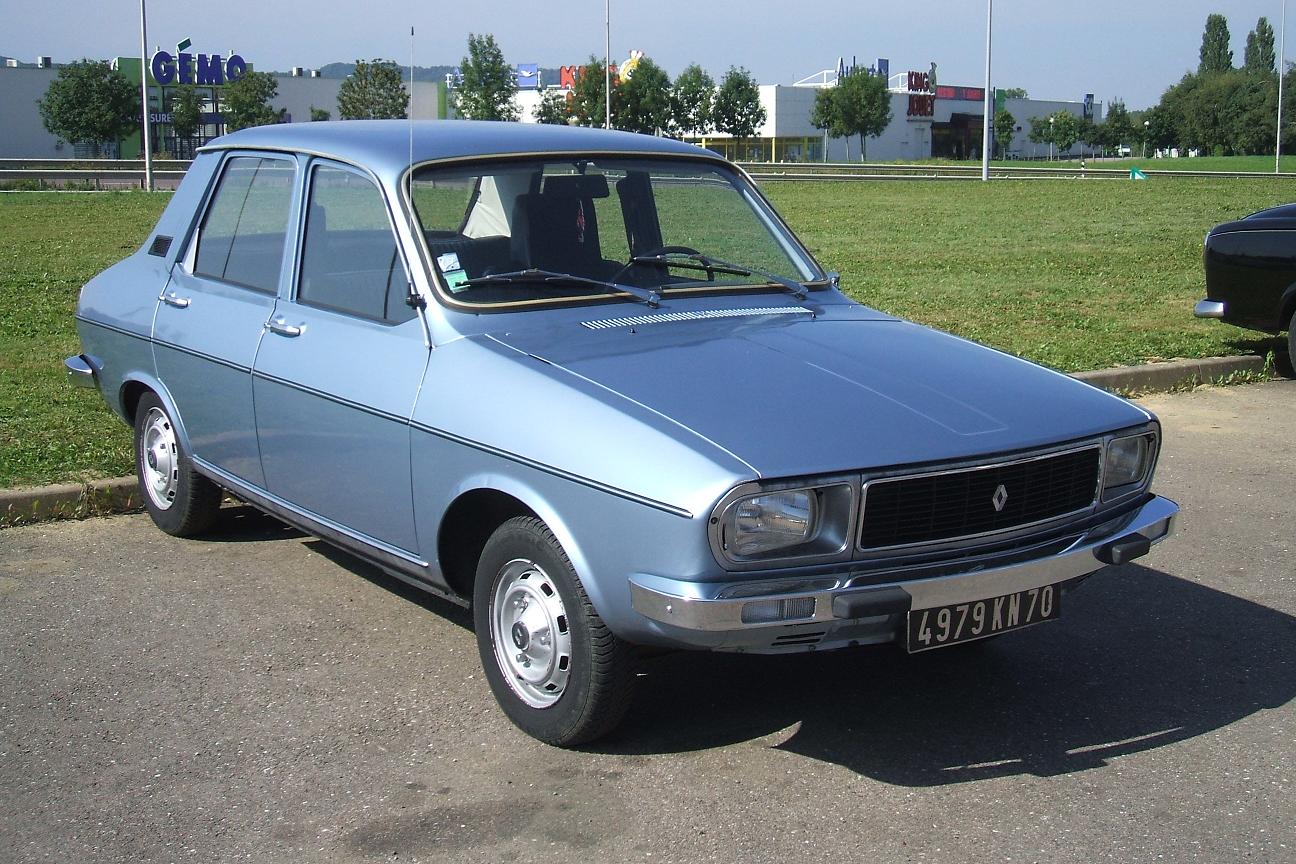
The Renault 12 is a small family car introduced by French automaker Renault at the Paris Motor Show in October 1969 and produced in France until 1980. Available as a saloon (Berline) and estate (Break), it was also produced under licence in many countries around the globe into the early 21st century.
In its first few years the 12 received praise from the European press for its spacious, comfortable interior, its styling, its performance and its low fuel consumption. However it fared worse in the North American press: in a test of the 1974 model, Road & Track was critical of the engine's "obtrusive" noise, and called the heavy, non-power steering "a serious design flaw". They also gave it "very poor marks" for the ventilation system.
Renault 12 production and sales ended in western Europe in 1980, but the model continued to be produced and sold by Renault affiliates elsewhere. The last R12 was produced in 2000 in Turkey, while Romanian automaker Dacia continued producing the R12-based 1310 saloon and estate until 2004 and the R12-based Dacia Pick-Up until December 2006.
Commercially the Renault 12 was a successful car, selling 2.5 million units.
In January 1964, the Styling Center began the design of the 117 model. This was a new model to bridge the gap between the Renault 8 and the Renault 16. The demands for Project 117 were:
The Renault 12's design dates back to the genesis of the Renault 16; indeed, some initial R16 concept designs resemble the R12 more than the ultimate design of the R16. However, the R12 was technically quite different from either the R16 or the smaller Renault 4. Like all new Renaults at the time (and in common, by now, with more than 60% of the cars produced in France) the car had front wheel drive, but the R12 had a very different layout from Renault's existing fwd models. The engine was placed longitudinally ahead of the front wheels, while it was behind the wheels on the R4 and R16.
At the time of its launch in October 1969 at the Paris Motor Show, the Renault 12 was only available as a 4-door saloon, in L and TL specifications. The more expensive TL featured two separate reclining front seats instead of one front bench seat, armrests on the doors, lights in the boot and glovebox, a heated rear window, and extra warning lights.
It would have been a simple matter to install the light weight engine from the Renault 16 in the Renault 12, and this was later done for some high-end versions. However Renault had successfully built European market share since 1945 by competing aggressively on price. In the closely contested 1300 cc category it was left to the new Peugeot 304 to attract customers willing to pay a premium price, while for the Renault 12, at launch, the aluminium block of the Renault 16 was rejected on cost grounds. Instead, Renault specified an enlarged version of the iron Cléon unit, used since 1962 in the Renault 8/10. The engine's size was increased to 1289 cc for use in the 12. Listed power output was 60 PS (44 kW; 59 hp) SAE (54 PS (40 kW; 53 hp) DIN) which provided for a respectable top speed of 145 km/h (90 mph).
Hub AI
Renault 12 AI simulator
(@Renault 12_simulator)
Renault 12
The Renault 12 is a small family car introduced by French automaker Renault at the Paris Motor Show in October 1969 and produced in France until 1980. Available as a saloon (Berline) and estate (Break), it was also produced under licence in many countries around the globe into the early 21st century.
In its first few years the 12 received praise from the European press for its spacious, comfortable interior, its styling, its performance and its low fuel consumption. However it fared worse in the North American press: in a test of the 1974 model, Road & Track was critical of the engine's "obtrusive" noise, and called the heavy, non-power steering "a serious design flaw". They also gave it "very poor marks" for the ventilation system.
Renault 12 production and sales ended in western Europe in 1980, but the model continued to be produced and sold by Renault affiliates elsewhere. The last R12 was produced in 2000 in Turkey, while Romanian automaker Dacia continued producing the R12-based 1310 saloon and estate until 2004 and the R12-based Dacia Pick-Up until December 2006.
Commercially the Renault 12 was a successful car, selling 2.5 million units.
In January 1964, the Styling Center began the design of the 117 model. This was a new model to bridge the gap between the Renault 8 and the Renault 16. The demands for Project 117 were:
The Renault 12's design dates back to the genesis of the Renault 16; indeed, some initial R16 concept designs resemble the R12 more than the ultimate design of the R16. However, the R12 was technically quite different from either the R16 or the smaller Renault 4. Like all new Renaults at the time (and in common, by now, with more than 60% of the cars produced in France) the car had front wheel drive, but the R12 had a very different layout from Renault's existing fwd models. The engine was placed longitudinally ahead of the front wheels, while it was behind the wheels on the R4 and R16.
At the time of its launch in October 1969 at the Paris Motor Show, the Renault 12 was only available as a 4-door saloon, in L and TL specifications. The more expensive TL featured two separate reclining front seats instead of one front bench seat, armrests on the doors, lights in the boot and glovebox, a heated rear window, and extra warning lights.
It would have been a simple matter to install the light weight engine from the Renault 16 in the Renault 12, and this was later done for some high-end versions. However Renault had successfully built European market share since 1945 by competing aggressively on price. In the closely contested 1300 cc category it was left to the new Peugeot 304 to attract customers willing to pay a premium price, while for the Renault 12, at launch, the aluminium block of the Renault 16 was rejected on cost grounds. Instead, Renault specified an enlarged version of the iron Cléon unit, used since 1962 in the Renault 8/10. The engine's size was increased to 1289 cc for use in the 12. Listed power output was 60 PS (44 kW; 59 hp) SAE (54 PS (40 kW; 53 hp) DIN) which provided for a respectable top speed of 145 km/h (90 mph).