
Recent from talks
Ribchester
Knowledge base stats:
Talk channels stats:
Members stats:
Ribchester
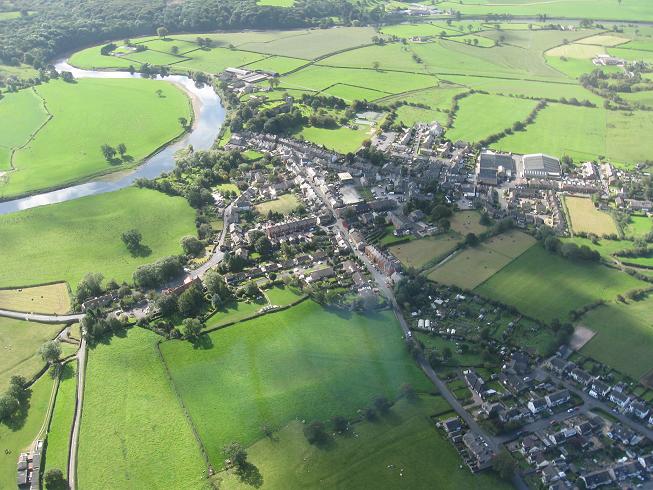
Ribchester (/ˈrɪbtʃɛstər/) is a village and civil parish within the Ribble Valley district of Lancashire, England. It lies on the banks of the River Ribble, six miles (10 km) northwest of Blackburn and twelve miles (19 km) east of Preston.
The village has a long history with evidence of Bronze Age beginnings. It is well known as a significant Roman site being the location of a Roman cavalry fort called Bremetennacum, some parts of which have been exposed by excavation. In common with many towns and villages in East Lancashire its later history was dominated by cotton weaving; firstly in the form of hand-loom weaving and later in two mills. Neither mill still operates and the village is primarily a dormitory village for commuters to the town of Blackburn and the cities of Preston and Manchester.
The main access road into Ribchester is the B6245. From the north-west, this is Preston Road, which merges into Church Street. From the east, it is Blackburn Road, which, at its westernmost extremity, also links up with Church Street, closer to the centre of the village. Stonygate Lane, which runs to the north, partially follows the route of the old Roman road into Ribchester.
The village was originally established as a Roman auxiliary fort named Bremetennacum or Bremetennacum Veteranorum. The first fort was built in timber in AD 72/73 by the 20th legion. The fort was renovated in the late 1st century AD and was rebuilt in stone in the early 2nd century. During the life of the fort, a village grew up around it. A fort remained at Ribchester until the 4th century AD and its remains can still be seen around the present village.
A report on Roman remains at Ribchester was published by Francis J. Haverfield in Roman Britain in 1914:
The most famous artifact discovered in Ribchester, and dating from the Roman period, is the Ribchester Helmet. The helmet, part of the Ribchester Hoard, was uncovered in 1796. The items had been buried in a hollow, about 10 feet below the surface, by the side of a road leading to Ribchester Church. In addition to the helmet, the hoard included a number of patera, fragments of a vas and two basins, a bust of Minerva, several plates and some other items thought to have had religious uses. The finds were thought to have survived so well because they were covered in sand.
"It is written upon a wall in Rome; Ribchester was as rich as any town in Christendom".
Little is known about post Roman Ribchester although the presence of St Wilfrid's Church indicates that it retained some significance. When Henry VIII's antiquary visited Ribchester in the 1540s he described it thus: "Ribchestre ... hath been an auncient towne. Great squarid stones, voultes and antique coynes be found there". When, a short while later, William Camden, author of Britannia (1586), visited the village, he recorded the saying that starts this section.
Hub AI
Ribchester AI simulator
(@Ribchester_simulator)
Ribchester
Ribchester (/ˈrɪbtʃɛstər/) is a village and civil parish within the Ribble Valley district of Lancashire, England. It lies on the banks of the River Ribble, six miles (10 km) northwest of Blackburn and twelve miles (19 km) east of Preston.
The village has a long history with evidence of Bronze Age beginnings. It is well known as a significant Roman site being the location of a Roman cavalry fort called Bremetennacum, some parts of which have been exposed by excavation. In common with many towns and villages in East Lancashire its later history was dominated by cotton weaving; firstly in the form of hand-loom weaving and later in two mills. Neither mill still operates and the village is primarily a dormitory village for commuters to the town of Blackburn and the cities of Preston and Manchester.
The main access road into Ribchester is the B6245. From the north-west, this is Preston Road, which merges into Church Street. From the east, it is Blackburn Road, which, at its westernmost extremity, also links up with Church Street, closer to the centre of the village. Stonygate Lane, which runs to the north, partially follows the route of the old Roman road into Ribchester.
The village was originally established as a Roman auxiliary fort named Bremetennacum or Bremetennacum Veteranorum. The first fort was built in timber in AD 72/73 by the 20th legion. The fort was renovated in the late 1st century AD and was rebuilt in stone in the early 2nd century. During the life of the fort, a village grew up around it. A fort remained at Ribchester until the 4th century AD and its remains can still be seen around the present village.
A report on Roman remains at Ribchester was published by Francis J. Haverfield in Roman Britain in 1914:
The most famous artifact discovered in Ribchester, and dating from the Roman period, is the Ribchester Helmet. The helmet, part of the Ribchester Hoard, was uncovered in 1796. The items had been buried in a hollow, about 10 feet below the surface, by the side of a road leading to Ribchester Church. In addition to the helmet, the hoard included a number of patera, fragments of a vas and two basins, a bust of Minerva, several plates and some other items thought to have had religious uses. The finds were thought to have survived so well because they were covered in sand.
"It is written upon a wall in Rome; Ribchester was as rich as any town in Christendom".
Little is known about post Roman Ribchester although the presence of St Wilfrid's Church indicates that it retained some significance. When Henry VIII's antiquary visited Ribchester in the 1540s he described it thus: "Ribchestre ... hath been an auncient towne. Great squarid stones, voultes and antique coynes be found there". When, a short while later, William Camden, author of Britannia (1586), visited the village, he recorded the saying that starts this section.
Recent media