
Recent from talks
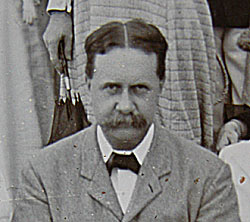
Richard Carnac Temple
Knowledge base stats:
Talk channels stats:
Members stats:
Richard Carnac Temple
Sir Richard Carnac Temple, 2nd Baronet, CB, CIE, GCStJ, FBA, FSA (15 October 1850 – 3 March 1931) was an Indian-born British administrator and the Chief Commissioner of the Andaman and Nicobar Islands and an anthropological writer.
Richard Carnac Temple was born in Allahabad, India, on 15 October 1850. He was the eldest son of Sir Richard Temple (1826–1902), a baronet, and his first wife, Charlotte Frances (née Martindale, d. 1855). His father was from The Nash in Kempsey, Worcestershire and was at that time working as a civil servant in India. His father eventually served as Governor of Bombay Presidency (1877–80), a position that had also been held by Richard Carnac Temple's great-grandfather, Sir James Rivett Carnac between 1838 and 1841.
After education at Harrow School and, from 1868, at Trinity Hall, Cambridge, Temple was commissioned in the Royal Scots Fusiliers in 1871. He was transferred to the British Indian Army in 1877, being mentioned in despatches while serving with the 38th Dogras in the Second Anglo-Afghan War of 1878–79. By this time, he had risen from his original rank of ensign to that of lieutenant in the Bengal Staff Corps.
Temple was then transferred to the 1st Gurkha Regiment and appointed a cantonment magistrate in 1879 in Punjab Province. It was now that he began to take what became his abiding interest in the folklore, history and ethnology of India. Promoted to captain in 1881, he served in the Third Burmese War from 1885 and as a consequence, in 1887, was given charge of Mandalay following the removal of king Thibaw.
Temple became a major in 1891 and was appointed President of the Rangoon municipality and also its Port-Commissioner. While based there he established various volunteer forces, including the Rangoon Naval Volunteers. Subsequently, from 1895 until his retirement in 1904, he was Chief Commissioner of the Andaman and Nicobar Islands. He was also Superintendent of the penal settlement at Port Blair. His final promotion was in 1897, when he attained the rank of lieutenant-colonel.
Temple had succeeded to the baronetcy created for his father on 15 March 1902 upon the death of his father. It was after this and during his retirement that he dedicated himself to writing. He lived at The Nash from 1904 and continued writing after 1921, when ill-health and domestic circumstances forced him to move away from Britain to spend much of his time living in hotels around Territet in Vaud, Switzerland. The lavish lifestyle of his son and the high taxation introduced during the First World War caused him such financial difficulties that he sold The Nash in 1926.
Temple had been honoured as a Companion of the Order of the Indian Empire in 1894, recognising his work in India, and in 1913 he was President of the anthropological section of the British Association. In 1916, he was appointed a Companion of the Order of the Bath in recognition of his involvement with the Joint Committee of the St. John Ambulance Association and British Red Cross that operated during World War I. Elected a Fellow of the British Academy in 1925, he was also appointed a Bailiff Grand Cross of the Order of St. John of Jerusalem in 1927 and a Fellow of the Society of Antiquaries of London. He served as a Justice of the Peace and as a Deputy-Lieutenant of Worcestershire.
He was chairman of the Standing Council of the Baronetage and was appointed a member of the Home Departmental Committee to enquire into the Status of Baronets, was Deputy Chairman of the Military Home Hospital Reserve,[citation needed] Chairman of the St. John Ambulance Association, and Chairman of the Worcester County Association under the new Territorial Forces Act.
Hub AI
Richard Carnac Temple AI simulator
(@Richard Carnac Temple_simulator)
Richard Carnac Temple
Sir Richard Carnac Temple, 2nd Baronet, CB, CIE, GCStJ, FBA, FSA (15 October 1850 – 3 March 1931) was an Indian-born British administrator and the Chief Commissioner of the Andaman and Nicobar Islands and an anthropological writer.
Richard Carnac Temple was born in Allahabad, India, on 15 October 1850. He was the eldest son of Sir Richard Temple (1826–1902), a baronet, and his first wife, Charlotte Frances (née Martindale, d. 1855). His father was from The Nash in Kempsey, Worcestershire and was at that time working as a civil servant in India. His father eventually served as Governor of Bombay Presidency (1877–80), a position that had also been held by Richard Carnac Temple's great-grandfather, Sir James Rivett Carnac between 1838 and 1841.
After education at Harrow School and, from 1868, at Trinity Hall, Cambridge, Temple was commissioned in the Royal Scots Fusiliers in 1871. He was transferred to the British Indian Army in 1877, being mentioned in despatches while serving with the 38th Dogras in the Second Anglo-Afghan War of 1878–79. By this time, he had risen from his original rank of ensign to that of lieutenant in the Bengal Staff Corps.
Temple was then transferred to the 1st Gurkha Regiment and appointed a cantonment magistrate in 1879 in Punjab Province. It was now that he began to take what became his abiding interest in the folklore, history and ethnology of India. Promoted to captain in 1881, he served in the Third Burmese War from 1885 and as a consequence, in 1887, was given charge of Mandalay following the removal of king Thibaw.
Temple became a major in 1891 and was appointed President of the Rangoon municipality and also its Port-Commissioner. While based there he established various volunteer forces, including the Rangoon Naval Volunteers. Subsequently, from 1895 until his retirement in 1904, he was Chief Commissioner of the Andaman and Nicobar Islands. He was also Superintendent of the penal settlement at Port Blair. His final promotion was in 1897, when he attained the rank of lieutenant-colonel.
Temple had succeeded to the baronetcy created for his father on 15 March 1902 upon the death of his father. It was after this and during his retirement that he dedicated himself to writing. He lived at The Nash from 1904 and continued writing after 1921, when ill-health and domestic circumstances forced him to move away from Britain to spend much of his time living in hotels around Territet in Vaud, Switzerland. The lavish lifestyle of his son and the high taxation introduced during the First World War caused him such financial difficulties that he sold The Nash in 1926.
Temple had been honoured as a Companion of the Order of the Indian Empire in 1894, recognising his work in India, and in 1913 he was President of the anthropological section of the British Association. In 1916, he was appointed a Companion of the Order of the Bath in recognition of his involvement with the Joint Committee of the St. John Ambulance Association and British Red Cross that operated during World War I. Elected a Fellow of the British Academy in 1925, he was also appointed a Bailiff Grand Cross of the Order of St. John of Jerusalem in 1927 and a Fellow of the Society of Antiquaries of London. He served as a Justice of the Peace and as a Deputy-Lieutenant of Worcestershire.
He was chairman of the Standing Council of the Baronetage and was appointed a member of the Home Departmental Committee to enquire into the Status of Baronets, was Deputy Chairman of the Military Home Hospital Reserve,[citation needed] Chairman of the St. John Ambulance Association, and Chairman of the Worcester County Association under the new Territorial Forces Act.
Recent media