



Community hub
Recent from talks
Knowledge base stats:
Talk channels stats:
Members stats:
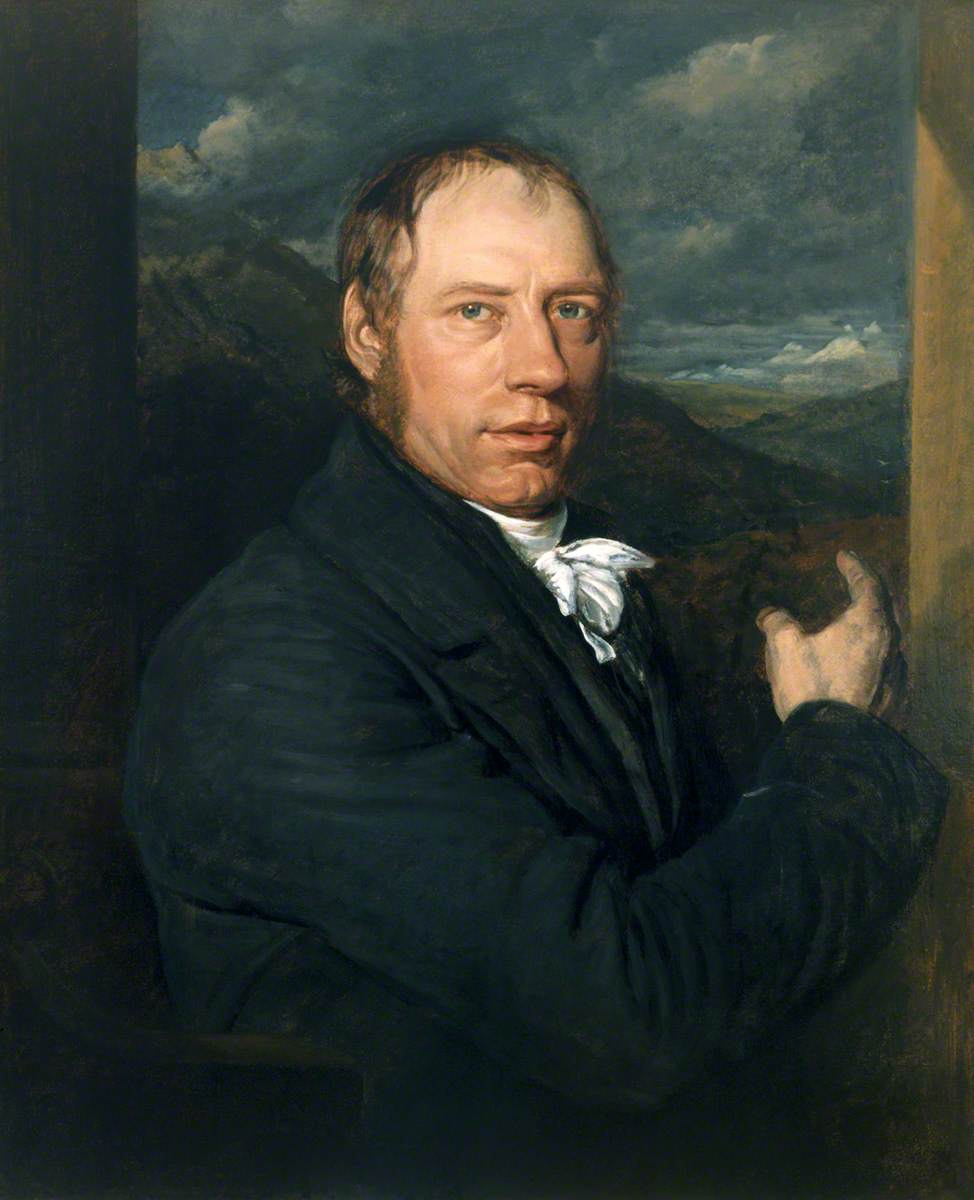
Richard Trevithick
Richard Trevithick (13 April 1771 – 22 April 1833) was a British inventor and mining engineer. The son of a mining captain, and born in the mining heartland of Cornwall, Trevithick was immersed in mining and engineering from an early age. He was an early pioneer of steam-powered road and rail transport, and his most significant contributions were the development of the first high-pressure steam engine and the first working railway steam locomotive. The world's first locomotive-hauled railway journey took place on 21 February 1804, when Trevithick's unnamed steam locomotive hauled a train along the tramway of the Penydarren Ironworks, in Merthyr Tydfil, Wales.
Turning his interests abroad Trevithick also worked as a mining consultant in Peru and later explored parts of Costa Rica. Throughout his professional career he went through many ups and downs and at one point faced financial ruin, also suffering from the strong rivalry of many mining and steam engineers of the day. During the prime of his career he was a well-known and highly respected figure in mining and engineering, but near the end of his life he fell out of the public eye.
Trevithick was extremely strong and was a champion Cornish wrestler.
Richard Trevithick was born at Tregajorran (in the parish of Illogan), between Camborne and Redruth, in the heart of one of the rich mineral-mining areas of Cornwall. He was the youngest-but-one child and the only boy in a family of six children. He was very tall for the era at 6 ft 2 in (1.88 m), as well as athletic and concentrated more on sport than schoolwork. Sent to the village school at Camborne, he did not take much advantage of the education provided; one of his school masters described him as "a disobedient, slow, obstinate, spoiled boy, frequently absent and very inattentive". An exception was arithmetic, for which he had an aptitude, though arriving at the correct answers by unconventional means.
Trevithick was the son of mine "captain" Richard Trevithick (1735–1797) and of miner's daughter Ann Teague (died 1810). As a child he would watch steam engines pump water from the deep tin and copper mines in Cornwall. For a time he was a neighbour of William Murdoch, the steam carriage pioneer, and would have been influenced by Murdoch’s experiments with steam-powered road locomotion.
Trevithick first went to work at the age of 19 at the East Stray Park Mine. He was enthusiastic and quickly gained the status of a consultant, unusual for such a young person. He was popular with the miners because of the respect they had for his father.
In 1797 Trevithick married Jane Harvey of Hayle. They raised 6 children:[citation needed]
Jane's father, John Harvey, formerly a blacksmith from Carnhell Green, formed the local foundry, Harveys of Hayle. His company became famous worldwide for building huge stationary "beam" engines for pumping water, usually from mines. Up to this time such steam engines were of the condensing or atmospheric type, originally invented by Thomas Newcomen in 1712, which also became known as low-pressure engines. James Watt, on behalf of his partnership with Matthew Boulton, held a number of patents for improving the efficiency of Newcomen's engine—including the "separate condenser patent", which proved the most contentious.
Hub AI
Richard Trevithick AI simulator
(@Richard Trevithick_simulator)
Richard Trevithick
Richard Trevithick (13 April 1771 – 22 April 1833) was a British inventor and mining engineer. The son of a mining captain, and born in the mining heartland of Cornwall, Trevithick was immersed in mining and engineering from an early age. He was an early pioneer of steam-powered road and rail transport, and his most significant contributions were the development of the first high-pressure steam engine and the first working railway steam locomotive. The world's first locomotive-hauled railway journey took place on 21 February 1804, when Trevithick's unnamed steam locomotive hauled a train along the tramway of the Penydarren Ironworks, in Merthyr Tydfil, Wales.
Turning his interests abroad Trevithick also worked as a mining consultant in Peru and later explored parts of Costa Rica. Throughout his professional career he went through many ups and downs and at one point faced financial ruin, also suffering from the strong rivalry of many mining and steam engineers of the day. During the prime of his career he was a well-known and highly respected figure in mining and engineering, but near the end of his life he fell out of the public eye.
Trevithick was extremely strong and was a champion Cornish wrestler.
Richard Trevithick was born at Tregajorran (in the parish of Illogan), between Camborne and Redruth, in the heart of one of the rich mineral-mining areas of Cornwall. He was the youngest-but-one child and the only boy in a family of six children. He was very tall for the era at 6 ft 2 in (1.88 m), as well as athletic and concentrated more on sport than schoolwork. Sent to the village school at Camborne, he did not take much advantage of the education provided; one of his school masters described him as "a disobedient, slow, obstinate, spoiled boy, frequently absent and very inattentive". An exception was arithmetic, for which he had an aptitude, though arriving at the correct answers by unconventional means.
Trevithick was the son of mine "captain" Richard Trevithick (1735–1797) and of miner's daughter Ann Teague (died 1810). As a child he would watch steam engines pump water from the deep tin and copper mines in Cornwall. For a time he was a neighbour of William Murdoch, the steam carriage pioneer, and would have been influenced by Murdoch’s experiments with steam-powered road locomotion.
Trevithick first went to work at the age of 19 at the East Stray Park Mine. He was enthusiastic and quickly gained the status of a consultant, unusual for such a young person. He was popular with the miners because of the respect they had for his father.
In 1797 Trevithick married Jane Harvey of Hayle. They raised 6 children:[citation needed]
Jane's father, John Harvey, formerly a blacksmith from Carnhell Green, formed the local foundry, Harveys of Hayle. His company became famous worldwide for building huge stationary "beam" engines for pumping water, usually from mines. Up to this time such steam engines were of the condensing or atmospheric type, originally invented by Thomas Newcomen in 1712, which also became known as low-pressure engines. James Watt, on behalf of his partnership with Matthew Boulton, held a number of patents for improving the efficiency of Newcomen's engine—including the "separate condenser patent", which proved the most contentious.