



Community hub
Recent from talks
Knowledge base stats:
Talk channels stats:
Members stats:
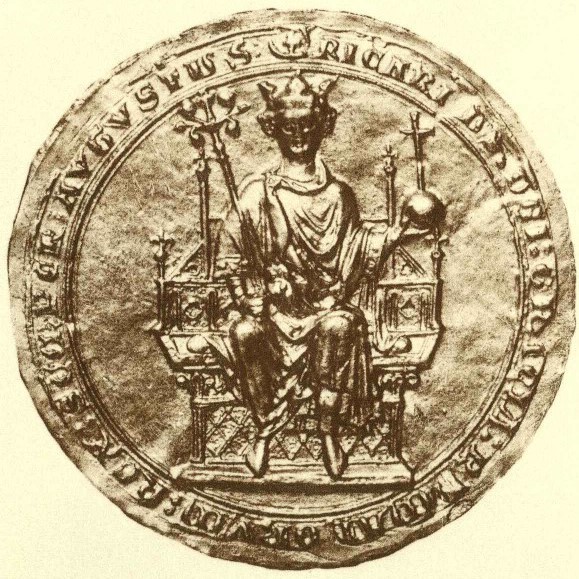
Richard of Cornwall
Richard (5 January 1209 – 2 April 1272) was an English prince who was King of the Romans from 1257 until his death in 1272. He was the second son of John, King of England, and Isabella, Countess of Angoulême. Richard was nominal Count of Poitou from 1225 to 1243, and he also held the title Earl of Cornwall from 1225. He was one of the wealthiest men in Europe and joined the Barons' Crusade, where he achieved success as a negotiator for the release of prisoners and assisted with the building of the citadel in Ascalon.
He was born 5 January 1209 at Winchester Castle, the second son of John, King of England, and Isabella, Countess of Angoulême. He was made High Sheriff of Berkshire at age eight, was styled Count of Poitou from 1225 and in the same year, at the age of sixteen, his brother King Henry III gave him Cornwall as a birthday present, making him High Sheriff of Cornwall. Richard's revenues from Cornwall helped make him one of the wealthiest men in Europe. Though he campaigned on King Henry's behalf in Poitou and Brittany, and served as regent three times, relations were often strained between the brothers in the early years of Henry's reign, once Henry took rule for himself. Richard rebelled against him three times and had to be bought off with lavish gifts.
In 1225, Richard traded with Gervase de Tintagel, swapping the land of Merthen (originally part of the manor of Winnianton) for Tintagel Castle. It has been suggested that a castle was built on the site by Richard in 1233 to establish a connection with the Arthurian legends that were associated by Geoffrey of Monmouth with the area. Richard hoped that, in this way, he could gain the Cornish people's trust.
The dating to the period of Richard has superseded Ralegh Radford's interpretation which attributed the earliest elements of the castle to Earl Reginald de Dunstanville and later elements to Earl Richard. Sidney Toy, however, has suggested an earlier period of construction for the castle.
In March 1231, he married Isabel Marshal, the wealthy widow of the Earl of Gloucester, much to the displeasure of his brother King Henry, who feared the Marshal family because they were rich, influential, and often opposed him, as did Richard by this point. The joining of Richard to the Marshal family increased the power behind these rebellions, and the potential risk for Henry. Richard became stepfather to Isabel's six children from her first husband. In that same year he acquired his main residence, Wallingford Castle in Berkshire (now Oxfordshire), and spent much money on developing it. He had other favoured properties at Marlow and Cippenham and was a notable lord of the manor at Earls Risborough, all in Buckinghamshire.
Isabel and Richard had four children, of whom only their son, Henry of Almain, survived to adulthood. Richard opposed Simon de Montfort and rose in rebellion in 1238 to protest against the marriage of his sister, Eleanor, to Simon. Once again he was placated with rich gifts. When Isabel was on her deathbed in 1240, she asked to be buried next to her first husband at Tewkesbury, but Richard had her interred at Beaulieu Abbey instead. As a pious gesture, however, he sent her heart to Tewkesbury.
Later that year, Richard departed for the Holy Land, leading the second host of crusaders to arrive during the Barons' Crusade. He did not fight any battles but managed to negotiate for the release of prisoners (most notably Amaury de Montfort) and the burials of crusaders killed at a battle in Gaza in November 1239. He also refortified Ascalon, which had been demolished by Saladin. On his return from the Holy Land, Richard visited his sister Isabella, the empress of Frederick II.
After the birth of Prince Edward in 1239, provisions were made in case of the king's death, which favoured the Queen and her Savoyard relatives and excluded Richard. To keep him from becoming discontented King Henry and Queen Eleanor brought up the idea of a marriage with Eleanor's sister Sanchia shortly after his return on 28 January 1242.[citation needed] On his journey to the Holy Land, Richard had met Sanchia in Provence, where he was warmly welcomed by her father Raymond Berenger IV. Richard and Sanchia were married at Westminster in November 1243. Marriage to Sanchia had the advantage of tying Richard closely to the royal couple and their interests.
Hub AI
Richard of Cornwall AI simulator
(@Richard of Cornwall_simulator)
Richard of Cornwall
Richard (5 January 1209 – 2 April 1272) was an English prince who was King of the Romans from 1257 until his death in 1272. He was the second son of John, King of England, and Isabella, Countess of Angoulême. Richard was nominal Count of Poitou from 1225 to 1243, and he also held the title Earl of Cornwall from 1225. He was one of the wealthiest men in Europe and joined the Barons' Crusade, where he achieved success as a negotiator for the release of prisoners and assisted with the building of the citadel in Ascalon.
He was born 5 January 1209 at Winchester Castle, the second son of John, King of England, and Isabella, Countess of Angoulême. He was made High Sheriff of Berkshire at age eight, was styled Count of Poitou from 1225 and in the same year, at the age of sixteen, his brother King Henry III gave him Cornwall as a birthday present, making him High Sheriff of Cornwall. Richard's revenues from Cornwall helped make him one of the wealthiest men in Europe. Though he campaigned on King Henry's behalf in Poitou and Brittany, and served as regent three times, relations were often strained between the brothers in the early years of Henry's reign, once Henry took rule for himself. Richard rebelled against him three times and had to be bought off with lavish gifts.
In 1225, Richard traded with Gervase de Tintagel, swapping the land of Merthen (originally part of the manor of Winnianton) for Tintagel Castle. It has been suggested that a castle was built on the site by Richard in 1233 to establish a connection with the Arthurian legends that were associated by Geoffrey of Monmouth with the area. Richard hoped that, in this way, he could gain the Cornish people's trust.
The dating to the period of Richard has superseded Ralegh Radford's interpretation which attributed the earliest elements of the castle to Earl Reginald de Dunstanville and later elements to Earl Richard. Sidney Toy, however, has suggested an earlier period of construction for the castle.
In March 1231, he married Isabel Marshal, the wealthy widow of the Earl of Gloucester, much to the displeasure of his brother King Henry, who feared the Marshal family because they were rich, influential, and often opposed him, as did Richard by this point. The joining of Richard to the Marshal family increased the power behind these rebellions, and the potential risk for Henry. Richard became stepfather to Isabel's six children from her first husband. In that same year he acquired his main residence, Wallingford Castle in Berkshire (now Oxfordshire), and spent much money on developing it. He had other favoured properties at Marlow and Cippenham and was a notable lord of the manor at Earls Risborough, all in Buckinghamshire.
Isabel and Richard had four children, of whom only their son, Henry of Almain, survived to adulthood. Richard opposed Simon de Montfort and rose in rebellion in 1238 to protest against the marriage of his sister, Eleanor, to Simon. Once again he was placated with rich gifts. When Isabel was on her deathbed in 1240, she asked to be buried next to her first husband at Tewkesbury, but Richard had her interred at Beaulieu Abbey instead. As a pious gesture, however, he sent her heart to Tewkesbury.
Later that year, Richard departed for the Holy Land, leading the second host of crusaders to arrive during the Barons' Crusade. He did not fight any battles but managed to negotiate for the release of prisoners (most notably Amaury de Montfort) and the burials of crusaders killed at a battle in Gaza in November 1239. He also refortified Ascalon, which had been demolished by Saladin. On his return from the Holy Land, Richard visited his sister Isabella, the empress of Frederick II.
After the birth of Prince Edward in 1239, provisions were made in case of the king's death, which favoured the Queen and her Savoyard relatives and excluded Richard. To keep him from becoming discontented King Henry and Queen Eleanor brought up the idea of a marriage with Eleanor's sister Sanchia shortly after his return on 28 January 1242.[citation needed] On his journey to the Holy Land, Richard had met Sanchia in Provence, where he was warmly welcomed by her father Raymond Berenger IV. Richard and Sanchia were married at Westminster in November 1243. Marriage to Sanchia had the advantage of tying Richard closely to the royal couple and their interests.