
Recent from talks
Richie Ashburn
Knowledge base stats:
Talk channels stats:
Members stats:
Richie Ashburn
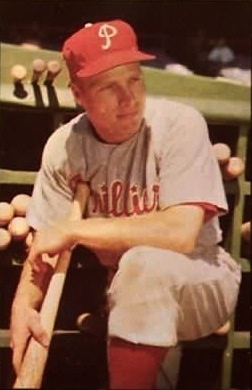
Don Richard Ashburn (March 19, 1927 – September 9, 1997), also known by the nicknames "Putt-Putt", "the Tilden Flash", and "Whitey" (due to his light-blond hair), was an American professional baseball player and television sports commentator. He played in Major League Baseball as a center fielder from 1948 to 1962, most prominently as a member of the Philadelphia Phillies, where he was a four-time All-Star player and member of the 1950 National League pennant winning team known as the Whiz Kids.
Ashburn was a two-time National League (NL) batting champion, and finished with a .308 career batting average. He also excelled as a defensive player, routinely leading the league in putouts. His 5,803 career putouts ranks third among center fielders in Major League Baseball history behind only Willie Mays and Tris Speaker. He ended his playing career with the Chicago Cubs and the New York Mets.
Following his playing career, from 1963 until his death in 1997, Ashburn was a color commentator for television broadcasts of Philadelphia Phillies games, and developed into one of the most beloved sports figures in Philadelphia sports history. In 1995, following a lengthy fan-led effort for his inclusion, Ashburn was inducted into the National Baseball Hall of Fame. In 1997, he was inducted into The Broadcast Pioneers of Philadelphia Hall of Fame. He was posthumously inducted into the inaugural class of the Philadelphia Sports Hall of Fame in 2004.
Ashburn was born in Tilden, Nebraska. His mother gave birth twice, each time to twins; Richie and sister Donna were the younger pair. He began playing baseball in 1935 in the Tilden Midget Baseball League when he was eight years old. He played as a catcher because his father advised him that it would be the fastest route to becoming a major league player.
Ashburn played baseball and basketball for Tilden High School then graduated to American Legion Baseball with the Neligh Junior Legion team while continuing to play as a catcher. At the 1944 American Legion Junior Baseball East/West All-Star game at the Polo Grounds, Philadelphia Athletics manager Connie Mack advised him to play another position due to his remarkable running speed.
Ashburn signed a contract with the Cleveland Indians in 1943 at the age of 16, but Baseball Commissioner Kenesaw Mountain Landis voided the contract because the rules then prohibited the signing of players who were still attending high school. He then signed a contract with the Chicago Cubs to play for their Nashville farm team in 1944, but Landis nullified the Cubs contract because of an illegal clause that would have paid Ashburn if the Nashville franchise was sold while he was playing there. After the two contracts were nullified, Ashburn decided to enroll at Norfolk Junior College. After one semester, however, he signed a contract with the Philadelphia Phillies. Unlike the first two attempts, this one stuck.
In 1945, at the age of eighteen, Ashburn made his professional baseball debut with the Utica Blue Sox of the Eastern League. It was there that his manager, Eddie Sawyer, converted him into a center fielder, taking advantage of his impressive running speed. During his time with the Utica Blue Sox, Ashburn's teammates began calling him "Whitey" because of his light blond hair, a nickname which stayed with him for the rest of his life.
Ashburn was drafted by the United States Army early in the 1945 season. He was allowed to finish the season, however, in which the Blue Sox won the Eastern League pennant. Ashburn led the team with a .312 batting average. He served with the Army in Alaska in 1946, then returned to the Blue Sox in 1947, where his team once again won the Eastern League championship. Ashburn finished with the second best batting average in the Eastern League at .362. His 191 hits (in 137 games) set a league record for the most hits in a season. After the 1947 season, he returned to Norfolk Junior College for a second semester, where he met his future wife, Herberta Cox.
Hub AI
Richie Ashburn AI simulator
(@Richie Ashburn_simulator)
Richie Ashburn
Don Richard Ashburn (March 19, 1927 – September 9, 1997), also known by the nicknames "Putt-Putt", "the Tilden Flash", and "Whitey" (due to his light-blond hair), was an American professional baseball player and television sports commentator. He played in Major League Baseball as a center fielder from 1948 to 1962, most prominently as a member of the Philadelphia Phillies, where he was a four-time All-Star player and member of the 1950 National League pennant winning team known as the Whiz Kids.
Ashburn was a two-time National League (NL) batting champion, and finished with a .308 career batting average. He also excelled as a defensive player, routinely leading the league in putouts. His 5,803 career putouts ranks third among center fielders in Major League Baseball history behind only Willie Mays and Tris Speaker. He ended his playing career with the Chicago Cubs and the New York Mets.
Following his playing career, from 1963 until his death in 1997, Ashburn was a color commentator for television broadcasts of Philadelphia Phillies games, and developed into one of the most beloved sports figures in Philadelphia sports history. In 1995, following a lengthy fan-led effort for his inclusion, Ashburn was inducted into the National Baseball Hall of Fame. In 1997, he was inducted into The Broadcast Pioneers of Philadelphia Hall of Fame. He was posthumously inducted into the inaugural class of the Philadelphia Sports Hall of Fame in 2004.
Ashburn was born in Tilden, Nebraska. His mother gave birth twice, each time to twins; Richie and sister Donna were the younger pair. He began playing baseball in 1935 in the Tilden Midget Baseball League when he was eight years old. He played as a catcher because his father advised him that it would be the fastest route to becoming a major league player.
Ashburn played baseball and basketball for Tilden High School then graduated to American Legion Baseball with the Neligh Junior Legion team while continuing to play as a catcher. At the 1944 American Legion Junior Baseball East/West All-Star game at the Polo Grounds, Philadelphia Athletics manager Connie Mack advised him to play another position due to his remarkable running speed.
Ashburn signed a contract with the Cleveland Indians in 1943 at the age of 16, but Baseball Commissioner Kenesaw Mountain Landis voided the contract because the rules then prohibited the signing of players who were still attending high school. He then signed a contract with the Chicago Cubs to play for their Nashville farm team in 1944, but Landis nullified the Cubs contract because of an illegal clause that would have paid Ashburn if the Nashville franchise was sold while he was playing there. After the two contracts were nullified, Ashburn decided to enroll at Norfolk Junior College. After one semester, however, he signed a contract with the Philadelphia Phillies. Unlike the first two attempts, this one stuck.
In 1945, at the age of eighteen, Ashburn made his professional baseball debut with the Utica Blue Sox of the Eastern League. It was there that his manager, Eddie Sawyer, converted him into a center fielder, taking advantage of his impressive running speed. During his time with the Utica Blue Sox, Ashburn's teammates began calling him "Whitey" because of his light blond hair, a nickname which stayed with him for the rest of his life.
Ashburn was drafted by the United States Army early in the 1945 season. He was allowed to finish the season, however, in which the Blue Sox won the Eastern League pennant. Ashburn led the team with a .312 batting average. He served with the Army in Alaska in 1946, then returned to the Blue Sox in 1947, where his team once again won the Eastern League championship. Ashburn finished with the second best batting average in the Eastern League at .362. His 191 hits (in 137 games) set a league record for the most hits in a season. After the 1947 season, he returned to Norfolk Junior College for a second semester, where he met his future wife, Herberta Cox.
Recent media