


Community hub
Recent from talks
Contribute something
Nothing was collected or created yet.
Robert Ellsworth
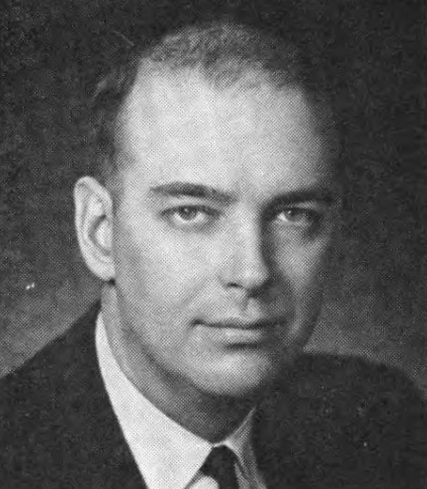
View on WikipediaRobert Fred Ellsworth (June 11, 1926 – May 9, 2011)[1] was an American legislator and diplomat. He served as the United States Permanent Representative to NATO (an ambassadorial-level appointment) between 1969 and 1971.[2] He had previously served three terms as a Republican Member of Congress from Kansas, from 1961 to 1967, and as an Assistant to the President during the presidency of Richard Nixon; under President Gerald Ford, he was Deputy Secretary of Defense.[1] Ellsworth also served as assistant to the chairman of the Federal Maritime Commission.[3]
Key Information


Life and career
[edit]Ellsworth was born in Lawrence, Kansas, and was educated in the public schools of that city. He served in the United States Navy during World War II and the Korean War. In 1945, he was graduated with a baccalaureate in engineering from the University of Kansas, where he had been a member of the Alpha Nu chapter of the Beta Theta Pi collegiate fraternity. He then studied law at the University of Michigan Law School, from which he was graduated in 1949; he practiced law in Lawrence, Kansas, and in Springfield, Massachusetts.
The retired ambassador was admitted to the Order of Saint John as a knight of honor in 1995.[4]
While serving as a congressman for Kansas's 1st congressional district, Ellsworth voted present for the 24th Amendment to the U.S. Constitution.[5] However, during his tenure as representative for Kansas's 3rd congressional district, Ellsworth voted in favor of the Civil Rights Acts of 1964[6] and the Voting Rights Act of 1965.[7]
On November 9, 2010, Ellsworth provided commentary to KFMB regarding an unexplained vapor trail in the airspace off the coast of Los Angeles which, at the time, was widely speculated to be a missile launch.[8] He cautioned the news crew to wait for definitive answers from the military, then went on to theorize: "It could be a test firing of an intercontinental ballistic missile from a submarine, an underwater submarine, to demonstrate, mainly to Asia, that we could do that."[8]
Ellsworth died in Encinitas, California: near the small city of Solana Beach, where he had founded and directed a research firm, Hamilton BioVentures.[9]
References
[edit]- ^ a b "Former Kansas Congressman Robert Fred Ellsworth dies at age 84". Lawrence Journal-World. May 11, 2011. Retrieved October 13, 2021.
- ^ "The Association for Diplomatic Studies and Training Foreign Affairs Oral History Project AMBASSADOR ROBERT F. ELLSWORTH" (PDF). Association for Diplomatic Studies and Training. 4 June 1991. Archived (PDF) from the original on 17 July 2024. Retrieved 17 July 2024.
- ^ "Kansans in the United States Congress". Kansapedia. Kansas Historical Society. Retrieved October 13, 2021.
- ^ Verzeichnis der Mitglieder der Balley Brandenburg des Ritterlichen Ordens St. Johannis vom Spital zu Jerusalem; Berlin: 2008; p. 94.
- ^ "S.J. RES. 29. CONSTITUTIONAL AMENDMENT TO BAN THE USE OF POLL TAX AS A REQUIREMENT FOR VOTING IN FEDERAL ELECTIONS".
- ^ "H.R. 7152. CIVIL RIGHTS ACT OF 1964. ADOPTION OF A RESOLUTION (H. RES. 789) PROVIDING FOR HOUSE APPROVAL OF THE BILL AS AMENDED BY THE SENATE".
- ^ "TO PASS H.R. 6400, THE 1965 VOTING RIGHTS ACT".
- ^ a b "Mysterious missile lights up the sky over the Pacific - San Diego, California News Station - KFMB Channel 8 - cbs8.com". Archived from the original on 2010-11-10.
- ^ "Robert Ellsworth, Lawmaker and Nixon Aide, Is Dead at 84". New York Times (New York ed.). May 11, 2011. p. A26. Retrieved October 13, 2021..
External links
[edit]- United States Congress. "Robert Ellsworth (id: E000148)". Biographical Directory of the United States Congress. Retrieved on 2008-03-31
- Appearances on C-SPAN


| 1st district |   | |
|---|---|---|
| 2nd district | ||
| 3rd district | ||
| 4th district | ||
| 5th district | ||
| 6th district | ||
| 7th district | ||
| 8th district | ||
| At-large | ||
| Territory | ||
| International | |
|---|---|
| National | |
| People | |
| Other | |
