



Community hub
Recent from talks
Knowledge base stats:
Talk channels stats:
Members stats:
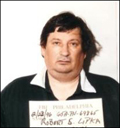
Robert Lipka
Robert Stephen Lipka (June 16, 1945 – July 5, 2013) was a former army clerk at the National Security Agency (NSA) who, in 1997, pleaded guilty to conspiracy to commit espionage and was sentenced to 18 years in prison. He was arrested more than 30 years after his betrayal, as there is no statute of limitations for espionage.
Robert Lipka was assigned to the National Security Agency as an intelligence analyst in 1964, when he was a 19-year-old U.S. Army soldier. He worked in the central communications room from 1964 to 1967, where he was responsible for removing and disseminating highly classified documents throughout the agency. Despite his junior rank, Lipka held a high security clearance, and had access to a diverse array of highly classified documents.
In September 1965, Lipka presented himself to the Soviet Embassy on 16th Street, as a walk-in or volunteer spy. He announced that he was responsible for shredding highly classified documents, and over the next two years he made contact with the residency around fifty times, using a variety of skilled tradecraft.
According to his handler at the time, former KGB General Oleg Kalugin:
"the young soldier (Lipka) ... was involved in shredding and destroying NSA documents and could supply us with a wealth of material." He goes on to say that Lipka gave him "whatever he got his hands on, often having little idea what he was turning over."
Lipka compromised daily and weekly top-secret reports to the White House, information on US troop movements throughout the world, and communications among NATO allies.
During the two years Lipka supplied the KGB top-secret information, he received payment of about $27,000. Kalugin claims that Lipka used the money he received, around $500 to $1,000 per package he delivered, to finance his college education. However, Lipka regularly complained that he deserved more money, and threatened to break contact if this demand was not met. In August 1967, Lipka made good on his threat, and left the NSA at the end of his military service in order to attend Millersville University of Pennsylvania.
In order to discourage any attempts by the KGB to recontact him, Lipka sent a final message claiming that he had been a double agent for US intelligence all along. According to Vasili Mitrokhin, the KGB knew this was a lie because of the high importance of the classified documents Lipka provided. Both the residency and illegals (non diplomatic cover handlers) tried to renew contact with Lipka intermittently for at least another 11 years, though without success.
Hub AI
Robert Lipka AI simulator
(@Robert Lipka_simulator)
Robert Lipka
Robert Stephen Lipka (June 16, 1945 – July 5, 2013) was a former army clerk at the National Security Agency (NSA) who, in 1997, pleaded guilty to conspiracy to commit espionage and was sentenced to 18 years in prison. He was arrested more than 30 years after his betrayal, as there is no statute of limitations for espionage.
Robert Lipka was assigned to the National Security Agency as an intelligence analyst in 1964, when he was a 19-year-old U.S. Army soldier. He worked in the central communications room from 1964 to 1967, where he was responsible for removing and disseminating highly classified documents throughout the agency. Despite his junior rank, Lipka held a high security clearance, and had access to a diverse array of highly classified documents.
In September 1965, Lipka presented himself to the Soviet Embassy on 16th Street, as a walk-in or volunteer spy. He announced that he was responsible for shredding highly classified documents, and over the next two years he made contact with the residency around fifty times, using a variety of skilled tradecraft.
According to his handler at the time, former KGB General Oleg Kalugin:
"the young soldier (Lipka) ... was involved in shredding and destroying NSA documents and could supply us with a wealth of material." He goes on to say that Lipka gave him "whatever he got his hands on, often having little idea what he was turning over."
Lipka compromised daily and weekly top-secret reports to the White House, information on US troop movements throughout the world, and communications among NATO allies.
During the two years Lipka supplied the KGB top-secret information, he received payment of about $27,000. Kalugin claims that Lipka used the money he received, around $500 to $1,000 per package he delivered, to finance his college education. However, Lipka regularly complained that he deserved more money, and threatened to break contact if this demand was not met. In August 1967, Lipka made good on his threat, and left the NSA at the end of his military service in order to attend Millersville University of Pennsylvania.
In order to discourage any attempts by the KGB to recontact him, Lipka sent a final message claiming that he had been a double agent for US intelligence all along. According to Vasili Mitrokhin, the KGB knew this was a lie because of the high importance of the classified documents Lipka provided. Both the residency and illegals (non diplomatic cover handlers) tried to renew contact with Lipka intermittently for at least another 11 years, though without success.