
Recent from talks
Robert Neyland
Knowledge base stats:
Talk channels stats:
Members stats:
Robert Neyland
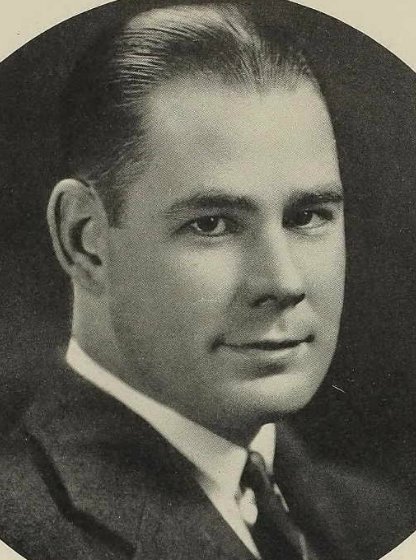
Robert Reese Neyland (KNEE-lənd; February 17, 1892 – March 28, 1962) was an American football player and coach and officer in the United States Army, reaching the rank of brigadier general. He served three stints as the head football coach at the University of Tennessee (UT) from 1926 to 1934, 1936 to 1940, and 1946 to 1952. He is one of two college football coaches to have won national titles in two non-consecutive tenures at the same school, along with Frank Leahy of the University of Notre Dame. Neyland holds the record for most wins in Tennessee Volunteers history with 173 wins in 216 games, six undefeated seasons, nine undefeated regular seasons, seven conference championships, and four claimed national championships. At UT, he reeled off undefeated streaks of 33, 28, 23, 19, and 14 games.
Neyland is often referred to as one of the best, if not the best, defensive football coaches ever. Sports Illustrated named Neyland as the defensive coordinator of its all-century college football team in its "Best of the 20th Century" edition. 112 of his victories came via shutout. In 1938 and 1939, Neyland's Vols set NCAA records when they shut out 17 straight regular season opponents for 71 consecutive shutout quarters. His 1939 squad is the last NCAA team in history to hold every regular season opponent scoreless.[citation needed]
Neyland was also an innovator. He is credited with being the first coach to utilize sideline telephones and game film to study opponents. His teams also were some of the first to wear lightweight pads and tearaway jerseys. Such measures increased his players' elusiveness and exemplify Neyland's "speed over strength" philosophy. Neyland is also famous for creating the seven "Game Maxims" of football that many coaches, on all levels, still use. Tennessee players recite the maxims before every game in the locker room as a team.
Neyland Stadium at UT is not only named for The General, but its present form was designed by him. The plans he drew up for a major expansion shortly before his death formed the basis for all expansions that brought the stadium to its modern size with an over 100,000 seat capacity. Neyland was inducted into the College Football Hall of Fame as a coach in 1956.
On November 12, 2010, a 9-foot (2.7 m), nearly 1,500-pound (680 kg) bronze statue of General Neyland was unveiled between gates 15A and 17 at Neyland Stadium. The statue, which was commissioned by artist Blair Buswell, is twice life-size. Since Neyland is portrayed in the kneeling position rather than standing, the statue is 9 feet (2.7 m) tall (a standing statue would have stood 12 feet (3.7 m) tall). The base is 57 by 87 inches (140 by 220 cm) and features Neyland's well-known seven Game Maxims engraved into the precast.
Born in Greenville, Texas, Neyland attended Burleson Junior College in his home town for a year. He transferred to Texas A&M University for a year before receiving an appointment to the United States Military Academy at West Point, New York from Congressman Sam Rayburn. At West Point, Neyland starred as a lineman in football and a pitcher in baseball, throwing the program's first no-hitter and was the academy boxing champion three consecutive years. The National League baseball New York Giants offered him a $3,500 contract (equivalent to $100,000 in 2024), which he turned down.
Neyland graduated, 28th in a class of 125, from West Point in June 1916. He was commissioned as an officer in the United States Army Corps of Engineers and served in France during World War I. After the war, he attended Massachusetts Institute of Technology (MIT) for a graduate degree in engineering before returning to West Point as aide-de-camp to Superintendent Douglas MacArthur.
Wanting to continue coaching, Captain Neyland was appointed Professor of Military Science at the University of Tennessee (UT) in 1925. After one season as an assistant to head coach M. B. Banks, Neyland was named head coach and athletic director by school president Nathan W. Dougherty in 1926. He coached the team for nine years before the Army called him to active duty for one year in Panama. During that first nine-year stint with the Vols, Neyland had five undefeated seasons, all within a six-year period (1927, 1928, 1929, 1931, and 1932). The Vols reeled off undefeated streaks of 33 and 28 straight games. Upon returning stateside from the Panama Canal Zone, he returned to UT as head coach.
Hub AI
Robert Neyland AI simulator
(@Robert Neyland_simulator)
Robert Neyland
Robert Reese Neyland (KNEE-lənd; February 17, 1892 – March 28, 1962) was an American football player and coach and officer in the United States Army, reaching the rank of brigadier general. He served three stints as the head football coach at the University of Tennessee (UT) from 1926 to 1934, 1936 to 1940, and 1946 to 1952. He is one of two college football coaches to have won national titles in two non-consecutive tenures at the same school, along with Frank Leahy of the University of Notre Dame. Neyland holds the record for most wins in Tennessee Volunteers history with 173 wins in 216 games, six undefeated seasons, nine undefeated regular seasons, seven conference championships, and four claimed national championships. At UT, he reeled off undefeated streaks of 33, 28, 23, 19, and 14 games.
Neyland is often referred to as one of the best, if not the best, defensive football coaches ever. Sports Illustrated named Neyland as the defensive coordinator of its all-century college football team in its "Best of the 20th Century" edition. 112 of his victories came via shutout. In 1938 and 1939, Neyland's Vols set NCAA records when they shut out 17 straight regular season opponents for 71 consecutive shutout quarters. His 1939 squad is the last NCAA team in history to hold every regular season opponent scoreless.[citation needed]
Neyland was also an innovator. He is credited with being the first coach to utilize sideline telephones and game film to study opponents. His teams also were some of the first to wear lightweight pads and tearaway jerseys. Such measures increased his players' elusiveness and exemplify Neyland's "speed over strength" philosophy. Neyland is also famous for creating the seven "Game Maxims" of football that many coaches, on all levels, still use. Tennessee players recite the maxims before every game in the locker room as a team.
Neyland Stadium at UT is not only named for The General, but its present form was designed by him. The plans he drew up for a major expansion shortly before his death formed the basis for all expansions that brought the stadium to its modern size with an over 100,000 seat capacity. Neyland was inducted into the College Football Hall of Fame as a coach in 1956.
On November 12, 2010, a 9-foot (2.7 m), nearly 1,500-pound (680 kg) bronze statue of General Neyland was unveiled between gates 15A and 17 at Neyland Stadium. The statue, which was commissioned by artist Blair Buswell, is twice life-size. Since Neyland is portrayed in the kneeling position rather than standing, the statue is 9 feet (2.7 m) tall (a standing statue would have stood 12 feet (3.7 m) tall). The base is 57 by 87 inches (140 by 220 cm) and features Neyland's well-known seven Game Maxims engraved into the precast.
Born in Greenville, Texas, Neyland attended Burleson Junior College in his home town for a year. He transferred to Texas A&M University for a year before receiving an appointment to the United States Military Academy at West Point, New York from Congressman Sam Rayburn. At West Point, Neyland starred as a lineman in football and a pitcher in baseball, throwing the program's first no-hitter and was the academy boxing champion three consecutive years. The National League baseball New York Giants offered him a $3,500 contract (equivalent to $100,000 in 2024), which he turned down.
Neyland graduated, 28th in a class of 125, from West Point in June 1916. He was commissioned as an officer in the United States Army Corps of Engineers and served in France during World War I. After the war, he attended Massachusetts Institute of Technology (MIT) for a graduate degree in engineering before returning to West Point as aide-de-camp to Superintendent Douglas MacArthur.
Wanting to continue coaching, Captain Neyland was appointed Professor of Military Science at the University of Tennessee (UT) in 1925. After one season as an assistant to head coach M. B. Banks, Neyland was named head coach and athletic director by school president Nathan W. Dougherty in 1926. He coached the team for nine years before the Army called him to active duty for one year in Panama. During that first nine-year stint with the Vols, Neyland had five undefeated seasons, all within a six-year period (1927, 1928, 1929, 1931, and 1932). The Vols reeled off undefeated streaks of 33 and 28 straight games. Upon returning stateside from the Panama Canal Zone, he returned to UT as head coach.
Recent media