Recent from talks
Nothing was collected or created yet.
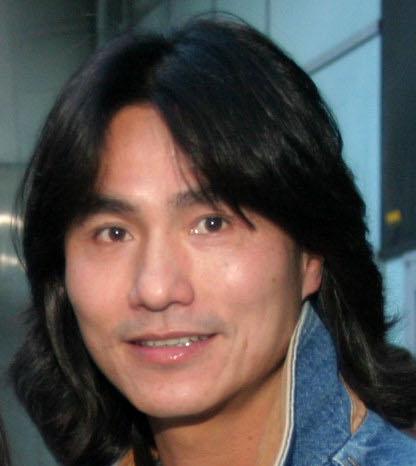
Robin Shou
View on WikipediaShou Wan-por (Chinese: 仇雲波, born July 17, 1960), known professionally as Robin Shou, is a Hong Kong-American actor, martial artist and stuntman. He is known for roles such as Liu Kang in the Mortal Kombat film series (1995 and 1997), Gobei in Beverly Hills Ninja (1997), Gen in Street Fighter: The Legend of Chun-Li (2009), and 14K in the Death Race films (2008-2013). Shou was also a Hong Kong action star in the late 1980s and early 1990s. He had appeared in about 40 movies during his Hong Kong career, before he entered Hollywood in 1994.[1] Prior to his acting career, Shou won several championships as a martial artist.
Key Information
Biography
[edit]Shou's interest in martial arts developed during his years as a University student. He began practising wushu after watching Jet Li's film Shaolin Temple. He soon became a Hong Kong stuntman.[2]
As a martial artist, Shou was an International Forms Champion in 1982 and 1983 and he won several gold and silver medals at prestigious competitions in China. He was also a traditional forms Grand Champion in California.[3]
Shou's first dramatic role was in Forbidden Nights in 1990, with Melissa Gilbert. Though only a TV film, this was his American debut. However, Shou went back to Hong Kong and continued making movies there such as Tiger Cage 2 and Fatal Termination. In 1994, Shou returned to Los Angeles when he landed his first American leading role as Liu Kang in Mortal Kombat (1995), based on the popular video game of the same name. He reprised the role in the 1997 sequel Mortal Kombat Annihilation. That same year, he appeared opposite Chris Farley in the action comedy Beverly Hills Ninja.
Shou also appeared in a minor role in another fighting video game adaptation, DOA: Dead or Alive, based on Tecmo's video game series of the same name, produced by Mortal Kombat director Paul W. S. Anderson and producer Jeremy Bolt. He played 14K in the Death Race series, and also appeared as Gen in 2009's Street Fighter: The Legend of Chun-Li. Shou trained Milla Jovovich for her role in Resident Evil.[4]
He is fluent in English in addition to his native Chinese.[5]
Filmography
[edit]Film
[edit]| Year | Title | Role | Notes |
|---|---|---|---|
| 1987 | The Big Brother | Robin | — |
| 1988 | City War | Killer | — |
| 1989 | Death Cage | Lan-si Han | — |
| 1990 | Tiger Cage 2 | Waise Chow | as Robin Chou |
| Fatal Termination | Wai Loong | — | |
| 1991 | Eastern Heroes | Hawk | — |
| 1992 | Interpol Connection | — | — |
| Magdaleno Orbos: Sa Kuko ng Mga Lawin | — | — | |
| Black Cat II | Robin | — | |
| 1993 | Bloody Mary Killer | — | |
| 1993 | Honor and Glory | Dragon Lee | — |
| 1994 | The Most Wanted | Gang leader | — |
| 1995 | Mortal Kombat | Liu Kang | Shou's Hollywood big screen debut and his second American movie |
| 1997 | Mortal Kombat Annihilation | Liu Kang | — |
| Beverly Hills Ninja | Gobei | — | |
| 2003 | Red Trousers - The Life of the Hong Kong Stuntmen | Evan Narrator Himself |
Director |
| 2006 | 18 Fingers of Death! | Jackie Chong | — |
| DOA: Dead or Alive | Pirate Senior | — | |
| 2008 | Death Race | 14K | — |
| 2009 | Street Fighter: The Legend of Chun-Li | Gen | — |
| 2010 | Death Race 2 | 14K | — |
| 2011 | Mortal Enemies | Sunny | — |
| 2013 | Death Race 3: Inferno | 14K | — |
| 2014 | Black Tiger: Hunter Hunted | Pacific "Pac" Fong / Black Tiger | Short film |
| 2015 | Earthbound | Short film, director | |
| TBD | Dead Mule Suitcase | Jack Lam | Director |
Television
[edit]| Year | Title | Role | Notes |
|---|---|---|---|
| 1990 | Yellowthread Street | Tony Siu | Episode: "The Red Pole" |
| Forbidden Nights | Liang Heng | Television film | |
| 1992 | Soldier Soldier | Journalist Feng | Episode: "Lost and Found" |
| 1998 | The Outer Limits | Major Ronald Neguchi | Episode: "Nightmare" |
| 2009 | Cold Case | Bo-Lin Chen (1983) | Episode: "Chinatown" |
| TBD | Way of the Empty Hand | Boss | Television film, (post-production) |
Video games
[edit]| Year | Title | Role | Notes |
|---|---|---|---|
| 2012 | Sleeping Dogs | Conroy Wu / Roland Ho | Voice |
References
[edit]- ^ "Robin Shou: Biography". Archived from the original on 2016-03-04. Retrieved 2013-06-28.
- ^ "Profile of Robin Shou". 19 April 2014.
- ^ "Robin Shou". 30 January 2015.
- ^ "Street Fighter Series | CAPCOM". www.streetfighter.com. Archived from the original on February 27, 2009.
- ^ "0516 好萊塢資深演員仇雲波1". YouTube.
External links
[edit]- Robin Shou at IMDb
- Robin Shou Hong Kong Cinema interview with Robin Shou
- Robin Shou Interview
Robin Shou
View on GrokipediaEarly life
Family background and immigration
Robin Shou was born on July 17, 1960, in Hong Kong to parents who originated from Shanghai. His father worked as a tailor, while his mother was a homemaker. As the fourth child in the family, Shou grew up in a household shaped by traditional Chinese values during his early years in Hong Kong.[3][12] In 1971, when Shou was 11 years old, his family immigrated to the United States, seeking new opportunities. They settled in Los Angeles, California, where they resided in a modest two-bedroom apartment, reflecting the economic realities of their new life as immigrants.[3][13]Martial arts training and education
Robin Shou attended California State University, Los Angeles, where he earned a Bachelor of Science degree in civil engineering.[6] During his university years, he began formal martial arts training at the age of 19, initially studying Kenpo Karate through classes offered at the university. This marked the start of his development as a martial artist, as he had no prior exposure to structured training despite his Hong Kong roots.[14] Inspired by Jet Li's performance in the 1982 film Shaolin Temple, Shou transitioned to Chinese Wushu in his early twenties, honing skills in forms, weapons, and acrobatic techniques that emphasized fluidity and precision.[14] His training intensified in the United States, where he dedicated himself to mastering Wushu alongside his academic pursuits, building exceptional physical conditioning and performance ability. Shou's university-era training culminated in competitive success, including victories as the International Forms Champion in 1982 and 1983, as well as membership on the National Wushu Team.[15] He also secured several gold and silver medals at prestigious competitions in China and became a four-time Traditional Forms Grand Champion in California, demonstrating his growing expertise in traditional and modern martial arts disciplines.[14] These accomplishments not only refined his technical prowess but also provided the foundation for professional opportunities, as his competitive reputation and skills drew attention from the film industry during a post-graduation trip to Hong Kong, where he transitioned into stunt work after a brief period in civil engineering.Career
Hong Kong film industry
Robin Shou entered the Hong Kong film industry as a stuntman in 1988, debuting in the action thriller City War, where he performed stunts alongside star Chow Yun-Fat under director Sun Chung.[16] His background in wushu provided the foundation for these early roles, enabling him to execute demanding physical sequences in the fast-paced environment of Hong Kong cinema. That same year, Shou contributed stunts to several high-energy action films, including The Big Heat directed by Andrew Kam, which featured intense gunfights and chases, and In the Line of Duty III: Force of the Dragon, a Cynthia Rothrock vehicle emphasizing martial arts combat.[17][18] These projects marked his immersion in the stunt community, where performers often risked injury in rudimentary safety conditions to meet tight production schedules. By the early 1990s, Shou transitioned to acting roles across more than 20 Hong Kong action films, leveraging his stunt experience to portray tough, agile characters in low-budget productions.[19] Key examples include Tiger Cage 2 (1990), directed by renowned martial arts choreographer Yuen Woo-ping, in which Shou delivered a memorable fight against Donnie Yen, highlighting intricate wushu-inspired sequences.[20] He also starred in Fatal Termination (1990), a explosive thriller with Moon Lee that showcased vehicular stunts and gunplay amid the era's emphasis on high-octane spectacle.[21] Shou's work with action-oriented directors like Yuen Woo-ping and Andrew Kam exemplified the collaborative spirit of Hong Kong's martial arts cinema, where innovative choreography elevated modest budgets into thrilling entertainment. The competitive nature of the industry, with its grueling schedules and physical demands, sharpened his skills as both stunt performer and actor, preparing him for broader opportunities.[11]Hollywood breakthrough
Robin Shou's breakthrough in Hollywood came with his casting as the lead character Liu Kang in the 1995 film adaptation of the popular video game Mortal Kombat. Initially working as a stuntman in Hong Kong, Shou was approached for the role but nearly declined, laughing off the project due to the unusual title and his unfamiliarity with the game.[22] However, after a rigorous audition process that required seven separate readings—more than his agent had ever heard of for any actor—he secured the part, leveraging his extensive martial arts background in wushu and kenpo karate.[23] As part of his preparation, Shou trained the non-martial artist cast members in basic fighting techniques and choreography to ensure authentic action sequences, drawing on his prior stunt experience to elevate the film's fight scenes.[11] The film Mortal Kombat, directed by Paul W. S. Anderson, became a surprise commercial success, grossing $70 million domestically and $122 million worldwide on a $20 million budget, marking the first video game adaptation to achieve blockbuster status and paving the way for future adaptations despite prior failures like Super Mario Bros. (1993).[24] Shou's portrayal of Liu Kang, the heroic Shaolin monk seeking vengeance, was praised for its physical authenticity and emotional depth, with critics noting his commanding presence in the tournament fights that highlighted the film's innovative blend of practical effects and wire-fu choreography.[25] This role established Shou as a reliable action performer in Hollywood, capitalizing on his Hong Kong stunt work to transition into leading man status. Shou reprised the role of Liu Kang in the sequel Mortal Kombat: Annihilation (1997), where the Earthrealm warriors face an invasion by the forces of evil. The film earned $35.9 million domestically but received more mixed reviews than its predecessor, with some critics faulting the rushed production and weaker script while still commending the escalated action spectacle and Shou's athletic prowess in expanded fight sequences.[26] Together, the Mortal Kombat films helped legitimize video game-to-film transitions in the 1990s, influencing later successes by proving audiences would embrace faithful adaptations with strong visual effects and martial arts emphasis.[24] Expanding beyond the franchise, Shou took on the supporting role of Gobei, a skilled ninja warrior, in the comedy Beverly Hills Ninja (1997), starring alongside Chris Farley as the bumbling Haru. In this fish-out-of-water tale, Shou's character provides comic relief through high-energy martial arts clashes and deadpan delivery, showcasing his versatility in blending action with humor as he mentors and spars with Farley's inept protagonist.[27] The film grossed $31.5 million domestically, benefiting from Farley's star power, and was received as a lighthearted romp, with Shou's precise fight work standing out amid the slapstick.[28] These mid-1990s roles solidified Shou's reputation as Hollywood's go-to martial artist for dynamic, culturally resonant action performances.Later roles
Following his breakthrough with the Mortal Kombat films, Robin Shou transitioned into supporting roles in international action productions, often leveraging his martial arts expertise in ensemble casts. In 2006, he portrayed the Pirate Leader in the video game adaptation DOA: Dead or Alive, a martial arts film directed by Corey Yuen that featured a multinational cast including Jaime Pressly and Devon Aoki. This role marked his continued involvement in genre films inspired by fighting games, emphasizing high-energy fight choreography. Shou's career in the late 2000s included appearances in high-profile Hollywood action vehicles. He played 14K, a cunning triad racer with an MIT degree, in the 2008 remake Death Race, directed by Paul W. S. Anderson and starring Jason Statham; the character was a strategic antagonist who had won two races and eliminated seven competitors prior to the film's events. He reprised this role in the direct-to-video sequels Death Race 2 (2010) and Death Race 3: Inferno (2013), and again in Death Race: Beyond Anarchy (2018), solidifying his presence in the franchise's gritty, vehicular combat narrative.[1] In 2009, Shou embodied the enigmatic martial artist Gen in Street Fighter: The Legend of Chun-Li, a live-action take on the Capcom series where he served as a mentor figure to the protagonist, played by Kristin Kreuk. These performances highlighted a shift toward character-driven supporting parts in co-productions blending American and Asian talent, rather than lead action-hero duties. Beyond acting, Shou contributed to the action genre through stunt coordination and training. He served as the personal martial arts trainer for Milla Jovovich in preparation for her role as Alice in the 2002 film Resident Evil, helping her develop the fluid combat style central to the character's survival against undead threats.[29] This uncredited work underscored his behind-the-scenes influence in Hollywood's action cinema, drawing on his wushu background to elevate performers in fast-paced sequences. In the 2010s, Shou explored independent and directorial pursuits amid sporadic acting gigs. He appeared as Sunny in the 2011 low-budget thriller Mortal Enemies and took on voice and production roles in the animated short Pirate Brothers that same year. A notable venture was his 2014 Kickstarter campaign for Earthbound, a 22-minute short film he wrote, directed, and starred in, which premiered in 2015 and addressed themes of resilience following Indonesia's 2004 tsunami; the project raised funds to support disaster recovery while showcasing Shou's aspirations in storytelling beyond pure action.[30] Into the 2020s, Shou continued with supporting roles such as Rambo in the crime drama Snakehead (2021) and High Lord Turak in season 2 of the fantasy series The Wheel of Time (2023).[1][31] By November 2025, his output had leaned toward international co-productions and mentorship, reflecting a matured phase focused on nuanced contributions to martial arts and action narratives.Personal life
Family and marriage
Robin Shou married Anne Shou in 2009, marking a significant personal milestone after years focused on his professional endeavors.[8][32] The couple has children, though Shou has chosen to keep details about his family private to protect their well-being.[11] Shou maintains a low-profile family life in Los Angeles, where he has resided since his family's immigration from Hong Kong in 1971, carefully balancing domestic responsibilities with occasional career commitments.[3][8] In a 2017 interview, Shou reflected on how fatherhood and marriage have shaped his priorities post-2010, emphasizing the need to cherish time with his wife and children to avoid missing out on life's important moments.[11]Other interests
Beyond his acting career, Robin Shou has maintained an active role in martial arts instruction, leveraging his expertise to train fellow performers. He notably served as a fight choreographer and trainer for actress Milla Jovovich, preparing her for the action sequences in Resident Evil (2002), where he focused on enhancing her combat skills through personalized wushu techniques.[11] This involvement underscores his commitment to mentoring aspiring actors and celebrities in martial arts, drawing from his own late-start training that began in his university years as an ongoing passion. Shou has also pursued interests in film production and directing, expanding his creative footprint behind the camera. In 2014, he launched a Kickstarter campaign to fund the post-production of Earthbound, a short film inspired by the 2004 Indian Ocean tsunami, blending martial arts elements with dramatic storytelling about a family's survival struggle.[33] The project, which debuted at the Martial Arts Museum in Pasadena in 2017, marked his directorial debut and highlighted his passion for narrative-driven action cinema.[34] In his personal pursuits, Shou emphasizes rigorous fitness routines to sustain his physical prowess, often dedicating up to three hours daily to workouts that incorporate boxing and wushu forms for comprehensive conditioning.[35] He also nurtures cultural connections to Hong Kong through photography, a hobby where he documents travels and film set experiences to preserve moments tied to his heritage.[11]Filmography
Films
| Year | Title | Role | Notes |
|---|---|---|---|
| 1987 | The Big Brother | Robin | Supporting actor and stunt performer[5] |
| 1988 | City War | Assassin | Supporting role with stunt work[5] |
| 1988 | The Big Heat | Assassin at hospital | Supporting actor[5] |
| 1988 | In the Line of Duty III: Thunder Above, Fire Beneath | Yamamoto's bodyguard | Supporting role and stunts[5] |
| 1989 | Long Arm of the Law Part 3: Witness | Thug | Stunt performer[1] |
| 1989 | Burning Ambition | Thug | Stunt performer[1] |
| 1989 | Casino Raiders | Thug | Stunt performer[1] |
| 1989 | Triads: The Inside Story | Thug | Stunt performer[1] |
| 1990 | Tiger Cage 2 | Waise Chow | Supporting martial artist |
| 1990 | Fatal Termination | Drug dealer | Supporting role with stunts[5] |
| 1991 | The Real Me | Stunt performer[1] | |
| 1991 | Once Upon a Time in China | Stunt performer | Member of Jackie Chan's stunt team[5] |
| 1992 | The 13th House | Supporting actor[1] | |
| 1993 | Executioners | Assassin | Supporting role[1] |
| 1993 | Once Upon a Time in China III | Stunt performer | Member of Jackie Chan's stunt team[5] |
| 1994 | Thunderbolt | Fighter | Stunt performer and supporting fighter |
| 1995 | Mortal Kombat | Liu Kang | Lead martial artist |
| 1997 | Mortal Kombat: Annihilation | Liu Kang | Lead role |
| 1997 | Beverly Hills Ninja | Gobei | Supporting role |
| 2000 | The Art of War | Shaolin monk | Supporting role |
| 2003 | Red Trousers: The Life of the Hong Kong Stuntmen | Narrator | Voice role and documentary appearance |
| 2004 | 18 Fingers of Death! | Himself | Appearance in martial arts documentary |
| 2006 | DOA: Dead or Alive | Casino dealer | Supporting role |
| 2008 | Death Race | 14K | Supporting role with action sequences |
| 2009 | Street Fighter: The Legend of Chun-Li | Gen | Supporting martial artist |
| 2011 | Pirate Brothers | Captain | Lead role in family adventure film |
| 2012 | Death Race 2 | 14K | Supporting role |
| 2013 | Death Race 3: Inferno | 14K | Supporting role |
