
Recent from talks
Rodeo clown
Knowledge base stats:
Talk channels stats:
Members stats:
Rodeo clown
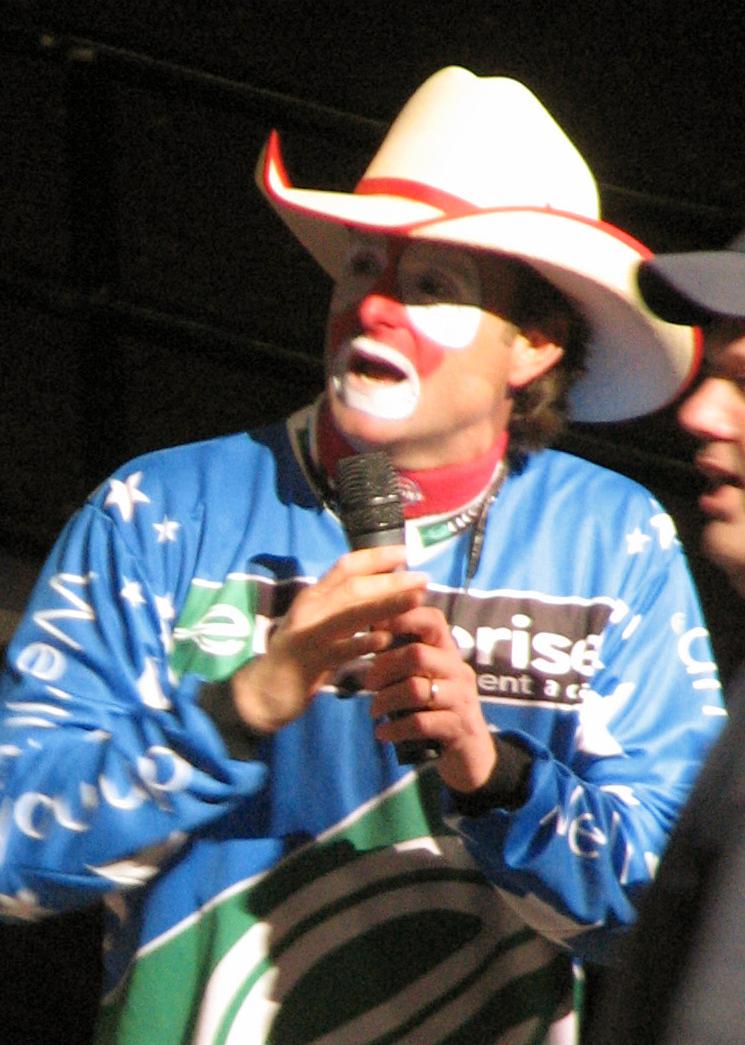
A rodeo clown, bullfighter or rodeo protection athlete, is a rodeo performer who works in bull riding competitions. Originally, the rodeo clown was a single job combining "bullfighting" — the protection of riders thrust from the bull — as well as being an individual who provided comic relief. Today, the job is split into two separate ones: bullfighters who protect the riders from the bull, and entertainers (barrelmen) who provide comic humor. However, in some parts of the world and at some small rodeos, the jobs of bull rider protection and comic remain combined.
The primary job of the rodeo bullfighter is to protect a fallen rider from the bull by distracting the bull and providing an alternative target for the bull to attack, whether the rider has been bucked off or has jumped off the animal. These individuals expose themselves to great danger in order to protect the riders. To this end, they wear bright, loose-fitting clothes that are designed to tear away, with protective gear fitted underneath. Rodeo clowns require speed, agility, and the ability to anticipate a bull's next move. Working closely with very large, very powerful animals, rodeo clowns are often injured seriously, and, sometimes, fatally. Most rodeos feature a clown, and clowns have become crowd favorites.
In some venues, rodeo bullfighters still wear clown make-up and some may also provide traditional clowning entertainment for the crowd between rodeo events, often parodying aspects of cowboy culture. But most modern bullfighters no longer dress as clowns, though they still wear bright, loose-fitting clothing. At larger events in the United States, the job is split, a bullfighter (sometimes two or more) protects the riders from the bull, and a barrelman (sometimes one person, sometimes two) provide comic humor. Some barrelmen provide both comedy and support to bullfighters, but the job of a bullfighter is generally distinct from that of the comic.
Rodeo clowns date to the beginnings of competitive rodeo in the early 20th century, when promoters hired cowboys to entertain the crowd between events or if the competition was delayed. These individuals began wearing oversized, baggy clothing and eventually developed more outlandish gear. When bull riding competition began to use ill-tempered Brahma bulls in the 1920s, the need for a person to distract the bull from fallen riders fell to the rodeo clown. The comedy aspect of clown work, as opposed to protection of rodeo athletes, began to disappear in some parts of the United States by the late 1970s.
The use of a barrel for protection began during the 1930s when a rodeo clown named Jasbo Fulkerson began to use a wooden barrel with a solid bottom. Wiley McCray is regarded historically as a pivotal figure in bullfighting and rodeo comedy acts, participating in many large events over many eras of rodeo. In 1995, Earl W. Bascom was honored at age 89 as the oldest living rodeo clown in the world. Bullfighting was reported as Wick Peth's profession in 1967, and Jimmy Anderson was reported to have begun his career in 1975.
In Australia, rodeo clowns were a part of rodeos and agricultural shows for many years. They were hired to entertain the spectators between events and to help manage the bullocks, steers or bulls in the arena. In the 1930s, with the introduction of aggressive Brahman bulls and Brahman crossbreds, the job became much more serious. In the late 20th century, acknowledging the great danger faced by the profession, the term bullfighter began to replace the name rodeo clown in formal use.
At the 2001 Professional Bull Riders (PBR) World Finals, bullfighter Rob Smets no longer wore his traditional, baggy clown outfit and began wearing a sport jersey and shorts that featured his sponsors' logos. This was the blueprint for future PBR bullfighter outfits as in 2003, all bullfighters in the organization stopped wearing traditional clown make-up and outfits, and traded them for sport jerseys and shorts with corporate sponsor logos. This was also the case for barrelmen in the PBR, but they retained their make-up. In subsequent years, many bullfighters in other organizations would also adopt sport jerseys and shorts, but many also kept wearing clown make-up. Some even combine make-up and baggies with jerseys. Frank Newsom, who had fought bulls in the Professional Rodeo Cowboys Association (PRCA) and Professional Bull Riders (PBR), including at each organization's respective world championship event (the National Finals Rodeo and PBR World Finals) was the last bullfighter to wear a baggy outfit and make-up at a televised PBR event, which was the 2004 Built Ford Tough Series (BFTS) event in Guthrie, Oklahoma. He was an alternate bullfighter at said event. Beginning the next year, he would don a sport jersey and shorts as an official member of the PBR elite series' bullfighting team, of which he was a member for several years until retiring at the conclusion of the 2022 PBR World Finals.
For several years, barrelmen at PBR events have no longer gone inside the barrel in the arena. As a result, they are now referred to as "arena entertainers" or simply "entertainers".
Hub AI
Rodeo clown AI simulator
(@Rodeo clown_simulator)
Rodeo clown
A rodeo clown, bullfighter or rodeo protection athlete, is a rodeo performer who works in bull riding competitions. Originally, the rodeo clown was a single job combining "bullfighting" — the protection of riders thrust from the bull — as well as being an individual who provided comic relief. Today, the job is split into two separate ones: bullfighters who protect the riders from the bull, and entertainers (barrelmen) who provide comic humor. However, in some parts of the world and at some small rodeos, the jobs of bull rider protection and comic remain combined.
The primary job of the rodeo bullfighter is to protect a fallen rider from the bull by distracting the bull and providing an alternative target for the bull to attack, whether the rider has been bucked off or has jumped off the animal. These individuals expose themselves to great danger in order to protect the riders. To this end, they wear bright, loose-fitting clothes that are designed to tear away, with protective gear fitted underneath. Rodeo clowns require speed, agility, and the ability to anticipate a bull's next move. Working closely with very large, very powerful animals, rodeo clowns are often injured seriously, and, sometimes, fatally. Most rodeos feature a clown, and clowns have become crowd favorites.
In some venues, rodeo bullfighters still wear clown make-up and some may also provide traditional clowning entertainment for the crowd between rodeo events, often parodying aspects of cowboy culture. But most modern bullfighters no longer dress as clowns, though they still wear bright, loose-fitting clothing. At larger events in the United States, the job is split, a bullfighter (sometimes two or more) protects the riders from the bull, and a barrelman (sometimes one person, sometimes two) provide comic humor. Some barrelmen provide both comedy and support to bullfighters, but the job of a bullfighter is generally distinct from that of the comic.
Rodeo clowns date to the beginnings of competitive rodeo in the early 20th century, when promoters hired cowboys to entertain the crowd between events or if the competition was delayed. These individuals began wearing oversized, baggy clothing and eventually developed more outlandish gear. When bull riding competition began to use ill-tempered Brahma bulls in the 1920s, the need for a person to distract the bull from fallen riders fell to the rodeo clown. The comedy aspect of clown work, as opposed to protection of rodeo athletes, began to disappear in some parts of the United States by the late 1970s.
The use of a barrel for protection began during the 1930s when a rodeo clown named Jasbo Fulkerson began to use a wooden barrel with a solid bottom. Wiley McCray is regarded historically as a pivotal figure in bullfighting and rodeo comedy acts, participating in many large events over many eras of rodeo. In 1995, Earl W. Bascom was honored at age 89 as the oldest living rodeo clown in the world. Bullfighting was reported as Wick Peth's profession in 1967, and Jimmy Anderson was reported to have begun his career in 1975.
In Australia, rodeo clowns were a part of rodeos and agricultural shows for many years. They were hired to entertain the spectators between events and to help manage the bullocks, steers or bulls in the arena. In the 1930s, with the introduction of aggressive Brahman bulls and Brahman crossbreds, the job became much more serious. In the late 20th century, acknowledging the great danger faced by the profession, the term bullfighter began to replace the name rodeo clown in formal use.
At the 2001 Professional Bull Riders (PBR) World Finals, bullfighter Rob Smets no longer wore his traditional, baggy clown outfit and began wearing a sport jersey and shorts that featured his sponsors' logos. This was the blueprint for future PBR bullfighter outfits as in 2003, all bullfighters in the organization stopped wearing traditional clown make-up and outfits, and traded them for sport jerseys and shorts with corporate sponsor logos. This was also the case for barrelmen in the PBR, but they retained their make-up. In subsequent years, many bullfighters in other organizations would also adopt sport jerseys and shorts, but many also kept wearing clown make-up. Some even combine make-up and baggies with jerseys. Frank Newsom, who had fought bulls in the Professional Rodeo Cowboys Association (PRCA) and Professional Bull Riders (PBR), including at each organization's respective world championship event (the National Finals Rodeo and PBR World Finals) was the last bullfighter to wear a baggy outfit and make-up at a televised PBR event, which was the 2004 Built Ford Tough Series (BFTS) event in Guthrie, Oklahoma. He was an alternate bullfighter at said event. Beginning the next year, he would don a sport jersey and shorts as an official member of the PBR elite series' bullfighting team, of which he was a member for several years until retiring at the conclusion of the 2022 PBR World Finals.
For several years, barrelmen at PBR events have no longer gone inside the barrel in the arena. As a result, they are now referred to as "arena entertainers" or simply "entertainers".
Recent media