


Community hub
Recent from talks
Contribute something
Nothing was collected or created yet.
Rodman Law
View on WikipediaRodman Law (born Frederick Rodman Law; January 21, 1885 – October 14, 1919) was an American parachutist, building climber and later silent movie stuntman and actor.[1]
Key Information


Biography
[edit]He was the older brother of pioneering aviator Ruth Law Oliver.[2] Law married Florence Kimball and was the father of three children. The family made their home in Brooklyn.[3][4] Law lived in Chicago and Texas.[5][6]
On February 2, 1912 Law parachuted or BASE jumped off the top of the candle of the Statue of Liberty. Law starred in or participated in several silent movies including a 1914 film built around his exploits Daredevil Rodman Law.[7] His female co-stars in his movies were Claire Whitney, Jean Acker, Ethel Wright, Rosanna Forbes, Beryl Bouton and Constance Bennett,[8][9] unrelated to the 1930s film actress of the same name.
Law was seriously injured while performing a stunt in 1914; by 1917, the injury was troubling enough that he entered Kings Hospital in Brooklyn for treatment. During the long hospitalization, the money Law had made through his work in films went to pay hospital bills and to support his family.[4] Law had almost given up stunt work, but when the US entered World War I, Law enlisted in the Army Aviation Corps. He was assigned to Kelly Field in Texas, where he returned to performing parachute jumping.[3][5]
Law contracted tuberculosis while at Kelly Field. He died of the disease at Camp Sevier in Greenville, South Carolina on October 14, 1919, after being hospitalized there for a few months.[3][2] Law was believed to be improving; at the time of his death he was planning to perform another parachute jumping stunt.[5]
Filmography
[edit]- A Leap for Love (1912)
- The Secret Service Man (1912)
- At the Risk of His Life (1912)
- Saved by Airship (1913)
- Death's Short Cut (1913)
- His Priceless Treasure (1913)
- The Daredevil Mountaineer (1913)
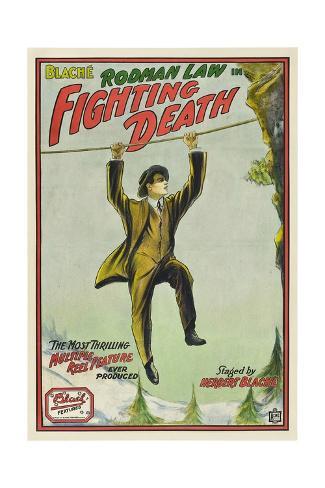
- Fighting Death (1914)
See also
[edit]References
[edit]- ^ Who Was Who on the Screen 3rd edition, page 422 by Evelyn Mack Truitt c.1983
- ^ a b "Thrill World But Their Dad is Not So Much Impressed". Wichita Daily Eagle. November 2, 1919. p. 39. Retrieved February 27, 2017 – via Newspapers.com.

- ^ a b c "Rodman Law, Defier of Death, Succumbs to White Plague". Brooklyn Daily Eagle. October 14, 1919. p. 2. Retrieved February 27, 2017 – via Newspapers.com.
- ^ a b "Rodman Law Hurt, Spent Fortune, Now Family is in Want". Brooklyn Daily Eagle. February 22, 1917. p. 1. Retrieved February 27, 2017 – via Newspapers.com.
- ^ a b c "Death Claims Rodman Law". Keowee Courier. October 22, 1919. p. 2. Retrieved February 27, 2017 – via Newspapers.com.
- ^ "Rodman Law Dead; Famous for Daring Death in Movies". New York Tribune. October 15, 1919. p. 10. Retrieved February 27, 2017 – via Newspapers.com.
- ^ listing of Daredevil Rodman Law (1914) "...the film concentrated on his many death-defying leaps..." www.allmovie.com, accessed November 16, 2020
- ^ Law and actress (sic) jump off bridge chroniclingamerica.loc.gov, accessed November 16, 2020
- ^ "...Miss Constance Bennett, the 19-year old steeplejack of new York City, climbed the 85-foot pole atop the Equitable Trust Building..." www.worthpoint.com, accessed November 16, 2020

External links
[edit]- Rodman Law at IMDb
- A poster for Fighting Death, one of Law's movies
- portrait
- Law and a lady friend
- THE DAMP SPOT THAT HOAXED D.C. (Law falsely claimed to be climbing the Washington Monument for a base jump)
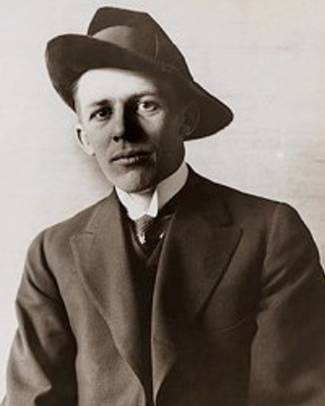
Rodman Law
View on GrokipediaEarly life
Birth and family
Frederick Rodman Law was born on January 21, 1885, in Lynn, Massachusetts, United States. [3] He was the older brother of pioneering aviator Ruth Bancroft Law, later known as Ruth Law Oliver. [3] [4] He was the son of Frederick Law and Sarah Bancroft Breed. His family had a strong strain of sailor blood; his father noted that the Laws of New England were known for their fearlessness in the rigging during the days of sail. As children, Rodman and Ruth frequently dared each other to perform dangerous acts, such as jumping from barns, climbing tall trees, or riding cattle, which often brought their parents to the verge of exhaustion. These early experiences contributed to the daring pursuits shared by the siblings. [5]Early career as daredevil
Rodman Law began his professional life engaging in various physically demanding occupations, including working as a sailor, detective, ironworker, and circus rider. [5] He eventually entered the trade of steeplejack, a profession involving the repair and maintenance of tall structures such as steeples and towers, which demanded exceptional climbing skill and fearlessness at great heights. [5] [6] In 1909, Law performed one of his earliest publicized death-defying stunts by climbing the exterior of the Flatiron Building in New York City using only his bare hands, an act undertaken on a bet with another steeplejack. [5] [6] This building-climbing exploit marked the start of his reputation as a daredevil and led to his nickname "The Human Fly," a moniker derived from his ability to scale tall structures unaided and with insect-like agility. [6] These early high-risk climbing activities as a steeplejack established Law's name in the world of thrill-seeking exhibitions before his later involvement in more aerial feats and motion pictures. [6]Daredevil career
Parachuting and aerial stunts
Rodman Law established his reputation as a daredevil through a series of bold parachute descents from prominent New York structures and landmarks before entering motion pictures. [7] He performed parachute jumps from the Brooklyn Bridge and from several of the city's tall buildings, feats that highlighted his willingness to undertake extreme heights with minimal safety measures. [7] On February 2, 1912, Law executed one of his most famous stunts by parachuting from the torch of the Statue of Liberty. [8] At approximately 35 years old and working as an aerial contractor and former steeplejack, he ascended to the observation platform in the statue's raised hand—151 feet above the pedestal and roughly 225 feet above sea level—carrying a 100-pound parachute after securing a special permit. [8] He jumped from the eastern side of the railing, clearing the edge by ten feet, and fell about 75 feet as dead weight before the parachute opened; the wind then carried him safely away from the statue. [8] Law landed heavily on the stone coping near the water's edge, about 30 feet from the bay, limping away but reporting no serious injury. [8] He further advanced his aerial repertoire with repeated parachute jumps from airplanes, collaborating with pilot Harry Bingham Brown, who flew a Wright biplane. [9] Promoted by balloonist and aviation entrepreneur A. Leo Stevens, these performances were advertised in publications such as Aeronautics and staged at airshows and fairs to attract crowds. [9] One documented event featured the duo at the Insular Fair in San Juan, Puerto Rico, from February 22 to March 2, 1913. [9] These parachuting and aerial exploits showcased Law's daring and technical skill in managing high-altitude risks, skills that later informed his motion picture stunt work. [9]Building climbing and ground-based feats
Rodman Law, a steeplejack by trade who specialized in building and repairing steeples and towers, earned the nicknames "human fly" and "human spider" for his daring unaided ascents of tall structures.[6] He began his death-defying climbing career in 1909 by scaling the side of New York City's Flatiron Building without ropes.[6] In early 1912, Law scaled the McAlpin Hotel unaided.[6] On May 1, 1912, he performed one of his most publicized climbs when he ascended the Raleigh Hotel on Pennsylvania Avenue in Washington, D.C., without permission or advance notice; he leapt onto the building from the sidewalk, evaded hotel staff who tried to grab him from open windows, paused four times to roll and smoke a cigarette while clinging to the exterior, and entered the building at the ninth floor before riding the elevator down.[6] In 1913, he climbed the side of the Capitol Dome.[6] These ground-based feats, executed without safety equipment and often in defiance of authorities, highlighted Law's exceptional physical skill, balance, and fearlessness in high-risk building ascents prior to his shift toward aerial stunts.[6]Transition to film
First motion picture stunts
Rodman Law transitioned from live daredevil performances to motion pictures around 1910, applying his expertise in aerial feats to filmed stunts during the nascent years of the industry. In 1910, he executed a leap from a hot air balloon, documented on film and regarded as one of the earliest examples of a motion picture stunt. This event bridged his real-world risk-taking with the emerging medium of cinema, allowing audiences to witness his daring acts without attending live exhibitions. By 1912, Law had begun appearing in short silent films that showcased his stunt abilities. He performed in A Leap for Love (1912), a production that featured his characteristic high-risk maneuvers. That same year, he starred in The Secret Service Man (1912), where his physical prowess was central to the action sequences. Law also appeared in At the Risk of His Life (1912), another short that highlighted his willingness to undertake dangerous feats for the camera. These early credits established him as a pioneer in performing authentic stunts on film rather than relying on camera tricks or substitutes. These initial motion picture appearances built directly on his prior experience with parachuting and aerial displays, enabling a seamless shift into filmed entertainment.Entry into silent films
Rodman Law transitioned from his high-profile daredevil career to silent films in the early 1910s, where he performed stunts and acted in short subjects that drew directly on his reputation as "The Human Fly." [2] His entry into motion pictures began in 1912 with roles in thrill-oriented shorts that showcased his real-life skills as a parachutist and building climber. [10] He appeared in films such as A Leap for Love (1912) as Alfred Lane and At the Risk of His Life (1912) as Tom Nelson, productions that capitalized on his established fame for daring feats. [10] In 1913, major studios filmed his actual stunts for inclusion in movies; the Pathe Moving Picture Co. captured him plunging over the 70-foot Rainbow Falls in a flat-bottomed boat at Ausable Chasm on July 28, while Reliance Moving Picture Co. recorded him leaping from Table Rock on horseback—holding a woman—30 feet into a pool of water later that August. [2] Law continued in similar short films through 1914, including The Daredevil Mountaineer (1913) as Slow Jim and Fighting Death (1914) as Jim Mason, often performing high-risk action sequences that mirrored his pre-film exploits. [10] He appeared in more than a half-dozen such feature and short films during this brief period, before a serious parachute injury in 1914 ended his stunt career. [2]Film career
Acting and stunt roles
Rodman Law transitioned from real-life daredevil feats to performing as both actor and stunt performer in silent short films during the early 1910s, where he often played leading roles that incorporated his signature high-risk stunts. [10] He was credited solely as an actor in these productions, but his background in parachuting and climbing meant he executed the dangerous sequences himself, blending performance with genuine risk. [5] In 1913, Law starred as Charles Belmont in Saved by Airship, a short drama that capitalized on his aerial expertise. [11] That same year, he portrayed John Armstrong in Death's Short Cut, performing a prominent stunt by plunging over Stillwater Falls in Maine during filming. [12] He also appeared in His Priceless Treasure in 1913. [10] Law's final notable role came in 1914 with Fighting Death, where he played Jim Mason in an adventure drama that highlighted his stunt work, including sequences filmed at the Williamsburg Bridge. [13] These films represented his primary contributions as an on-screen performer, merging his daredevil reputation with early cinematic action. [5]Notable films and contributions
Rodman Law performed genuine high-risk stunts in early motion pictures, bridging his career as a live daredevil with the emerging medium of silent film. His February 1912 parachute descent from the torch balcony of the Statue of Liberty was deliberately staged and captured on film by Pathé for newsreels, representing one of the earliest documented instances of a dangerous feat performed specifically for cinematic capture. [14] This collaboration marked the beginning of his brief film career from 1912 to 1914, during which he performed authentic aerial, climbing, and acrobatic sequences without doubles or artificial effects in a series of adventure-oriented silent shorts. His resilience in executing these hazardous performances earned him the nickname "The Unkillable Actor" in some accounts. [5]Personal life
Relationship with Ruth Law
Rodman Law was the brother of Ruth Law Oliver, a pioneering aviatrix who became renowned for her record-setting flights and contributions to early aviation.[15] His career as a daredevil performer, including feats as the "Human Fly" climbing tall buildings and parachuting from balloons and planes, inspired her interest in aviation.[16] Sources indicate that Ruth became interested in aviation because of Rodman's exploits as a trick parachutist and stunt performer.[17] Historical photographs depict Rodman and Ruth together in a Wright Model B flyer, an aircraft associated with Ruth's early career after she acquired it in 1912.[18] Their sibling bond reflected a mutual daredevil spirit, with Rodman's high-risk activities influencing Ruth's path as a trailblazing female pilot.[19]Later years
In 1914, Law sustained a serious injury while performing a parachute jump from a hot air balloon in Trenton, New Jersey, marking a significant turning point that curtailed his high-risk stunt activities. [2] By 1917, the lingering effects of this injury required extended treatment at Kings Hospital in Brooklyn, where prolonged medical care exhausted the earnings he had accumulated from his film and stunt work, resulting in financial hardship for his family. [20] He had largely abandoned professional stunt performing during this period due to his health and circumstances. [21] In 1918, Law performed parachute jumps from moving airplanes at Kelly Field in Texas, including a descent from 6,000 feet. [22]Death and legacy
Illness and death
Rodman Law died of tuberculosis on October 14, 1919, at the United States Public Health Service Hospital in Greenville, South Carolina, at the age of 34. [15] He had been a patient at the hospital—associated with Camp Sevier—for three months prior to his death, though he was confined to bed for only one week before succumbing to the disease. [15] Contemporary accounts noted the irony that the daredevil performer, known for surviving numerous high-risk stunts, ultimately succumbed to illness rather than accident, with newspapers expressing surprise at the cause of his death. [1]Legacy in stunts and cinema
Rodman Law is recognized as one of the original stuntmen of the silent movie era, a pioneer who transitioned real-life daredevil feats into early cinematic performances. [23] His background as a parachutist and building climber, nicknamed "The Human Fly," allowed him to bring authentic high-risk stunts to film, helping establish the practice of performing genuine danger on camera rather than relying solely on illusions or tricks. [3] This approach contributed to the foundation of action-oriented sequences in silent cinema, demonstrating that real peril could engage audiences and shape the emerging conventions of stunt work in Hollywood. Law's brief involvement in motion pictures, concentrated in the years around 1912–1914, marked an important early chapter in the evolution of film stunts from vaudeville-inspired spectacles to scripted cinematic action. [24] By executing his own dangerous acts for the camera, he helped bridge live exhibition daring with the demands of film production, influencing the shift toward more authentic risk in early movie entertainment. His early death from tuberculosis in 1919 curtailed any potential for greater long-term influence, leaving his contributions as a foundational but limited chapter in stunt and cinema history. [3] In contemporary accounts of early film pioneers, Law is occasionally referenced as an innovative figure whose work prefigured the development of professional stunt performing in later decades. [24]References
- https://commons.wikimedia.org/wiki/File:Frederick_Rodman_Law_and_Ruth_B._Law_in_their_Wright_Model_B_flyer_circa_1910-1915.jpg