
Recent from talks
Role-playing video game
Knowledge base stats:
Talk channels stats:
Members stats:
Role-playing video game
Role-playing video games, also known as CRPG (computer/console role-playing games), comprise a broad video game genre generally defined by a detailed story and character advancement (often through increasing characters' levels or other skills). Role-playing games almost always feature combat as a defining feature and traditionally used turn-based combat; however, modern role-playing games commonly feature real-time action combat or even non-violent forms of conflict resolution (with some eschewing combat altogether). Further, many games have incorporated role-playing elements such as character advancement and quests while remaining within other genres.
Role-playing video games have their origins in tabletop role-playing games and use much of the same terminology, settings, and game mechanics. Other major similarities with pen-and-paper games include developed story-telling and narrative elements, player-character development, and elaborately designed fantasy worlds. The electronic medium takes the place of the gamemaster, resolving combat on its own and determining the game's response to different player actions. RPGs have evolved from simple text-based console-window games into visually rich 3D experiences.
The first RPGs date to the mid 1970s, when developers attempted to implement systems like Dungeons & Dragons on university mainframe computers. While initially niche, RPGs would soon become mainstream on consoles like the NES with franchises such as Dragon Quest and Final Fantasy. Western RPGs for home computers became popular through series such as Fallout, The Elder Scrolls and Baldur's Gate. Today, RPGs enjoy significant popularity both as mainstream AAA games and as niche titles aimed towards dedicated audiences. More recently, independent developers have found success, with games such as OFF, Undertale, and Omori achieving both critical and commercial success.
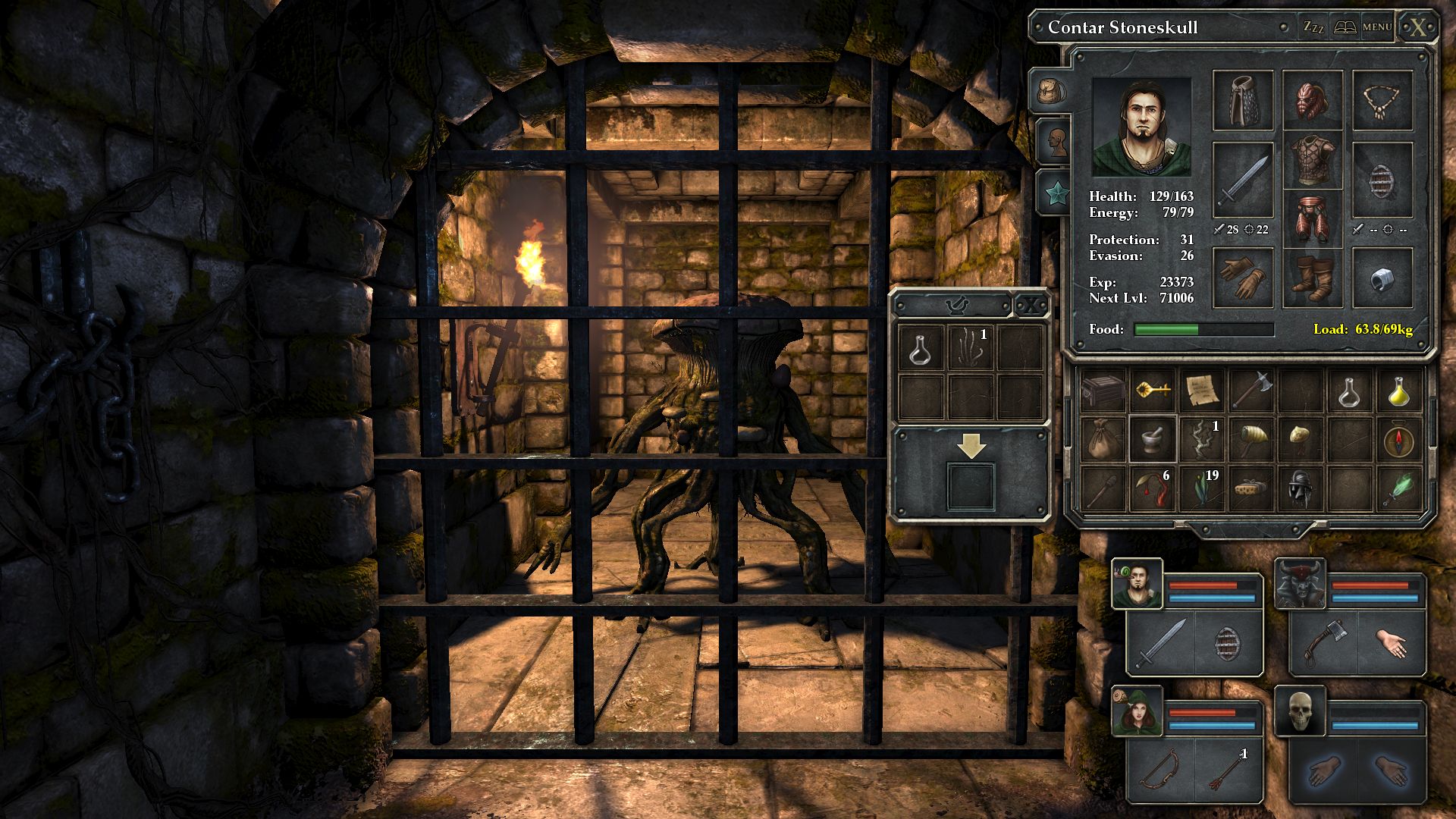
Role-playing video games use much of the same terminology, settings and game mechanics as early tabletop role-playing games such as Dungeons & Dragons. Players control a central game character, or multiple game characters, usually called a party. These characters are controlled by issuing commands, which are then performed by the character at an effectiveness determined by that character's numeric attributes. Often these attributes increase each time a character gains a level, and a character's level goes up each time the player accumulates a certain amount of experience. Usually, the characters attain victory by completing a series of quests or reaching the conclusion of a central storyline. Players explore a game world, while solving puzzles and engaging in combat.
Role-playing games are traditionally divided into turn-based RPGs, that rarely challenge a player's physical coordination or reaction time, and action-based RPGs, that do the opposite.
Role-playing video games typically rely on a highly developed story and setting, and characters are typically designed by the player. Role-playing video games also typically attempt to offer more complex and dynamic character interaction than what is found in other video game genres. This usually involves additional focus on the artificial intelligence and scripted behavior of computer-controlled non-player characters.
In order to be considered a role-playing game, characters have to become more functionally powerful by gaining new skills, weapons, and magic. This creates a positive-feedback cycle that is central to these games: the player grows in power, allowing them to overcome more difficult challenges, and gain even more power. This is part of the appeal of the genre, where players experience growing from an ordinary person into a superhero with amazing powers. Whereas other games give the player these powers immediately, the player in a role-playing game will choose their powers and skills as they gain experience.
Three different systems of rewarding the player characters for solving the tasks in the game can be set apart: the experience system (also known as the "level-based" system), the training system (also known as the "skill-based" system) and the skill-point system (also known as "level-free" system)
Hub AI
Role-playing video game AI simulator
(@Role-playing video game_simulator)
Role-playing video game
Role-playing video games, also known as CRPG (computer/console role-playing games), comprise a broad video game genre generally defined by a detailed story and character advancement (often through increasing characters' levels or other skills). Role-playing games almost always feature combat as a defining feature and traditionally used turn-based combat; however, modern role-playing games commonly feature real-time action combat or even non-violent forms of conflict resolution (with some eschewing combat altogether). Further, many games have incorporated role-playing elements such as character advancement and quests while remaining within other genres.
Role-playing video games have their origins in tabletop role-playing games and use much of the same terminology, settings, and game mechanics. Other major similarities with pen-and-paper games include developed story-telling and narrative elements, player-character development, and elaborately designed fantasy worlds. The electronic medium takes the place of the gamemaster, resolving combat on its own and determining the game's response to different player actions. RPGs have evolved from simple text-based console-window games into visually rich 3D experiences.
The first RPGs date to the mid 1970s, when developers attempted to implement systems like Dungeons & Dragons on university mainframe computers. While initially niche, RPGs would soon become mainstream on consoles like the NES with franchises such as Dragon Quest and Final Fantasy. Western RPGs for home computers became popular through series such as Fallout, The Elder Scrolls and Baldur's Gate. Today, RPGs enjoy significant popularity both as mainstream AAA games and as niche titles aimed towards dedicated audiences. More recently, independent developers have found success, with games such as OFF, Undertale, and Omori achieving both critical and commercial success.
Role-playing video games use much of the same terminology, settings and game mechanics as early tabletop role-playing games such as Dungeons & Dragons. Players control a central game character, or multiple game characters, usually called a party. These characters are controlled by issuing commands, which are then performed by the character at an effectiveness determined by that character's numeric attributes. Often these attributes increase each time a character gains a level, and a character's level goes up each time the player accumulates a certain amount of experience. Usually, the characters attain victory by completing a series of quests or reaching the conclusion of a central storyline. Players explore a game world, while solving puzzles and engaging in combat.
Role-playing games are traditionally divided into turn-based RPGs, that rarely challenge a player's physical coordination or reaction time, and action-based RPGs, that do the opposite.
Role-playing video games typically rely on a highly developed story and setting, and characters are typically designed by the player. Role-playing video games also typically attempt to offer more complex and dynamic character interaction than what is found in other video game genres. This usually involves additional focus on the artificial intelligence and scripted behavior of computer-controlled non-player characters.
In order to be considered a role-playing game, characters have to become more functionally powerful by gaining new skills, weapons, and magic. This creates a positive-feedback cycle that is central to these games: the player grows in power, allowing them to overcome more difficult challenges, and gain even more power. This is part of the appeal of the genre, where players experience growing from an ordinary person into a superhero with amazing powers. Whereas other games give the player these powers immediately, the player in a role-playing game will choose their powers and skills as they gain experience.
Three different systems of rewarding the player characters for solving the tasks in the game can be set apart: the experience system (also known as the "level-based" system), the training system (also known as the "skill-based" system) and the skill-point system (also known as "level-free" system)
Recent media