Hubbry Logo
Ron McClureRon McClureMain
Open search
Ron McClure
Community hub
Ron McClure
logo
8 pages, 0 posts
0 subscribers
Be the first to start a discussion here.
Ron McClure
Ron McClure
from Wikipedia

Key Information

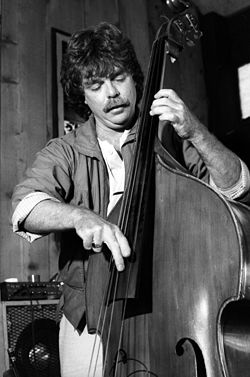
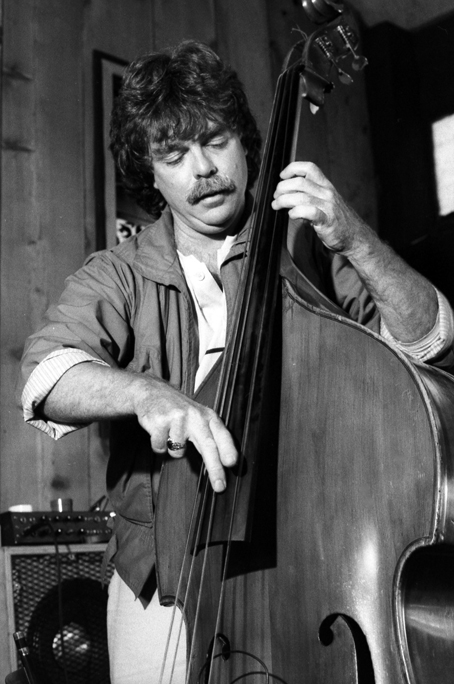
Ron McClure (born November 22, 1941)[1] is an American jazz bassist.

Early life

[edit]

McClure was born in New Haven, Connecticut, United States.[1] He started on piano at age five, and later played accordion and bass.[1] McClure studied privately with Joseph Iadone and, later, with Hall Overton and Don Sebesky.[1] McClure attended the Hartt School of Music,[2] graduating in 1963.[1]

Later life and career

[edit]

McClure worked in the Buddy Rich Sextet in 1963.[1] He then joined Maynard Ferguson's big band[2] and, afterwards, Herbie Mann in 1964; and then assumed the bass chair in the Wynton Kelly Trio vacated by Paul Chambers in 1965 (playing behind guitarist Wes Montgomery).[1]

From 1966 to 1969, he was a member of Charles Lloyd's "classic quartet" with pianist Keith Jarrett and drummer Jack DeJohnette,[3] which was voted "Group of the Year" in 1967 by Downbeat magazine.

In 1970, with pianist-composer Mike Nock, drummer Eddie Marshall and violinist Michael White, he co-founded the jazz-rock group, the Fourth Way.[1] He also participated in Carla Bley's album, Escalator over the Hill, and worked with saxophonist Joe Henderson.

In April and May 1972, while McClure was teaching at Berklee College of Music, he worked three jobs lasting a total of four weeks as the bassist in the Thelonious Monk Quartet.[4]

In October 1973, McClure joined Vince Guaraldi and drummer Mike Clark for sessions at Wally Heider Studios in San Francisco. Their take of “Autumn Leaves” can be heard on a posthumous 2006 CD titled “North Beach”.

In 1974, McClure joined Blood, Sweat & Tears, staying until 1975 and performing on three albums: Mirror Image, New City and In Concert.[1] In 1976, McClure's composition “No Show” was nominated for a Grammy Award for Best Arrangement, Instrumental or A Cappella.

In the 1980s, he joined Quest, led by saxophonist Dave Liebman, which also included drummer Billy Hart and pianist Richie Beirach.[5] He also recorded a duo album with pianist Michel Petrucciani.[1] McClure's major engagements in the 1990s through the early 2000s were with Lee Konitz, and then with the reassembled Quest.

His solo output include the contributions of John Scofield, John Abercrombie, Vic Juris, Paul Bley, Michael Eckroth, Richie Beirach, and Randy Brecker.

Discography

[edit]
Ron McClure (left) with guitarist Johnny Alegre (center) and drummer Billy Hart (right) in Midtown, Manhattan, at 151 West 46th Street, between Sixth and Seventh Avenues. The photo was taken in 2009, when they recorded Johnny Alegre 3 for MCA.

As leader/co-leader

[edit]

As sideman

[edit]

With Joe Henderson

With Lee Konitz

With David Liebman

With Charles Lloyd

With Karlheinz Miklin

  • Next Page (SOS-Music [Austria], 1991)
  • Decisions (SOS-Music, 1993)
  • Last Waltz (Acoustic Music, 1997)
  • From Here to There (TCB, 2002)
  • In Between (Extraplatte, 2005) – rec.2002

With Jarmo Savolainen

  • First Sight (Timeless, 1992)
  • True Image (A-Records, 1995)

With others

References

[edit]
Revisions and contributorsEdit on WikipediaRead on Wikipedia
from Grokipedia
Ron McClure is an American jazz double bassist known for his versatile and resourceful playing across hard bop, jazz-rock, free jazz, and bebop, as well as his long career collaborating with leading figures including Charles Lloyd, Joe Henderson, and Blood, Sweat & Tears. Born on November 22, 1941, in New Haven, Connecticut, McClure began his musical training on piano at age five, later studying accordion and bass under private teachers including Joseph Iadone, Hall Overton, and Don Sebesky, before graduating from the Hartt School of Music in 1963. He has also been active as an educator since the early 1970s, teaching at institutions such as Berklee College of Music and Long Island University while leading workshops nationally and internationally. McClure's early career featured work with the Buddy Rich Sextet in 1963, Maynard Ferguson's big band, Herbie Mann in 1964, and the Wynton Kelly Trio in 1965, where he replaced Paul Chambers and performed behind Wes Montgomery. He gained wider recognition as bassist in the Charles Lloyd Quartet from 1966 to 1969 alongside Keith Jarrett and Jack DeJohnette, a group named Group of the Year by DownBeat magazine in 1967. In 1970 he co-founded the pioneering jazz-rock ensemble The Fourth Way and contributed to Carla Bley's Escalator Over the Hill. During the 1970s McClure forged a significant association with Joe Henderson on four albums and joined Blood, Sweat & Tears, appearing on Mirror Image, New City, and Live And Improvised. In the 1980s he was a member of Quest with Dave Liebman, Richie Beirach, and Billy Hart, and recorded a duo project with Michel Petrucciani; later decades brought collaborations with Lee Konitz and the reassembled Quest. As a leader McClure has recorded for labels including Steeplechase and Ken Music, often featuring notable sidemen such as John Scofield, John Abercrombie, Vic Juris, Richie Beirach, and Randy Brecker.

Early life

Birth and childhood

Ron McClure was born on November 22, 1941, in New Haven, Connecticut. Little public information exists regarding his family background or specific formative experiences during childhood in Connecticut, with available biographical sources focusing primarily on his early musical development rather than pre-adolescent personal details.

Education and early musical influences

Ron McClure began his musical training at age five on piano, soon expanding to accordion and double bass, while growing up in New Haven, Connecticut. A high school teacher encouraged him to pursue music professionally, leading him to attend the Hartt School of Music at the University of Hartford as a double bass major. He graduated from the Hartt School in 1963, though the institution offered limited encouragement for jazz at the time. While there, his private teacher Eddie Miller taught him jazz harmony, helping bridge classical training with his interest in the genre. McClure also studied privately with Joseph Iadone, and later with Hall Overton and Don Sebesky. From childhood, McClure listened to jazz recordings and knew it was the music he wanted to play, drawing particular inspiration from double bassists such as Paul Chambers, Ron Carter, Eddie Gomez, George Mraz, Wilbur Ware, Albert Stinson, and Steve Swallow, along with Charles Mingus for his compositional approach. These early influences shaped his focus on the double bass and prepared him for the transition to professional work in the early 1960s.

Career

Early professional engagements

Ron McClure began his professional career while still a student at the Hartt School of Music in Hartford, Connecticut, where he met and performed with established musicians who came through the area. Vibraphonist Mike Mainieri introduced him to Buddy Rich, resulting in his participation in Rich's sextet in 1963. Through his connections with Mainieri and pianist Mike Abene, McClure joined Maynard Ferguson's big band, marking his first commercial recordings for Mainstream Records. He valued the experience for the band's strong arrangements and the featured role Ferguson gave him as bassist. In 1965, while continuing with Ferguson's band, McClure substituted for Paul Chambers in the Wynton Kelly Trio—featuring Wes Montgomery on guitar and Jimmy Cobb on drums—during performances in Atlantic City and New York clubs. These opportunities culminated in his hiring for a nine-week West Coast tour with the group starting in July 1965, during which he also recorded with Wynton Kelly. These associations with leading jazz figures helped establish McClure's presence on the national scene and paved the way for further opportunities in the mid-1960s.

Breakthrough with Charles Lloyd Quartet

Ron McClure achieved his breakthrough as the bassist in the Charles Lloyd Quartet from 1966 to 1969, replacing Cecil McBee shortly after the group's early successes. The "classic quartet" featured Charles Lloyd on tenor saxophone and flute, Keith Jarrett on piano, Jack DeJohnette on drums, and McClure on bass, forming a dynamic ensemble that blended post-bop innovation with elements appealing to broader audiences during the counterculture era. The group earned widespread recognition, including being voted Group of the Year in 1967 by DownBeat magazine, and Charles Lloyd was named Jazz Artist of the Year that same year. The quartet's crossover appeal led to performances at rock venues such as the Fillmore Auditorium in San Francisco, where their January 1967 shows were captured on the live album Love-In. A landmark moment came on June 18, 1967, when they closed the inaugural Montreux Jazz Festival in Switzerland with a legendary concert recorded by Swiss Radio, featuring extended explorations such as a nearly 28-minute version of "Forest Flower" and other pieces blending free jazz energy with mystical and lyrical elements. The Montreux performance captured the group at its creative peak, with the rhythm section—anchored by McClure's steady, reliable pulse—providing a commanding foundation for Jarrett and DeJohnette's explosive creativity and Lloyd's theatrical solos. The quartet also undertook a historic tour of the Soviet Union in 1967, including stops at the Tallinn Jazz Festival and venues in Leningrad, further highlighting their international impact and role in bridging jazz with emerging global audiences. Recordings from this period, including Charles Lloyd in the Soviet Union and the later-released Montreux tapes, document the group's innovative spirit and high energy, which critics described as a "near masterpiece" of collective improvisation and joy. McClure's contributions as the "perfect steady straight-man foil" were essential in maintaining cohesion amid the band's adventurous explorations. The quartet's work during these years marked a significant high point in jazz innovation before its dissolution in 1969.

Blood, Sweat & Tears and fusion era

Ron McClure joined Blood, Sweat & Tears as bassist in 1974, succeeding Jim Fielder in the jazz-rock band's lineup. He recorded on the album Mirror Image (1974), contributing Fender and acoustic bass parts during a transitional period for the group. McClure stayed through the recording of New City (1975), where he composed and arranged the instrumental track "No Show," earning a Grammy nomination for Best Instrumental Arrangement. He also performed on the live album Live & Improvised (recorded during his tenure and released later), adding to his recorded contributions with the band. During his time with Blood, Sweat & Tears from 1974 to 1976, McClure emphasized the band's heavy reliance on improvisation in live performances, describing it as feeling like "a jazz band that was lucky enough to have had some hits so we could work." He regarded the experience as among the most enjoyable of his career, despite shifting dynamics within the group. McClure joined around the same time as saxophonist Joe Henderson, though Henderson departed before recordings began, leaving McClure to continue with the band. This engagement placed him firmly in the 1970s jazz fusion scene, where Blood, Sweat & Tears blended jazz improvisation with rock elements, even if McClure noted that fusion was not the primary driving force during his tenure but rather a mixture of influences. Internal conflicts, burnout, and a disappointing road trip performance led to McClure being fired from the band in 1976. This marked the end of his Blood, Sweat & Tears period, after which he pursued other collaborations.

Later career and collaborations

In the mid-1970s, after departing Blood, Sweat & Tears, Ron McClure refocused on acoustic jazz, leading his own groups and recording extensively as a bandleader, particularly on the Steeplechase label where he has issued more than twenty albums. His solo projects during this period often featured notable sidemen such as John Scofield and emphasized his versatility across hard bop, post-bop, and freer improvisational contexts. McClure's later collaborations spanned a diverse range of jazz figures, including stints with Joe Henderson, Chet Baker, Paul Bley, and Dave Liebman in the late 1970s and 1980s. He also recorded a duo project with pianist Michel Petrucciani, highlighting his collaborative approach in intimate settings. In the 1990s and early 2000s, he maintained a significant association with saxophonist Lee Konitz, participating in quartet and other ensemble work during this era. McClure has continued to engage in select recording and performance projects into the 21st century, including a trio collaboration with guitarist Johnny Alegre and drummer Billy Hart on the 2009 album Johnny Alegre 3. He remains active as a performer, appearing at venues such as Smalls Jazz Club in New York. Since the 2000s, McClure has served on the faculty of New York University's Steinhardt School of Culture, Education, and Human Development, where he teaches jazz bass and composition, contributing to the education of new generations of musicians while sustaining his performing career.

Discography

Albums as leader

Ron McClure has maintained an active recording career as a leader, issuing more than twenty CDs primarily on the SteepleChase label, with additional releases on Ode, Naxos Jazz, Ken Music, and EPC. His albums as leader showcase his work in post-bop and hard bop contexts, frequently featuring prominent collaborators including John Scofield, John Abercrombie, Vic Juris, Richie Beirach, and Randy Brecker. His first notable leader release was Home Base, issued in 1982 on Ode Records. Later highlights include Dream Team (SteepleChase, 1998), a quartet session with Billy Hart on drums, Marc Copland on piano, and Rich Perry on tenor saxophone, praised as a particularly strong date. Double Triangle (Naxos Jazz, 1999) presented McClure fronting a sextet. Subsequent SteepleChase releases include Match Point (2002), New Moon (2009), Dedication (2011), and Crunch Time (2012), the latter introducing younger players Gabe Terracciano, Mike Eckroth, and Shareef Taher. These works reflect McClure's continued engagement with small-group jazz into the 21st century.

Selected sideman appearances

Ron McClure has built an extensive career as a sideman, lending his versatile bass playing to a diverse array of jazz and jazz-related projects across multiple decades. His early professional engagements included work with the Buddy Rich Sextet in 1963, Maynard Ferguson's big band from 1963 to 1964, Herbie Mann in 1964, and the Wynton Kelly Trio in 1965, where he replaced Paul Chambers and performed alongside guitarist Wes Montgomery. In 1965, he also appeared on the Wynton Kelly Trio album Full View. From 1966 to 1969, McClure was the bassist in the influential Charles Lloyd Quartet, featuring Keith Jarrett on piano and Jack DeJohnette on drums; the group earned DownBeat's Group of the Year honors in 1967 for its innovative fusion of jazz, rock, and modal elements. Key recordings from this period include Love-In (1967), which marked his integration into the quartet after Cecil McBee's departure. He later contributed to Carla Bley's large-scale jazz opera Escalator Over The Hill (1971) and recorded four albums with saxophonist Joe Henderson during the 1970s. In 1974, McClure joined Blood, Sweat & Tears, appearing on the albums Mirror Image (1974), New City (1975), and Live And Improvised (1976). During the 1980s, he was a key member of the quartet Quest, led by saxophonist Dave Liebman and also featuring pianist Richie Beirach and drummer Billy Hart; he later rejoined the group for performances and recordings in the 2000s, including the live album Redemption: Quest Live in Europe (2005). Additional notable collaborations include a duo recording with pianist Michel Petrucciani in the 1980s and extended work with alto saxophonist Lee Konitz in the 1990s and early 2000s.

Media appearances and contributions

Television performances

Ron McClure's television appearances are limited and primarily tied to his jazz collaborations rather than talk shows or variety formats. He appeared as a musician on the 1967 Finnish TV series "Charles Lloyd soittaa" with the Charles Lloyd Quartet. His public presence has otherwise centered on live concerts, studio recordings, and educational roles, including faculty positions in jazz studies.

Film and soundtrack work

Ron McClure has no documented contributions as a performer, composer, or arranger for film soundtracks or motion picture scoring. He has limited on-screen appearances in documentaries, including as Self in the 2011 film "Michel Petrucciani," a documentary about the pianist with whom he recorded. Biographical sources emphasize his jazz performance and recording career without highlighting extensive involvement in visual media.

Legacy

Teaching and mentorship

Ron McClure has made substantial contributions to jazz education through teaching positions at prominent institutions and private instruction, sharing his extensive performance experience with aspiring musicians. He serves as adjunct faculty in the Department of Music and Performing Arts Professions at New York University's Steinhardt School, where he teaches jazz bass and composition. In this capacity, he directs the Ron McClure Ensemble, guiding students in performing jazz standards alongside his own original arrangements and providing hands-on mentorship in ensemble playing and interpretation. McClure also offers private bass lessons (with secondary instruction in piano) to adult students from beginner to advanced levels through the New York Jazz Academy, conducting sessions in Manhattan's Upper West Side and traveling as needed. His involvement in education dates back to the early 1970s, when he taught at Berklee College of Music and Long Island University while establishing himself as an active clinician through workshops held nationally and internationally. Through these roles, McClure has mentored younger bassists by imparting technical expertise, improvisational concepts, and professional insights drawn from his career.

Influence on jazz bass

Ron McClure is recognized as one of the most respected jazz bassists, praised for his sensitive and dexterous approach, perfect timing, and exquisite sense of groove that have distinguished his contributions to the instrument. His inclusion among the 50 best jazz bassists of all time reflects critical acknowledgment of his stylistic impact across diverse jazz idioms. In jazz-rock and fusion contexts, McClure brought the electric bass to the foreground on certain recordings, allowing it to function as a frontline instrument in addition to its rhythm-section role. His work in such formats demonstrated versatility that bridged traditional jazz bass duties with more contemporary, improvisational demands. McClure's overall influence lies in his consistent demonstration of adaptability and musicality, earning him respect among peers for balancing supportive playing with opportunities for creative expression.

Personal life

Ron McClure was born on November 22, 1941, in New Haven, Connecticut. He has resided in New York since the mid-1970s, following a period living in San Francisco. In a 1998 interview, he stated that he returned to New York for a professional opportunity and has remained there ever since. Little additional public information is available regarding his family or other personal interests.

References

Add your contribution
Related Hubs
User Avatar
No comments yet.