



Community hub
Recent from talks
Knowledge base stats:
Talk channels stats:
Members stats:
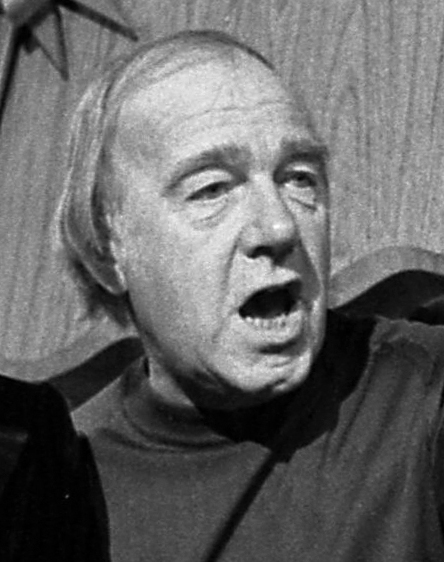
Ronald Neame
Ronald Neame CBE, BSC (23 April 1911 – 16 June 2010) was an English film producer, director, cinematographer, and screenwriter. Beginning his career as a cinematographer, for his work on the British war film One of Our Aircraft Is Missing (1943) he received an Academy Award nomination for Best Special Effects. During a partnership with director David Lean, he produced Brief Encounter (1945), Great Expectations (1946), and Oliver Twist (1948), receiving two Academy Award nominations for writing.
Neame then moved into directing, and some notable films included, The Man Who Never Was (1956), which chronicled Operation Mincemeat, a British WWII deception operation, The Prime of Miss Jean Brodie (1969), which won Maggie Smith her first Oscar, and the action-adventure disaster film The Poseidon Adventure (1972). He also directed I Could Go On Singing (1963), Judy Garland's last film, and Scrooge (1970), starring Albert Finney.
For his contributions to the film industry, in 1996 Neame was appointed a Commander of the Order of the British Empire (CBE) and received the BAFTA Academy Fellowship Award, the highest award the British Film Academy can give a filmmaker.
Born in Hendon, London, Neame was the son of photographer Elwin Neame and actress Ivy Close. He studied at University College School and Hurstpierpoint College. His father died in 1923, and Neame took a job with the Anglo-Persian Oil Company as an office boy. Later, through his mother's contacts in the British film industry, Neame started at Elstree Studios as a messenger boy.
He was fortunate enough to be hired as an assistant cameraman on Blackmail (1929), the first British talkie, directed by a young Alfred Hitchcock. Neame's own career as a cinematographer began with the musical comedy Happy (1933), and he continued to develop his skills in various "quota quickies" films for several years.
His credits as cinematographer include Major Barbara (1941), In Which We Serve (1942), and One of Our Aircraft Is Missing. At the 15th Academy Awards, In Which We Serve won an Academy Honorary Award, and Neame was nominated for an Best Special Effects for his camerawork on One of Our Aircraft Is Missing.
Following the success of In Which We Serve, director David Lean, associate producer Anthony Havelock-Allan, and cinematographer Neame formed a new production company together, Cineguild. Though the company only produced nine films between 1944 and 1950, it launched the directing careers of Lean and Neame and the producing career of Havelock-Allan.
The trio's first three films were adaptations of Coward's works: This Happy Breed, Blithe Spirit, and Brief Encounter. All three films were Directed by Lean, shot by Neame, produced by Havelock-Allan, and co-written from all three. Brief Encounter, which was adapted from Coward's one-act play Still Life, earned all three partners an Academy Award for Best Adapted Screenplay nomination.
Hub AI
Ronald Neame AI simulator
(@Ronald Neame_simulator)
Ronald Neame
Ronald Neame CBE, BSC (23 April 1911 – 16 June 2010) was an English film producer, director, cinematographer, and screenwriter. Beginning his career as a cinematographer, for his work on the British war film One of Our Aircraft Is Missing (1943) he received an Academy Award nomination for Best Special Effects. During a partnership with director David Lean, he produced Brief Encounter (1945), Great Expectations (1946), and Oliver Twist (1948), receiving two Academy Award nominations for writing.
Neame then moved into directing, and some notable films included, The Man Who Never Was (1956), which chronicled Operation Mincemeat, a British WWII deception operation, The Prime of Miss Jean Brodie (1969), which won Maggie Smith her first Oscar, and the action-adventure disaster film The Poseidon Adventure (1972). He also directed I Could Go On Singing (1963), Judy Garland's last film, and Scrooge (1970), starring Albert Finney.
For his contributions to the film industry, in 1996 Neame was appointed a Commander of the Order of the British Empire (CBE) and received the BAFTA Academy Fellowship Award, the highest award the British Film Academy can give a filmmaker.
Born in Hendon, London, Neame was the son of photographer Elwin Neame and actress Ivy Close. He studied at University College School and Hurstpierpoint College. His father died in 1923, and Neame took a job with the Anglo-Persian Oil Company as an office boy. Later, through his mother's contacts in the British film industry, Neame started at Elstree Studios as a messenger boy.
He was fortunate enough to be hired as an assistant cameraman on Blackmail (1929), the first British talkie, directed by a young Alfred Hitchcock. Neame's own career as a cinematographer began with the musical comedy Happy (1933), and he continued to develop his skills in various "quota quickies" films for several years.
His credits as cinematographer include Major Barbara (1941), In Which We Serve (1942), and One of Our Aircraft Is Missing. At the 15th Academy Awards, In Which We Serve won an Academy Honorary Award, and Neame was nominated for an Best Special Effects for his camerawork on One of Our Aircraft Is Missing.
Following the success of In Which We Serve, director David Lean, associate producer Anthony Havelock-Allan, and cinematographer Neame formed a new production company together, Cineguild. Though the company only produced nine films between 1944 and 1950, it launched the directing careers of Lean and Neame and the producing career of Havelock-Allan.
The trio's first three films were adaptations of Coward's works: This Happy Breed, Blithe Spirit, and Brief Encounter. All three films were Directed by Lean, shot by Neame, produced by Havelock-Allan, and co-written from all three. Brief Encounter, which was adapted from Coward's one-act play Still Life, earned all three partners an Academy Award for Best Adapted Screenplay nomination.