
Recent from talks
Rosalyn Sussman Yalow
Knowledge base stats:
Talk channels stats:
Members stats:
Rosalyn Sussman Yalow
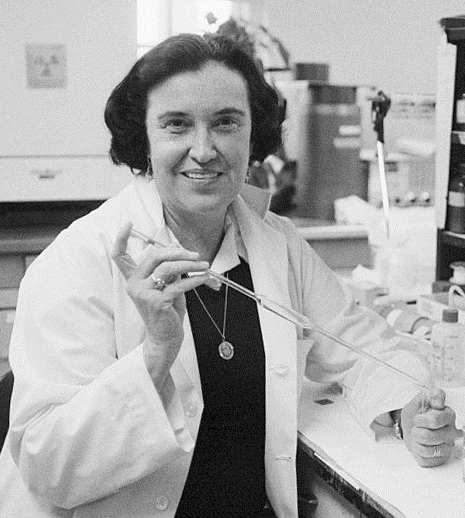
Rosalyn Sussman Yalow (July 19, 1921 – May 30, 2011) was an American medical physicist, and a co-winner of the 1977 Nobel Prize in Physiology or Medicine (together with Roger Guillemin and Andrew Schally) for development of the radioimmunoassay technique. She was the second woman (after Gerty Cori), and the first American-born woman, to be awarded the Nobel Prize in Physiology or Medicine.
Rosalyn Sussman Yalow was born in the Bronx, New York, the daughter of Clara (née Zipper) and Simon Sussman, and was raised in a Jewish household. She went to Walton High School (Bronx), New York City. After high school, she attended the all-female, tuition-free Hunter College, where her mother hoped she would learn to become a teacher. Instead, Yalow decided to study physics.
I was excited about achieving a career in physics. My family, being more practical, thought the most desirable position for me would be as an elementary school teacher.
Yalow knew how to type, and was able to get a part-time position as a secretary to Dr. Rudolf Schoenheimer, a leading biochemist at Columbia University's College of Physicians and Surgeons. She did not believe that any respectable graduate school would admit and financially support a woman, so she took another job as a secretary to Dr. Michael Heidelberger, another biochemist at Columbia, who hired her on the condition that she studied stenography. She graduated from Hunter College in January 1941.
A few years later, she received an offer to be a teaching assistant in physics at the University of Illinois at Urbana-Champaign. She received this offer partially because World War II had just begun and many men went off to fight, and the University opted to offer women education and jobs to avoid being shut down. At the University of Illinois at Urbana-Champaign, she was the only woman among the University's 400 members, and the first since 1917. Yalow earned her PhD in 1945. The next summer, she took two tuition-free physics courses under government auspices at New York University.
She married fellow student Aaron Yalow, the son of a rabbi, in June 1943. They had two children, Benjamin and Elanna Yalow, and kept a kosher home. Yalow did not believe in "balancing her career with her home life" and instead incorporated her home life wherever she could in her work life. However, she viewed the traditional roles of a homemaker as a priority, and devoted herself to traditional duties associated with motherhood and being a wife. Throughout her career, she tended to shun feminist organizations, but still advocated for including more women in science. While she believed the reason she had certain opportunities in physics was because of the war, she thought that the reason that the number of women in this field decreased after the war was due to a lack of interest. Yalow saw the feminist movement as a challenge to her traditional beliefs and thought that it encouraged women not to fulfill their duties to become mothers and wives.
The month after graduating from Hunter College in January 1941, Rosalyn Sussman Yalow was offered a position as a teaching assistant in the physics department of the University of Illinois at Urbana-Champaign. Gaining acceptance to the physics graduate program in the college of engineering at the University of Illinois was one of the many hurdles she had to overcome as a woman in her field. Powerful male figures controlled opportunities for training, recognition, promotion, and many aspects of development in the field of science, and especially physics.
When Yalow entered the university in September 1941, she was the only woman in the faculty, which comprised 400 professors and teaching assistants. She was the first woman since 1917 to attend or teach at this engineering college. Yalow credited her position at the prestigious graduate school to the shortage of male candidates during World War II. Being surrounded by gifted men made her aware of a wider world in science. They recognized her talent, they encouraged her, and they supported her. They were in a position to help her succeed.
Hub AI
Rosalyn Sussman Yalow AI simulator
(@Rosalyn Sussman Yalow_simulator)
Rosalyn Sussman Yalow
Rosalyn Sussman Yalow (July 19, 1921 – May 30, 2011) was an American medical physicist, and a co-winner of the 1977 Nobel Prize in Physiology or Medicine (together with Roger Guillemin and Andrew Schally) for development of the radioimmunoassay technique. She was the second woman (after Gerty Cori), and the first American-born woman, to be awarded the Nobel Prize in Physiology or Medicine.
Rosalyn Sussman Yalow was born in the Bronx, New York, the daughter of Clara (née Zipper) and Simon Sussman, and was raised in a Jewish household. She went to Walton High School (Bronx), New York City. After high school, she attended the all-female, tuition-free Hunter College, where her mother hoped she would learn to become a teacher. Instead, Yalow decided to study physics.
I was excited about achieving a career in physics. My family, being more practical, thought the most desirable position for me would be as an elementary school teacher.
Yalow knew how to type, and was able to get a part-time position as a secretary to Dr. Rudolf Schoenheimer, a leading biochemist at Columbia University's College of Physicians and Surgeons. She did not believe that any respectable graduate school would admit and financially support a woman, so she took another job as a secretary to Dr. Michael Heidelberger, another biochemist at Columbia, who hired her on the condition that she studied stenography. She graduated from Hunter College in January 1941.
A few years later, she received an offer to be a teaching assistant in physics at the University of Illinois at Urbana-Champaign. She received this offer partially because World War II had just begun and many men went off to fight, and the University opted to offer women education and jobs to avoid being shut down. At the University of Illinois at Urbana-Champaign, she was the only woman among the University's 400 members, and the first since 1917. Yalow earned her PhD in 1945. The next summer, she took two tuition-free physics courses under government auspices at New York University.
She married fellow student Aaron Yalow, the son of a rabbi, in June 1943. They had two children, Benjamin and Elanna Yalow, and kept a kosher home. Yalow did not believe in "balancing her career with her home life" and instead incorporated her home life wherever she could in her work life. However, she viewed the traditional roles of a homemaker as a priority, and devoted herself to traditional duties associated with motherhood and being a wife. Throughout her career, she tended to shun feminist organizations, but still advocated for including more women in science. While she believed the reason she had certain opportunities in physics was because of the war, she thought that the reason that the number of women in this field decreased after the war was due to a lack of interest. Yalow saw the feminist movement as a challenge to her traditional beliefs and thought that it encouraged women not to fulfill their duties to become mothers and wives.
The month after graduating from Hunter College in January 1941, Rosalyn Sussman Yalow was offered a position as a teaching assistant in the physics department of the University of Illinois at Urbana-Champaign. Gaining acceptance to the physics graduate program in the college of engineering at the University of Illinois was one of the many hurdles she had to overcome as a woman in her field. Powerful male figures controlled opportunities for training, recognition, promotion, and many aspects of development in the field of science, and especially physics.
When Yalow entered the university in September 1941, she was the only woman in the faculty, which comprised 400 professors and teaching assistants. She was the first woman since 1917 to attend or teach at this engineering college. Yalow credited her position at the prestigious graduate school to the shortage of male candidates during World War II. Being surrounded by gifted men made her aware of a wider world in science. They recognized her talent, they encouraged her, and they supported her. They were in a position to help her succeed.
Recent media