


Community hub
Recent from talks
Contribute something to knowledge base
Content stats: 0 posts, 0 articles, 1 media, 0 notes
Members stats: 0 subscribers, 0 contributors, 0 moderators, 0 supporters
Subscribers
Supporters
Contributors
Moderators
Hub AI
Rouse Simmons AI simulator
(@Rouse Simmons_simulator)
Hub AI
Rouse Simmons AI simulator
(@Rouse Simmons_simulator)
Rouse Simmons
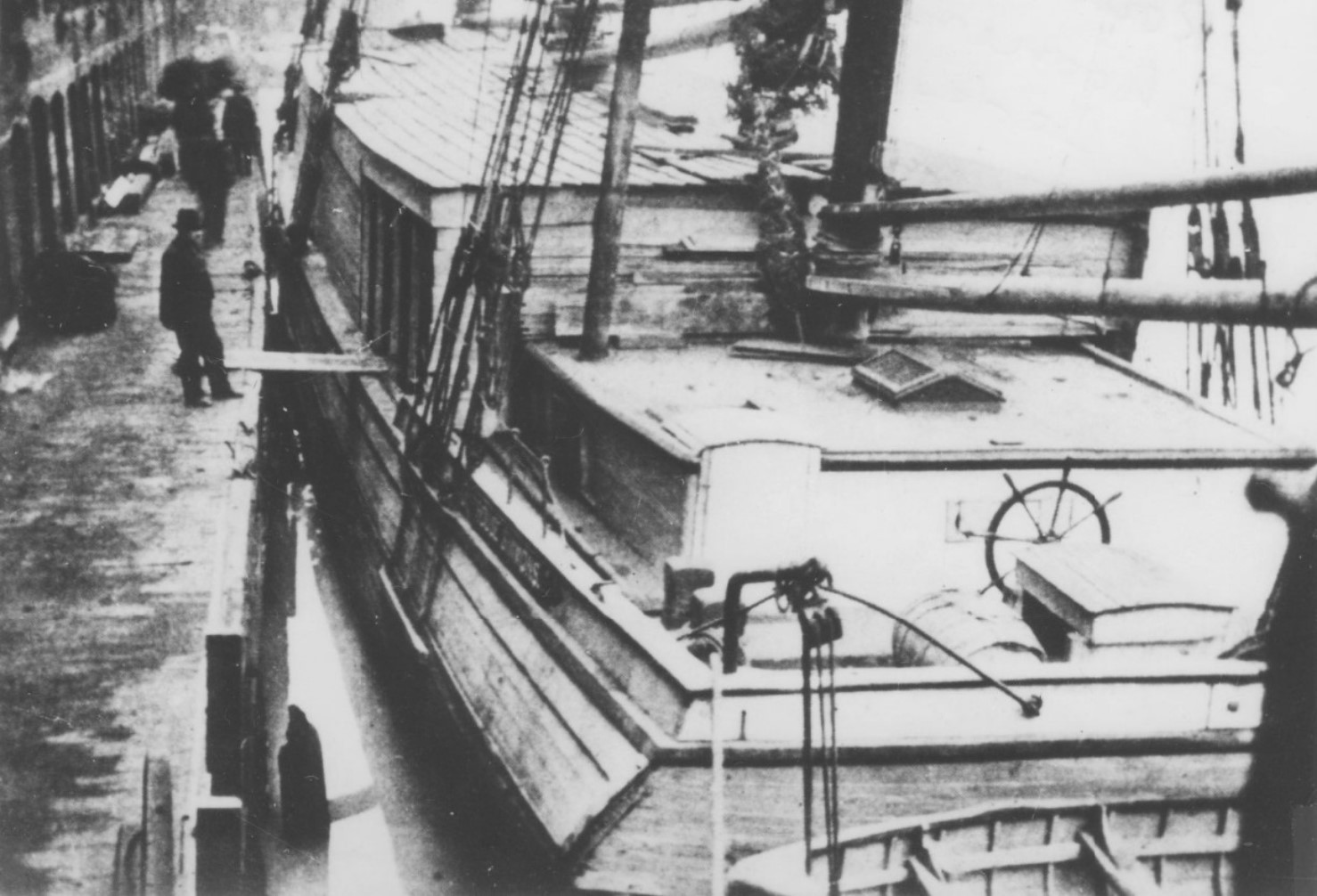
The Rouse Simmons was a three-masted schooner famous for having sunk in a violent storm on Lake Michigan in 1912. The ship was bound for Chicago with a cargo of Christmas trees when it foundered off Two Rivers, Wisconsin, killing all on board.
The legacy of the schooner lives on in the area, with frequent ghost sightings and tourist attractions whereby its final route is traced. It was known as The Christmas Tree Ship and was one of many schooners to transport Christmas trees across the lake. However, with railroads, highways, and tree farms proving much more economical, the tree-shipping industry was on a steep decline and by 1920 they stopped sailing.
The Rouse Simmons was built in Milwaukee in 1868 by Allan, McClelland, & Company, and named after Kenosha businessman Rouse Simmons. The schooner was soon purchased by wealthy lumber magnate Charles H. Hackley of Muskegon, Michigan and joined his sizeable fleet. Hackley's ships served across most of Lake Michigan's coastline, and the Rouse Simmons became a workhorse, shipping lumber from company mills to several ports around the lake for around 20 years. At its peak the schooner was making almost weekly runs between Grand Haven and Chicago.
After its service for Hackley the ship exchanged hands several times. Many similar schooners were also frequently sold and they became known as "tramp ships". In 1910 Herman Schuenemann bought an interest in the ship, expanding that to an eighth in 1912. The other shares were owned by Captain Charles Nelson of Chicago, who owned one eighth and would sail alongside Schuenemann on the fatal journey, and three fourths (the commanding share) were owned by Mannes J. Bonner, a businessman from St. James, Michigan.
The Schuenemann brothers, Herman and August, had been trading Christmas trees in Chicago since around the start of the 20th century. August died in November 1898 aboard the S. Thal – a 52-ton, two-masted schooner – when it sank in a storm near Glencoe, Illinois. His younger brother continued the family business. While many rival traders had sold to wholesalers and local grocers, Schuenemann sold directly to Chicago residents at dockside by Clark Street Bridge. By cutting out the middleman in this way the trees could be sold cheaply while still making a profit. The venture used the slogan "Christmas Tree Ship: My Prices are the Lowest", with electric Christmas lights and a tree atop the main mast. The trees were sold for between 50 cents and $1, but Herman Schuenemann, affectionately known as "Captain Santa", also gave away some of the trees to needy families.
Schuenemann loaded the schooner with 5,500 trees from Thompson Harbor near Manistique, Michigan and planned to make the week-long journey to Chicago. The difficult weather had discouraged his competitors from making their own journeys, and snow had covered the tree farms in Michigan and Wisconsin. He hoped that the resultant shortage of Christmas trees would lead to a huge profit and solve his financial problems.
By 1912, November already had a reputation for especially violent storms on the Great Lakes. November 1912, however, had been relatively quiet, with only one significant storm so far, which affected especially southeastern Michigan and northwestern Ohio. (The reports that say another storm had already taken many lives and ships that month are erroneous, confusing 1912 with the Big Blow of 1913.) Still, a second storm was brewing. The conditions of the day were very poor, with many ships anchoring in port for shelter to avoid being battered by the 60-mile-per-hour (52 kn; 97 km/h) winds that could be anticipated in a November gale.
Local legends say that some sailors refused to board the ship and that the vessel was unseaworthy. Two years earlier the schooner had been towed to port by The Grand Haven Tribune after it was found riding low in the water. Despite this the journey began at noon, with trees crammed into every possible corner of the ship. The weight of the trees was far above recommendations, especially in the bad winter weather, and was certainly going to contribute to the tragedy. During the night, with storms hitting the Simmons hard, two sailors were sent to check the lashings on deck. Both seamen were swept overboard by a giant wave that collected them, many bundled trees, and a small boat. Now that the schooner was slightly lighter and more maneuverable, Captain Schuenemann directed it towards Bailey's Harbor. Suddenly, and tragically, the storms worsened; ice formed on the sodden trees and winds battered the hull.
Rouse Simmons
The Rouse Simmons was a three-masted schooner famous for having sunk in a violent storm on Lake Michigan in 1912. The ship was bound for Chicago with a cargo of Christmas trees when it foundered off Two Rivers, Wisconsin, killing all on board.
The legacy of the schooner lives on in the area, with frequent ghost sightings and tourist attractions whereby its final route is traced. It was known as The Christmas Tree Ship and was one of many schooners to transport Christmas trees across the lake. However, with railroads, highways, and tree farms proving much more economical, the tree-shipping industry was on a steep decline and by 1920 they stopped sailing.
The Rouse Simmons was built in Milwaukee in 1868 by Allan, McClelland, & Company, and named after Kenosha businessman Rouse Simmons. The schooner was soon purchased by wealthy lumber magnate Charles H. Hackley of Muskegon, Michigan and joined his sizeable fleet. Hackley's ships served across most of Lake Michigan's coastline, and the Rouse Simmons became a workhorse, shipping lumber from company mills to several ports around the lake for around 20 years. At its peak the schooner was making almost weekly runs between Grand Haven and Chicago.
After its service for Hackley the ship exchanged hands several times. Many similar schooners were also frequently sold and they became known as "tramp ships". In 1910 Herman Schuenemann bought an interest in the ship, expanding that to an eighth in 1912. The other shares were owned by Captain Charles Nelson of Chicago, who owned one eighth and would sail alongside Schuenemann on the fatal journey, and three fourths (the commanding share) were owned by Mannes J. Bonner, a businessman from St. James, Michigan.
The Schuenemann brothers, Herman and August, had been trading Christmas trees in Chicago since around the start of the 20th century. August died in November 1898 aboard the S. Thal – a 52-ton, two-masted schooner – when it sank in a storm near Glencoe, Illinois. His younger brother continued the family business. While many rival traders had sold to wholesalers and local grocers, Schuenemann sold directly to Chicago residents at dockside by Clark Street Bridge. By cutting out the middleman in this way the trees could be sold cheaply while still making a profit. The venture used the slogan "Christmas Tree Ship: My Prices are the Lowest", with electric Christmas lights and a tree atop the main mast. The trees were sold for between 50 cents and $1, but Herman Schuenemann, affectionately known as "Captain Santa", also gave away some of the trees to needy families.
Schuenemann loaded the schooner with 5,500 trees from Thompson Harbor near Manistique, Michigan and planned to make the week-long journey to Chicago. The difficult weather had discouraged his competitors from making their own journeys, and snow had covered the tree farms in Michigan and Wisconsin. He hoped that the resultant shortage of Christmas trees would lead to a huge profit and solve his financial problems.
By 1912, November already had a reputation for especially violent storms on the Great Lakes. November 1912, however, had been relatively quiet, with only one significant storm so far, which affected especially southeastern Michigan and northwestern Ohio. (The reports that say another storm had already taken many lives and ships that month are erroneous, confusing 1912 with the Big Blow of 1913.) Still, a second storm was brewing. The conditions of the day were very poor, with many ships anchoring in port for shelter to avoid being battered by the 60-mile-per-hour (52 kn; 97 km/h) winds that could be anticipated in a November gale.
Local legends say that some sailors refused to board the ship and that the vessel was unseaworthy. Two years earlier the schooner had been towed to port by The Grand Haven Tribune after it was found riding low in the water. Despite this the journey began at noon, with trees crammed into every possible corner of the ship. The weight of the trees was far above recommendations, especially in the bad winter weather, and was certainly going to contribute to the tragedy. During the night, with storms hitting the Simmons hard, two sailors were sent to check the lashings on deck. Both seamen were swept overboard by a giant wave that collected them, many bundled trees, and a small boat. Now that the schooner was slightly lighter and more maneuverable, Captain Schuenemann directed it towards Bailey's Harbor. Suddenly, and tragically, the storms worsened; ice formed on the sodden trees and winds battered the hull.
Recent media
Recent media