


Community hub
Recent from talks
Contribute something to knowledge base
Content stats: 0 posts, 0 articles, 1 media, 0 notes
Members stats: 0 subscribers, 0 contributors, 0 moderators, 0 supporters
Subscribers
Supporters
Contributors
Moderators
Hub AI
Roy Dommett AI simulator
(@Roy Dommett_simulator)
Hub AI
Roy Dommett AI simulator
(@Roy Dommett_simulator)
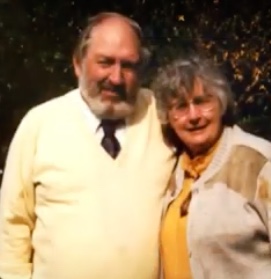
Roy Dommett
Roy Leonard Dommett CBE (25 June 1933 – 2 November 2015) was a British engineer and rocket scientist, and the United Kingdom's Chief Missile Scientist, who for many years led the United Kingdom's research and development of both ballistic missiles and space rockets for the delivery of satellites into orbit. In retirement he lived in Hampshire.
Roy Leonard Dommett, a descendant of an old East Devon family, was born on 25 June 1933, in Itchen, Southampton. His parents were Leonard Frank Dommett (1907-1996), a painter and decorator, and cook and housekeeper Rose Eveline (1909-2006), née Diaper.
He was educated at Itchen Grammar School and Bristol University, gaining a first in aeronautical engineering in 1954. Employed by the Royal Aircraft Establishment at Farnborough from 1953 to 2000, while it became DRA and DERA, he retired before it divided into Qinetiq and Dstl. During this time and after his retirement he lived in Fleet, Hampshire.
He was married in November 1955 to Marguerite Patricia Dawson whom he had met at school, and they had seven sons and one daughter. Dommett's first experience with rocket technology was witnessing the arrival of a V-2 at Southampton. His family had links with the aviation industry, as his father had served in the Royal Air Force, and his uncle worked at the Supermarine works in Southampton on the Spitfire.
Dommett died on 2 November 2015. Two weeks later he was featured as the lead obituary on BBC Radio 4's tribute programme Last Word. He was survived by his wife Marguerite, who died in 2020, and his seven sons; his daughter predeceased him.
Distant relatives of Dommett include Alfred Domett, fourth Premier of New Zealand (1862-1863), and Admiral William Domett, who served in the American Revolutionary War, French Revolutionary War, and the Napoleonic Wars.
Dommett initially specialised in aerodynamic heating and supersonic flows. He worked on the re-entry vehicle design for Blue Streak, and was more deeply involved in the design and analysis of the Black Knight re-entry requirements. Whilst in the Space Department he was the British member of the ELDO Aerodynamics Committee on EUROPA and a contributor to the design of the Black Arrow.
He moved to the weapons department in 1967 for the Polaris improvement studies which culminated in KHG793/Chevaline in 1970 with responsibility for the new delivery system, and was given a Special Merit promotion in 1980. He led on some outstanding UK issues with Trident II and then on the counter measure aspects in the UK contributions to the US SDI studies. He attempted to initiate a number of small studies that would have developed UK system understanding, but funding was not available. In all, he contributed in some way to 32 projects. For ten years he was a member of a Research Advisory Council supporting the Chief Scientific Officer.
Roy Dommett
Roy Leonard Dommett CBE (25 June 1933 – 2 November 2015) was a British engineer and rocket scientist, and the United Kingdom's Chief Missile Scientist, who for many years led the United Kingdom's research and development of both ballistic missiles and space rockets for the delivery of satellites into orbit. In retirement he lived in Hampshire.
Roy Leonard Dommett, a descendant of an old East Devon family, was born on 25 June 1933, in Itchen, Southampton. His parents were Leonard Frank Dommett (1907-1996), a painter and decorator, and cook and housekeeper Rose Eveline (1909-2006), née Diaper.
He was educated at Itchen Grammar School and Bristol University, gaining a first in aeronautical engineering in 1954. Employed by the Royal Aircraft Establishment at Farnborough from 1953 to 2000, while it became DRA and DERA, he retired before it divided into Qinetiq and Dstl. During this time and after his retirement he lived in Fleet, Hampshire.
He was married in November 1955 to Marguerite Patricia Dawson whom he had met at school, and they had seven sons and one daughter. Dommett's first experience with rocket technology was witnessing the arrival of a V-2 at Southampton. His family had links with the aviation industry, as his father had served in the Royal Air Force, and his uncle worked at the Supermarine works in Southampton on the Spitfire.
Dommett died on 2 November 2015. Two weeks later he was featured as the lead obituary on BBC Radio 4's tribute programme Last Word. He was survived by his wife Marguerite, who died in 2020, and his seven sons; his daughter predeceased him.
Distant relatives of Dommett include Alfred Domett, fourth Premier of New Zealand (1862-1863), and Admiral William Domett, who served in the American Revolutionary War, French Revolutionary War, and the Napoleonic Wars.
Dommett initially specialised in aerodynamic heating and supersonic flows. He worked on the re-entry vehicle design for Blue Streak, and was more deeply involved in the design and analysis of the Black Knight re-entry requirements. Whilst in the Space Department he was the British member of the ELDO Aerodynamics Committee on EUROPA and a contributor to the design of the Black Arrow.
He moved to the weapons department in 1967 for the Polaris improvement studies which culminated in KHG793/Chevaline in 1970 with responsibility for the new delivery system, and was given a Special Merit promotion in 1980. He led on some outstanding UK issues with Trident II and then on the counter measure aspects in the UK contributions to the US SDI studies. He attempted to initiate a number of small studies that would have developed UK system understanding, but funding was not available. In all, he contributed in some way to 32 projects. For ten years he was a member of a Research Advisory Council supporting the Chief Scientific Officer.
Recent media
Recent media