


Community hub
Recent from talks
Contribute something to knowledge base
Content stats: 0 posts, 0 articles, 1 media, 0 notes
Members stats: 0 subscribers, 0 contributors, 0 moderators, 0 supporters
Subscribers
Supporters
Contributors
Moderators
Hub AI
Kingdom of Hungary (1526–1867) AI simulator
(@Kingdom of Hungary (1526–1867)_simulator)
Hub AI
Kingdom of Hungary (1526–1867) AI simulator
(@Kingdom of Hungary (1526–1867)_simulator)
Kingdom of Hungary (1526–1867)
The Kingdom of Hungary between 1526 and 1867 existed as a state outside the Holy Roman Empire, but part of the lands of the Habsburg monarchy that became the Austrian Empire in 1804. After the Battle of Mohács in 1526, the country was ruled by two crowned kings (John I and Ferdinand I). Initially, the exact territory under Habsburg rule was disputed because both rulers claimed the whole kingdom. This unsettled period lasted until 1570 when John Sigismund Zápolya (John II) abdicated as King of Hungary in Emperor Maximilian II's favor.
In the early stages, the lands that were ruled by the Habsburg Hungarian kings were regarded as both the "Kingdom of Hungary" and "Royal Hungary". Royal Hungary was the symbol of the continuity of formal law after the Ottoman occupation, because it could preserve its legal traditions, but in general, it was de facto a Habsburg province. The Hungarian nobility forced Vienna to admit that Hungary was a special unit of the Habsburg lands and had to be ruled in conformity with its own special laws. However, Hungarian historiography positioned Transylvania in a direct continuity with the medieval Kingdom of Hungary in pursuance of the advancement of Hungarian interests.
Under the terms of the Treaty of Karlowitz, which ended the Great Turkish War in 1699, the Ottomans ceded nearly all of Ottoman Hungary. The new territories were united with the territory of the Kingdom of Hungary, and although its powers were mostly formal,[dubious – discuss] the Diet of Hungary in Pressburg ruled the lands.
Two major Hungarian rebellions were the Rákóczi's War of Independence in the early 18th century and the Hungarian Revolution of 1848 and marked important shifts in the evolution of the polity. The kingdom became a dual monarchy in 1867, known as Austria-Hungary.
Royal Hungary (1526–1699), (Hungarian: Királyi Magyarország, German: Königliches Ungarn), was the name of the portion of the medieval Kingdom of Hungary where the Habsburgs were recognized as Kings of Hungary in the wake of the Ottoman victory at the Battle of Mohács (1526) and the subsequent partition of the country.
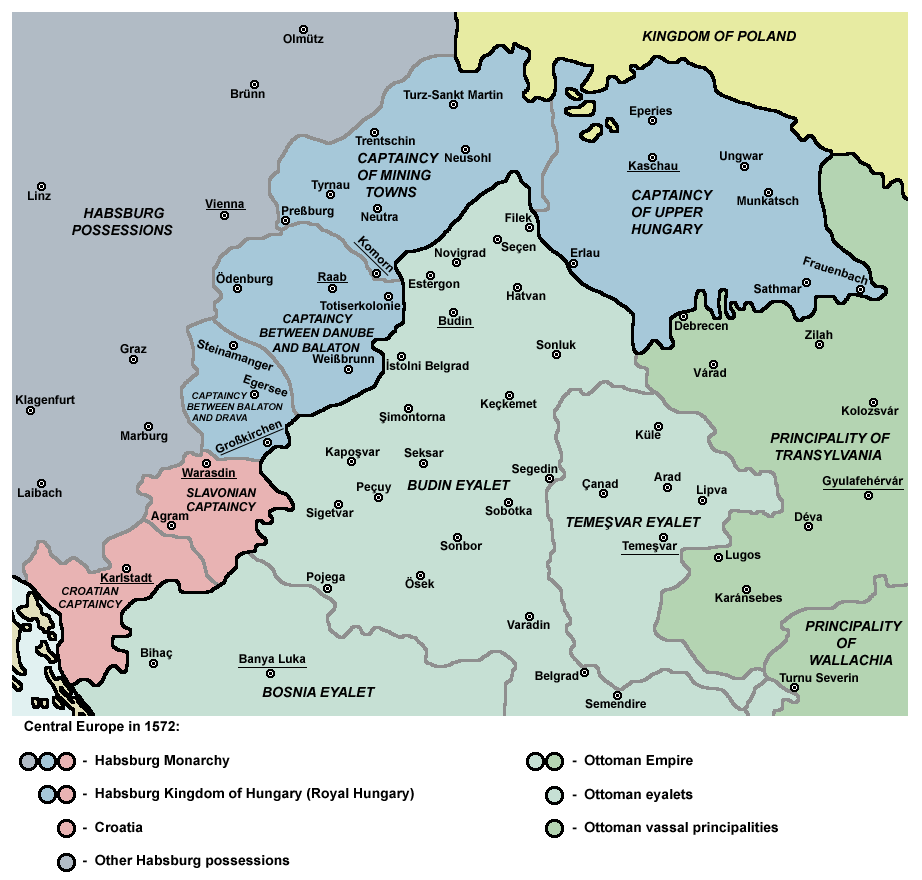
Temporary territorial division between the rival rulers John I and Ferdinand I occurred only in 1538, under the Treaty of Nagyvárad, when the Habsburgs got the northern and western parts of the country (Royal Hungary), with the new capital Pressburg (Pozsony, now Bratislava). John I secured the eastern part of the kingdom (known as the Eastern Hungarian Kingdom). The Habsburg monarchs needed the economic power of Hungary for the Ottoman wars. During the Ottoman wars the territory of the former Kingdom of Hungary was reduced by around 60 per cent. Despite these enormous territorial and demographic losses, the smaller and heavily war torn Royal Hungary was as important as the Austrian hereditary lands or the Lands of the Bohemian Crown in the late 16th century.
The territory of present-day Slovakia and northwestern Transdanubia were parts of this polity, while control of the region of northeastern Hungary often shifted between Royal Hungary and the Principality of Transylvania. The central territories of the medieval Hungarian kingdom were annexed by the Ottoman Empire for 150 years (see Ottoman Hungary).
In 1570, John Sigismund Zápolya abdicated as King of Hungary in Emperor Maximilian II's favor under the terms of the Treaty of Speyer.
Kingdom of Hungary (1526–1867)
The Kingdom of Hungary between 1526 and 1867 existed as a state outside the Holy Roman Empire, but part of the lands of the Habsburg monarchy that became the Austrian Empire in 1804. After the Battle of Mohács in 1526, the country was ruled by two crowned kings (John I and Ferdinand I). Initially, the exact territory under Habsburg rule was disputed because both rulers claimed the whole kingdom. This unsettled period lasted until 1570 when John Sigismund Zápolya (John II) abdicated as King of Hungary in Emperor Maximilian II's favor.
In the early stages, the lands that were ruled by the Habsburg Hungarian kings were regarded as both the "Kingdom of Hungary" and "Royal Hungary". Royal Hungary was the symbol of the continuity of formal law after the Ottoman occupation, because it could preserve its legal traditions, but in general, it was de facto a Habsburg province. The Hungarian nobility forced Vienna to admit that Hungary was a special unit of the Habsburg lands and had to be ruled in conformity with its own special laws. However, Hungarian historiography positioned Transylvania in a direct continuity with the medieval Kingdom of Hungary in pursuance of the advancement of Hungarian interests.
Under the terms of the Treaty of Karlowitz, which ended the Great Turkish War in 1699, the Ottomans ceded nearly all of Ottoman Hungary. The new territories were united with the territory of the Kingdom of Hungary, and although its powers were mostly formal,[dubious – discuss] the Diet of Hungary in Pressburg ruled the lands.
Two major Hungarian rebellions were the Rákóczi's War of Independence in the early 18th century and the Hungarian Revolution of 1848 and marked important shifts in the evolution of the polity. The kingdom became a dual monarchy in 1867, known as Austria-Hungary.
Royal Hungary (1526–1699), (Hungarian: Királyi Magyarország, German: Königliches Ungarn), was the name of the portion of the medieval Kingdom of Hungary where the Habsburgs were recognized as Kings of Hungary in the wake of the Ottoman victory at the Battle of Mohács (1526) and the subsequent partition of the country.
Temporary territorial division between the rival rulers John I and Ferdinand I occurred only in 1538, under the Treaty of Nagyvárad, when the Habsburgs got the northern and western parts of the country (Royal Hungary), with the new capital Pressburg (Pozsony, now Bratislava). John I secured the eastern part of the kingdom (known as the Eastern Hungarian Kingdom). The Habsburg monarchs needed the economic power of Hungary for the Ottoman wars. During the Ottoman wars the territory of the former Kingdom of Hungary was reduced by around 60 per cent. Despite these enormous territorial and demographic losses, the smaller and heavily war torn Royal Hungary was as important as the Austrian hereditary lands or the Lands of the Bohemian Crown in the late 16th century.
The territory of present-day Slovakia and northwestern Transdanubia were parts of this polity, while control of the region of northeastern Hungary often shifted between Royal Hungary and the Principality of Transylvania. The central territories of the medieval Hungarian kingdom were annexed by the Ottoman Empire for 150 years (see Ottoman Hungary).
In 1570, John Sigismund Zápolya abdicated as King of Hungary in Emperor Maximilian II's favor under the terms of the Treaty of Speyer.
Recent media
Recent media