
Recent from talks
Rush (band)
Knowledge base stats:
Talk channels stats:
Members stats:
Rush (band)
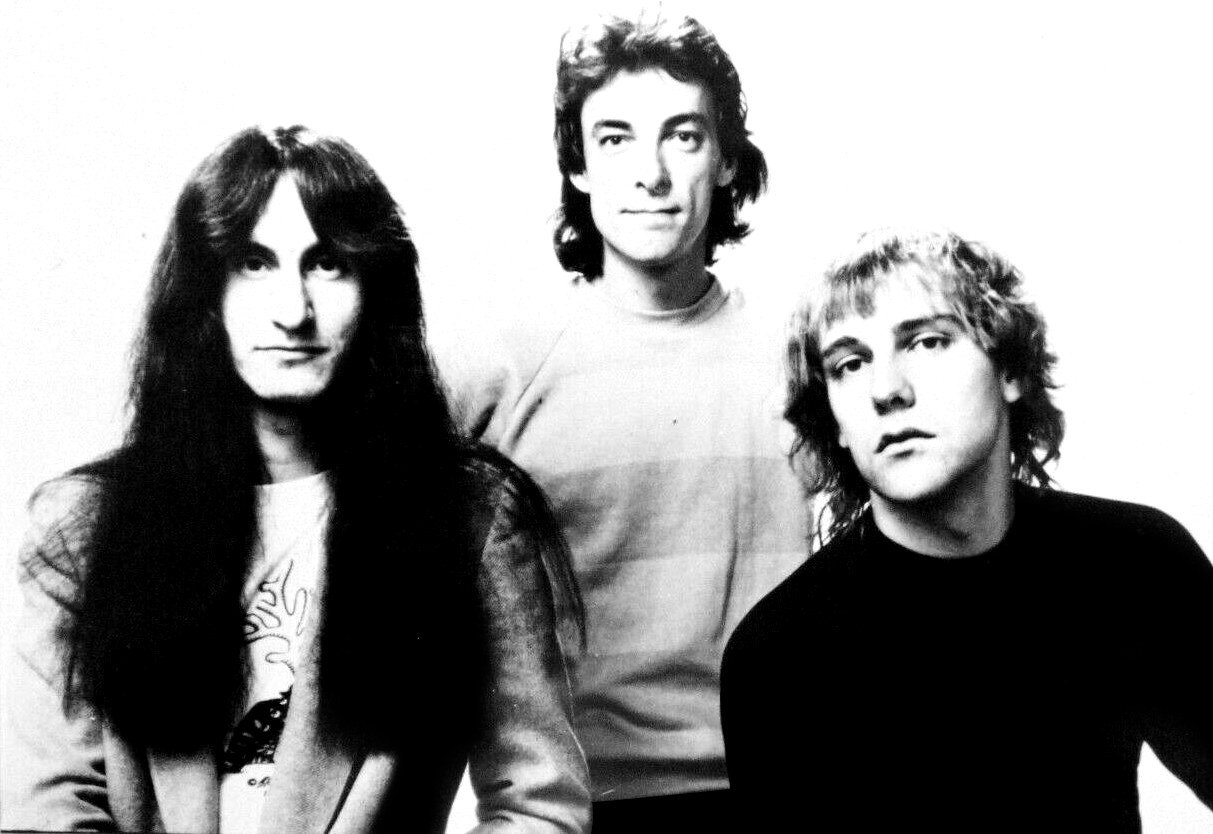
Rush are a Canadian rock band formed in Toronto in 1968. The band's original line-up included guitarist Alex Lifeson, drummer John Rutsey, and bassist and vocalist Jeff Jones, whom Geddy Lee replaced shortly after its formation. Rush went through a few line-up changes over the next six years, before arriving at its classic power trio line-up with the addition of Neil Peart in July 1974, replacing Rutsey four months after the release of their self-titled debut album. The line-up of Lifeson, Lee and Peart remained stable for the remainder of the band's initial run until 2015, after which Peart retired from music. Lifeson later confirmed in 2018 that the band had disbanded, citing Peart's health as a contributing factor. Lifeson and Lee continued to occasionally work together in the years following Peart's death in 2020. In October 2025, Lifeson and Lee announced a 2026 reunion tour as Rush, with Anika Nilles filling in for Peart.
Rush are known for their virtuosic musicianship, complex compositions and eclectic lyrical motifs, which drew primarily on science fiction, fantasy and philosophy. The band's style changed over the years, from a blues-inspired hard rock beginning, later moving into progressive rock, then a period in the 1980s marked by heavy use of synthesizers, before returning to guitar-driven rock in the remainder of their career. The members of Rush have been acknowledged as some of the most proficient players on their respective instruments, with each winning numerous awards in magazine readers' polls in various years.
As of 2024, Rush ranks 90th in the US with sales of 26 million albums and industry sources estimate their total worldwide album sales at over 42 million. They have been awarded 14 platinum and 3 multi-platinum albums in the US and 17 platinum albums in Canada. Rush were nominated for seven Grammy Awards, won ten Juno Awards, and won an International Achievement Award at the 2009 SOCAN Awards. The band was inducted into the Canadian Music Hall of Fame in 1994 and the Rock and Roll Hall of Fame in 2013. Critics consider Rush to be one of the greatest rock bands of all time.
The band was formed in the neighbourhood of Willowdale in Toronto by guitarist Alex Lifeson, bassist and frontman Jeff Jones, and drummer John Rutsey, in August 1968. Lifeson and Rutsey had been friends since a young age and played together in a short-lived band, The Projection (formerly known as The Lost Cause). Afterward the two stuck together and brought in Jones to form a new group; their first gig was in September at the Coff-Inn, a youth centre in the basement of St. Theodore of Canterbury Anglican Church in Willowdale; they were paid CA$25. They had not named themselves at the time of the booking; Rutsey's brother, Bill thought they needed a name that was short and to the point. He suggested Rush, and the group went with it.
Due to increasing difficulties in getting to Lifeson's house for practice, Jones suggested that Lifeson get his schoolmate Gary "Geddy" Weinrib to step in on lead vocals and bass. Weinrib replaced Jones as Rush's frontman, adopting the stage name Geddy Lee. Rush rehearsed a set mainly formed of covers by various rock artists, including Cream, Jimi Hendrix, and John Mayall. The band underwent several configurations to the line-up that included Lindy Young (who was recruited in early 1969) on keyboards and various instruments, and Mitch Bossi on second guitar (later on, in 1971). Shortly after becoming a four-piece band of Lee, Lifeson, Young and Rutsey, Ray Danniels was hired to be their manager. As Lee recounted years later,
Ray came along. He had no real reputation yet as a manager or anything. He was just kind of an agent working in Toronto. So he started directing the band and he just thought I wasn't suitable, for whatever reasons he had. I don't know whether it was the way I looked, or my religious background–who the f--- knew? Anyway, he influenced them and they went along with it, Alex Lifeson and John Rutsey, and I was out.
With Lee kicked out of the band in spring 1969, Rutsey recruited new bassist and vocalist Joe Perna, and the group of Lifeson, Rutsey, Young and Perna named themselves Hadrian. But after a disastrous gig with Perna, Rutsey invited Lee back in September 1969 and the group resumed as Rush. Lee said, "I started a blues band (named Ogilvie, then Judd, and joined by Lindy Young) and I was, frankly speaking, doing better than they were. Then I got a call from John and he said, 'Can we get together?' Basically, 'Can you come back? We're sorry.'" Second guitarist Mitch Bossi joined during the first half of 1971 but after that, the band stabilized as a trio of Lifeson, Rutsey and Lee. They kept Danniels as their manager, with his business partner and agent Vic Wilson sharing duties.
Rush honed their skills with regular gigs, initially touring the Ontario high school circuit. In 1971, the legal drinking age was decreased from 21 to 18, allowing the band to play bars and clubs. Lee said it was at this point that Rush turned "from a basement garage band that played the occasional high school gig to a regular working band playing six days a week." A demo tape was shipped to various record labels, but Rush were unable to secure a deal, leading to Danniels and them forming their own label, Moon Records. Rush recorded their first single in 1973; their cover of "Not Fade Away" by Buddy Holly was chosen as it had become a crowd favourite. "You Can't Fight It", an original song, was put on the B-side. Released in September, it went to No. 88 on the Canadian RPM Top Singles chart. Also in September 1973, Rush performed their first major gig, opening for the New York Dolls in Toronto and finished putting down tracks for their first album. The initial sessions produced undesirable results over the sound quality, so tracks were recut and remixed with a new engineer, Terry Brown. Danniels sold his management company to help raise funds to make the record. Rutsey wrote the lyrics, but tore them up on the day Lee was to record them and would not produce a new set. Lee quickly wrote a fresh set based on earlier versions, which was used on the final take.
Hub AI
Rush (band) AI simulator
(@Rush (band)_simulator)
Rush (band)
Rush are a Canadian rock band formed in Toronto in 1968. The band's original line-up included guitarist Alex Lifeson, drummer John Rutsey, and bassist and vocalist Jeff Jones, whom Geddy Lee replaced shortly after its formation. Rush went through a few line-up changes over the next six years, before arriving at its classic power trio line-up with the addition of Neil Peart in July 1974, replacing Rutsey four months after the release of their self-titled debut album. The line-up of Lifeson, Lee and Peart remained stable for the remainder of the band's initial run until 2015, after which Peart retired from music. Lifeson later confirmed in 2018 that the band had disbanded, citing Peart's health as a contributing factor. Lifeson and Lee continued to occasionally work together in the years following Peart's death in 2020. In October 2025, Lifeson and Lee announced a 2026 reunion tour as Rush, with Anika Nilles filling in for Peart.
Rush are known for their virtuosic musicianship, complex compositions and eclectic lyrical motifs, which drew primarily on science fiction, fantasy and philosophy. The band's style changed over the years, from a blues-inspired hard rock beginning, later moving into progressive rock, then a period in the 1980s marked by heavy use of synthesizers, before returning to guitar-driven rock in the remainder of their career. The members of Rush have been acknowledged as some of the most proficient players on their respective instruments, with each winning numerous awards in magazine readers' polls in various years.
As of 2024, Rush ranks 90th in the US with sales of 26 million albums and industry sources estimate their total worldwide album sales at over 42 million. They have been awarded 14 platinum and 3 multi-platinum albums in the US and 17 platinum albums in Canada. Rush were nominated for seven Grammy Awards, won ten Juno Awards, and won an International Achievement Award at the 2009 SOCAN Awards. The band was inducted into the Canadian Music Hall of Fame in 1994 and the Rock and Roll Hall of Fame in 2013. Critics consider Rush to be one of the greatest rock bands of all time.
The band was formed in the neighbourhood of Willowdale in Toronto by guitarist Alex Lifeson, bassist and frontman Jeff Jones, and drummer John Rutsey, in August 1968. Lifeson and Rutsey had been friends since a young age and played together in a short-lived band, The Projection (formerly known as The Lost Cause). Afterward the two stuck together and brought in Jones to form a new group; their first gig was in September at the Coff-Inn, a youth centre in the basement of St. Theodore of Canterbury Anglican Church in Willowdale; they were paid CA$25. They had not named themselves at the time of the booking; Rutsey's brother, Bill thought they needed a name that was short and to the point. He suggested Rush, and the group went with it.
Due to increasing difficulties in getting to Lifeson's house for practice, Jones suggested that Lifeson get his schoolmate Gary "Geddy" Weinrib to step in on lead vocals and bass. Weinrib replaced Jones as Rush's frontman, adopting the stage name Geddy Lee. Rush rehearsed a set mainly formed of covers by various rock artists, including Cream, Jimi Hendrix, and John Mayall. The band underwent several configurations to the line-up that included Lindy Young (who was recruited in early 1969) on keyboards and various instruments, and Mitch Bossi on second guitar (later on, in 1971). Shortly after becoming a four-piece band of Lee, Lifeson, Young and Rutsey, Ray Danniels was hired to be their manager. As Lee recounted years later,
Ray came along. He had no real reputation yet as a manager or anything. He was just kind of an agent working in Toronto. So he started directing the band and he just thought I wasn't suitable, for whatever reasons he had. I don't know whether it was the way I looked, or my religious background–who the f--- knew? Anyway, he influenced them and they went along with it, Alex Lifeson and John Rutsey, and I was out.
With Lee kicked out of the band in spring 1969, Rutsey recruited new bassist and vocalist Joe Perna, and the group of Lifeson, Rutsey, Young and Perna named themselves Hadrian. But after a disastrous gig with Perna, Rutsey invited Lee back in September 1969 and the group resumed as Rush. Lee said, "I started a blues band (named Ogilvie, then Judd, and joined by Lindy Young) and I was, frankly speaking, doing better than they were. Then I got a call from John and he said, 'Can we get together?' Basically, 'Can you come back? We're sorry.'" Second guitarist Mitch Bossi joined during the first half of 1971 but after that, the band stabilized as a trio of Lifeson, Rutsey and Lee. They kept Danniels as their manager, with his business partner and agent Vic Wilson sharing duties.
Rush honed their skills with regular gigs, initially touring the Ontario high school circuit. In 1971, the legal drinking age was decreased from 21 to 18, allowing the band to play bars and clubs. Lee said it was at this point that Rush turned "from a basement garage band that played the occasional high school gig to a regular working band playing six days a week." A demo tape was shipped to various record labels, but Rush were unable to secure a deal, leading to Danniels and them forming their own label, Moon Records. Rush recorded their first single in 1973; their cover of "Not Fade Away" by Buddy Holly was chosen as it had become a crowd favourite. "You Can't Fight It", an original song, was put on the B-side. Released in September, it went to No. 88 on the Canadian RPM Top Singles chart. Also in September 1973, Rush performed their first major gig, opening for the New York Dolls in Toronto and finished putting down tracks for their first album. The initial sessions produced undesirable results over the sound quality, so tracks were recut and remixed with a new engineer, Terry Brown. Danniels sold his management company to help raise funds to make the record. Rutsey wrote the lyrics, but tore them up on the day Lee was to record them and would not produce a new set. Lee quickly wrote a fresh set based on earlier versions, which was used on the final take.
Recent media