Hubbry Logo
Ruut TarmoRuut TarmoMain
Open search
Ruut Tarmo
Community hub
Ruut Tarmo
logo
8 pages, 0 posts
0 subscribers
Be the first to start a discussion here.
Ruut Tarmo
Ruut Tarmo
from Wikipedia

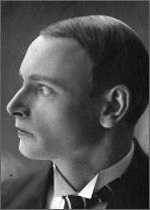
Ruut Tarmo (26 April 1896 – 28 January 1967)[1] was an Estonian stage and film actor and stage director whose career spanned more than five decades.

Key Information

Biography

[edit]

Ruut Tarmo was born Harald Rudolf Klein in Tartu in 1896 to Julius Klein and Sohvi Klein (née Anja)[1] and he began his career on stages in his hometown in 1912. In 1914 he began an engagement at the prestigious Vanemuine Theatre and would later travel the world's stages (including at least two appearances on London stages with fellow countryman Ants Eskola),.[2] Ruut Tarmo was the stage manager of the Apollo miniature theater in Tallinn from 1917 to 1922. Tarmo worked at the Estonian Drama Theatre in 1922–25, 1928–41, 1949–51, at the Vanemuine in 1925–26, at the theater Rändteater in 1926–28, and in the Estonia Theatre in 1941–49 as a drama actor. In 1927 he would make his film debut in the Aksella Luts and Theodor Luts-penned and directed silent film drama Noored kotkad (English: Young Eagles), which chronicled Estonian soldiers fighting in the Estonian War of Independence from 1918 to 1920.[3]

In November 1951, Tarmo and his wife, actress Mari Möldre, were arrested on charges of performing anti-Soviet repertoire and for anti-Soviet jokes and opinions. Although the reasoning was not very watertight, they were sentenced to ten years in prison with the deprivation of all rights and the confiscation of all property. Tarmo's wife was released after Joseph Stalin's death in July 1954, Tarmo was released from prison in January 1955. After his release, he was forbidden to participate in the arts. Upon the ban being lifted, Tarmo returned to the stage and screen. In 1955, he made his first post-ban film appearance in a comedic short titled Värav nr. 2, directed by Oleg Lentsius.[4]

From 1955 to 1967, Ruut Tarmo worked again at the Estonian Drama Theater. He played also in several television productions and many Estonian films. His last film role was in the feature film Keskpäevane praam (English: Midday Ferry). Tarmo would remain a popular stage and film actor until his death in Tallinn in 1967.

In 1971, his wife would write a posthumous biography of the actor; Ruut Tarmo, published by Eesti Raamat.[5] In 2010, a play titled Mari ja Ruut was performed at the Estonian Drama Theatre which chronicled the lives of Tarmo and wife Mari Möldre during Tarmo's imprisonment.[4]

Personal life

[edit]

Tarmo was 157 cm tall. His wife was Mari Möldre from 1926, his daughter was actress Lia Tarmo. He was of part Baltic German descent on his father's side.

Awards

[edit]

References

[edit]
[edit]
Revisions and contributorsEdit on WikipediaRead on Wikipedia
from Grokipedia
''Ruut Tarmo'' is an Estonian actor and stage director known for his extensive career in Estonian theatre and film spanning more than five decades. Born on 26 April 1896 in Tartu (then Yuryev in the Russian Empire), Tarmo began his theatrical career in the early 1910s and established himself as a prominent performer on major Estonian stages, including the Vanemuine theatre and later the Estonian Drama Theatre. He made his film debut in the silent era with the patriotic classic The Young Eagles (Noored kotkad, 1927), and continued acting in films through the mid-20th century, including roles in Mäeküla piimamees (1965) and Keskpäevane praam (1967). His career encompassed both independent Estonian productions and works during the Soviet period, reflecting his enduring presence in Estonian performing arts until his death on 28 January 1967 in Tallinn.

Early life

Birth and family background

Ruut Tarmo was born Harald Rudolf Klein on 26 April 1896 in Tartu, then known as Yuryev in the Governorate of Livonia, Russian Empire. He was the son of Julius Klein and Sohvi Klein (née Anja). He later adopted the stage name Ruut Tarmo in 1935.

Entry into acting and name change

Ruut Tarmo began his acting career in 1912, performing on stages in Tartu. He joined the Vanemuine Theatre in Tartu in 1914, starting a long association with one of Estonia's prominent theaters. In 1935, he changed his birth name from Harald Rudolf Klein to Ruut Tarmo, adopting the professional name under which he became known in Estonian theater and film. This name change coincided with his ongoing work in the arts, though specific motivations for the change are not documented in primary biographical accounts.

Theater career

Pre-1951 theater engagements

Ruut Tarmo began his stage career in 1912 in Tartu societies, marking the start of his involvement in theater. He joined the Vanemuine Theatre in Tartu in 1914. From 1917 to 1922, he served as stage manager at the Apollo miniature theatre in Tallinn, gaining experience in production roles alongside acting. He then joined the Estonian Drama Theatre in Tallinn from 1922 to 1925, later returning for extended periods from 1928 to 1941 and again from 1949 to 1951. In the mid-1920s, Tarmo worked at Vanemuine Theatre again from 1925 to 1926 and with the touring Rändteater from 1926 to 1928. He was engaged at the Estonia Theatre from 1941 to 1949. During his career, Tarmo also participated in international performances, including at least two appearances in London alongside actor Ants Eskola. As both an actor and stage director, his pre-1951 theater work spanned over five decades until interrupted by his arrest in 1951 on charges of anti-Soviet activities (slander of Soviet reality and possession of forbidden literature), for which he was sentenced to ten years' imprisonment.

Post-1955 theater engagements

After the ban on his artistic activities was lifted following his release from imprisonment in 1955, Ruut Tarmo returned to the Estonian Drama Theatre, where he resumed his acting career and remained engaged from 1955 until his death on 28 January 1967. He continued performing on stage during this period, maintaining continuity in his long-standing association with the theatre despite earlier interruptions. In recognition of his contributions to Estonian theatre, he received the title of Honoured Artist of the Estonian SSR in 1959 and People's Artist of the Estonian SSR in 1966. Details on specific productions, roles, or directing work from these years remain limited in available sources.

Film career

Early film work

Ruut Tarmo's involvement in cinema began during the silent era with his debut in the 1927 Estonian film Noored kotkad (Young Eagles), directed by Theodor Luts. In this production, which follows three young volunteers fighting in the Estonian War of Independence, he portrayed Lepik, a poor farmhand who forms a close bond with his comrades amid the conflict. He appeared under the credited name Rudolf Klein. This role represented Tarmo's only film credit before 1951, after which his screen appearances resumed following a prolonged interruption in his career. The film itself holds significance as one of the few surviving Estonian silent features and a landmark in national cinema for its depiction of the independence struggle.

Later film appearances

After resuming his artistic career in 1955, Ruut Tarmo's screen appearances remained infrequent, as his primary commitment continued to be theater. His film roles during this period were limited to three productions over the next twelve years. He first appeared on screen in the short comedy Värav nr. 2 (1955), playing the role of Jaan Koppel. A decade later, he had a part in the feature film Mäeküla piimamees (Milkman of the Manor, 1965), credited as R. Tarmo. Tarmo's final film credit was in Keskpäevane praam (Midday Ferry, 1967), where he portrayed the Seller, again credited as R. Tarmo. These sparse later film roles reflect the extent to which stage work dominated his professional life in his final years.

Political repression

Arrest and imprisonment

Ruut Tarmo and his wife, actress Mari Möldre, were arrested on 21 November 1951 by Soviet authorities in Tallinn. The couple faced charges of performing anti-Soviet repertoire, expressing anti-Soviet opinions and jokes, and related activities such as possessing banned literature and appearing in unsanctioned performances. On 4 February 1952, the Estonian SSR Supreme Court sentenced them under Article 58-10 of the RSFSR Criminal Code for anti-Soviet agitation and propaganda to 10 years of imprisonment, deprivation of rights, and confiscation of property. Ruut Tarmo served his sentence in the Vasalemma prison camp, while Mari Möldre was held in Valga women's prison. Mari Möldre was released in July 1954 following the death of Joseph Stalin and the onset of de-Stalinization processes. Ruut Tarmo was released in January 1955 after serving approximately three years and two months.

Release and aftermath

Ruut Tarmo was released from imprisonment in January 1955. Initially, he was forbidden to work in the arts. The restriction was lifted later that year, enabling his return to professional activities on both stage and screen. He made his first post-release film appearance in Värav nr. 2 (1955).

Personal life

Marriage and family

Ruut Tarmo married actress Mari Möldre in 1926. Ruut had a daughter from a previous relationship, actress Lia Tarmo (1923–1996), who was part of the household. In November 1951, Ruut Tarmo and his wife Mari Möldre were both arrested on charges related to anti-Soviet activities. They were sentenced to ten years of imprisonment with deprivation of rights and confiscation of property. Mari Möldre served time in a prison camp and was released in July 1954 due to health reasons and good behavior. Ruut Tarmo was released in January 1955. His daughter Lia Tarmo was also affected by the family's political repression during this period. The couple's experiences during the repression were later dramatized in the 2010 play Mari ja Ruut. Mari Möldre published a biography of her husband titled Ruut Tarmo in 1971.

Death

Ruut Tarmo died on 28 January 1967 in Tallinn, Estonian SSR, Soviet Union, at the age of 70.

Recognition and legacy

Awards and honors

Ruut Tarmo was awarded the title of Honoured Artist of the Estonian SSR (Eesti NSV teeneline kunstnik) in 1959, following his release from imprisonment in 1955 (after arrest in 1951 alongside his wife Mari Möldre) and several years of gradual return to professional acting work. This recognition acknowledged his contributions to Estonian theater and film during the postwar Soviet era. He received the higher honor of People's Artist of the Estonian SSR (Eesti NSV rahvakunstnik) in 1966, the most prestigious artistic title conferred in the republic at that time. This distinction was highlighted in contemporary publications, including a 1966 monograph dedicated to his career. These Soviet-era state honors reflected official recognition of his enduring work in Estonian performing arts after his political rehabilitation.

Posthumous recognition

In 1971, Tarmo's wife Mari Möldre published a biography titled Ruut Tarmo, issued by Eesti Raamat in Tallinn. The book, categorized under biographies and memoirs, offered a personal account of his life. In 2010, the Estonian Drama Theatre presented a staged reading of the play Mari ja Ruut, which focused on the imprisonment of Tarmo and his wife Mari Möldre. The work was based on documentary materials and took place on May 26, 2010.
Add your contribution
Related Hubs
User Avatar
No comments yet.