
Recent from talks
South Asia Subregional Economic Cooperation
Knowledge base stats:
Talk channels stats:
Members stats:
South Asia Subregional Economic Cooperation
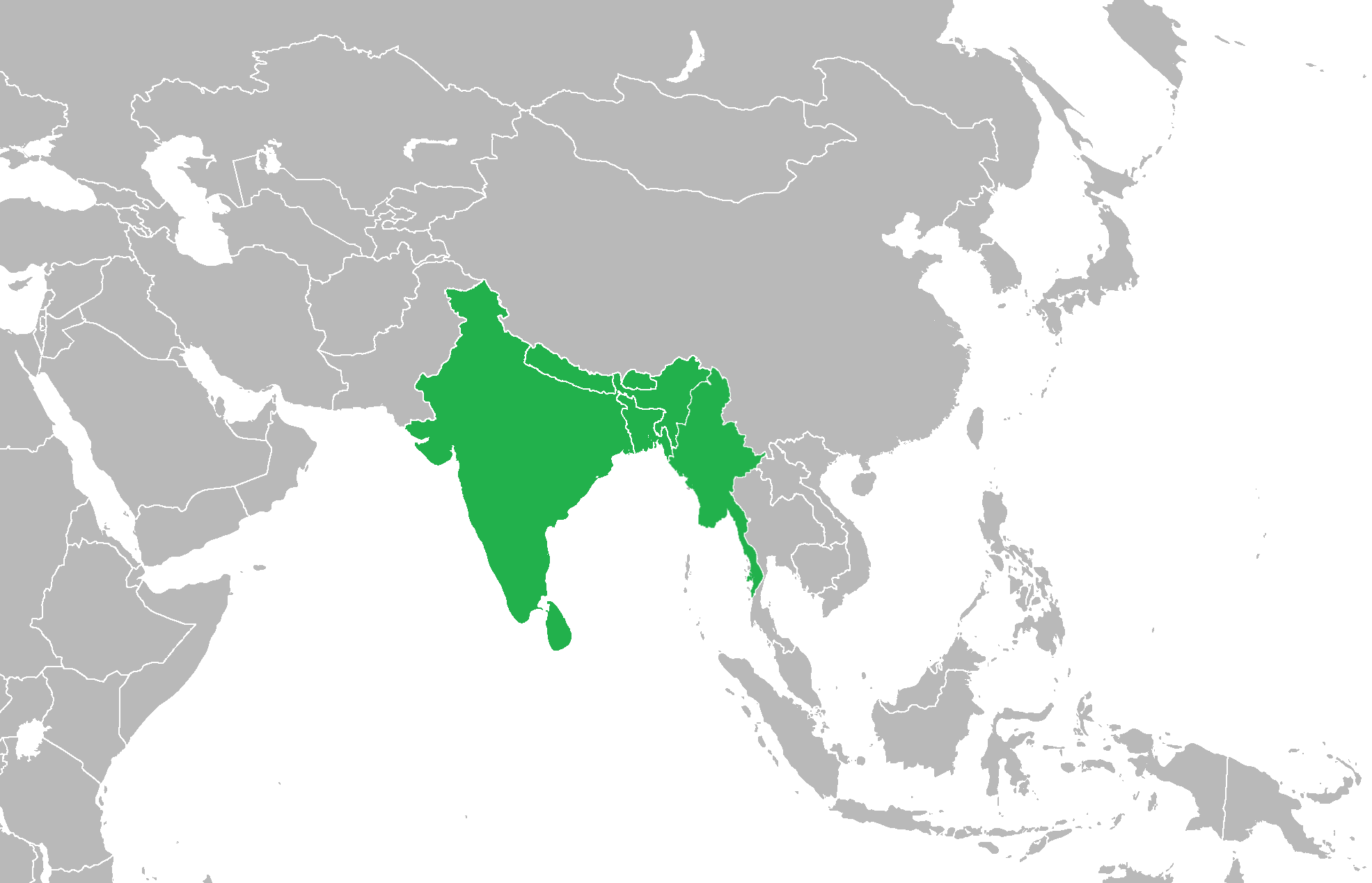
The South Asia Subregional Economic Cooperation (SASEC) Program, set up in 2001, brings together Bangladesh, Bhutan, India, Maldives, Myanmar, Nepal, and Sri Lanka in a project-based partnership to promote regional prosperity by improving cross-border connectivity, boosting trade among member countries, and strengthening regional economic cooperation. As of September 2025, SASEC countries have implemented 61 regional projects worth over $23 billion in the energy, transport, trade facilitation, economic corridor development, information and communications technology (ICT), health, and tourism sectors. The Manila, Philippines-based Asian Development Bank (ADB) serves as the Secretariat for the SASEC member countries.
South Asia is one of the least economically integrated regions in the world and has much to gain from developing and expanding regional transport networks and energy links.
South Asia's intraregional trade is considerably lower than in other regions. In 2010, trade between South Asian countries accounted for only 4.3% of the region's total trade. This is partly because transport systems in South Asia have been developed with primarily national priorities in mind, rather than with a view to boosting trade by improving cross-border connectivity.
As a result, the region has invested insufficiently in critical infrastructure, and cross-border trading systems suffer from a lack of uniformity and compatibility. Other barriers also hold back trade between South Asia countries, such as limited transit arrangements, lack of automated customs procedures, and lengthy administration procedures.
South Asian nations have varied but uneven energy resources. However, none has realized the full potential of their energy sources because of insufficient investment in energy infrastructure. The dominance of certain fuel types in certain countries – coal in India, gas in Bangladesh, and hydropower in Bhutan and Nepal – leaves them vulnerable to import dependence. There is also a need to develop renewable energy resources to increase climate change resilience in Maldives and Sri Lanka. This situation could be eased by strengthening cross-border energy networks and trade. Better telecommunications connections would also expand personal and business links, increasing trade at all levels
In 1996, Bangladesh, Bhutan, India, and Nepal, a subset of the South Asian Association for Regional Cooperation (SAARC), formed the South Asian Growth Quadrangle (SAGQ) aimed at boosting cooperation in environment, energy and power, trade and investment, transport, and tourism. SAARC endorsed SAGQ in 1997. The initial four member countries then requested ADB assistance to promote economic cooperation in the subregion, leading to the creation of the SASEC Program in 2001. Maldives and Sri Lanka were welcomed as new member countries in May 2014. Myanmar became the seventh member of SASEC in February 2017.
The organization adopted the SASEC operational plan in November 2016 and launched its subregional strategic development road map in April 2017. An update to the operational plan was released in February 2020.
In 2005, the SASEC countries agreed on priority sectors for investment and coordinated action: transport, trade facilitation, and energy. In 2016, the SASEC countries approved the SASEC Operational Plan 2016-2025, a 10-year strategic roadmap, which introduced economic corridor development (ECD) as a fourth sectoral area of focus. SASEC also supports regional initiatives in ICT Archived 2016-03-04 at the Wayback Machine.
Hub AI
South Asia Subregional Economic Cooperation AI simulator
(@South Asia Subregional Economic Cooperation_simulator)
South Asia Subregional Economic Cooperation
The South Asia Subregional Economic Cooperation (SASEC) Program, set up in 2001, brings together Bangladesh, Bhutan, India, Maldives, Myanmar, Nepal, and Sri Lanka in a project-based partnership to promote regional prosperity by improving cross-border connectivity, boosting trade among member countries, and strengthening regional economic cooperation. As of September 2025, SASEC countries have implemented 61 regional projects worth over $23 billion in the energy, transport, trade facilitation, economic corridor development, information and communications technology (ICT), health, and tourism sectors. The Manila, Philippines-based Asian Development Bank (ADB) serves as the Secretariat for the SASEC member countries.
South Asia is one of the least economically integrated regions in the world and has much to gain from developing and expanding regional transport networks and energy links.
South Asia's intraregional trade is considerably lower than in other regions. In 2010, trade between South Asian countries accounted for only 4.3% of the region's total trade. This is partly because transport systems in South Asia have been developed with primarily national priorities in mind, rather than with a view to boosting trade by improving cross-border connectivity.
As a result, the region has invested insufficiently in critical infrastructure, and cross-border trading systems suffer from a lack of uniformity and compatibility. Other barriers also hold back trade between South Asia countries, such as limited transit arrangements, lack of automated customs procedures, and lengthy administration procedures.
South Asian nations have varied but uneven energy resources. However, none has realized the full potential of their energy sources because of insufficient investment in energy infrastructure. The dominance of certain fuel types in certain countries – coal in India, gas in Bangladesh, and hydropower in Bhutan and Nepal – leaves them vulnerable to import dependence. There is also a need to develop renewable energy resources to increase climate change resilience in Maldives and Sri Lanka. This situation could be eased by strengthening cross-border energy networks and trade. Better telecommunications connections would also expand personal and business links, increasing trade at all levels
In 1996, Bangladesh, Bhutan, India, and Nepal, a subset of the South Asian Association for Regional Cooperation (SAARC), formed the South Asian Growth Quadrangle (SAGQ) aimed at boosting cooperation in environment, energy and power, trade and investment, transport, and tourism. SAARC endorsed SAGQ in 1997. The initial four member countries then requested ADB assistance to promote economic cooperation in the subregion, leading to the creation of the SASEC Program in 2001. Maldives and Sri Lanka were welcomed as new member countries in May 2014. Myanmar became the seventh member of SASEC in February 2017.
The organization adopted the SASEC operational plan in November 2016 and launched its subregional strategic development road map in April 2017. An update to the operational plan was released in February 2020.
In 2005, the SASEC countries agreed on priority sectors for investment and coordinated action: transport, trade facilitation, and energy. In 2016, the SASEC countries approved the SASEC Operational Plan 2016-2025, a 10-year strategic roadmap, which introduced economic corridor development (ECD) as a fourth sectoral area of focus. SASEC also supports regional initiatives in ICT Archived 2016-03-04 at the Wayback Machine.
Recent media