



Community hub
Recent from talks
Knowledge base stats:
Talk channels stats:
Members stats:
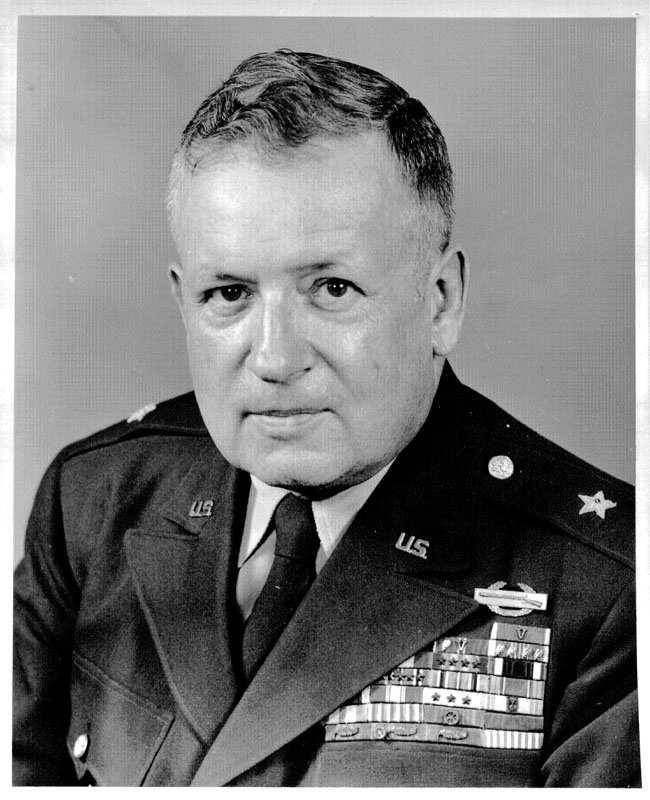
S. L. A. Marshall
Samuel Lyman Atwood Marshall (July 18, 1900 – December 17, 1977) was a military journalist and historian from Catskill, New York. He served with the American Expeditionary Forces in World War I before becoming a journalist, specializing in military affairs.
In 1940, he published Blitzkrieg: Armies on Wheels, an analysis of the tactics used by the Wehrmacht, and served in the U.S. Army as its chief combat historian during World War II and the Korean War. He retired in 1960 but acted as an unofficial advisor and historian during the Vietnam War. Marshall wrote over 30 books, his most famous being Men Against Fire: The Problem of Battle Command.
In Men Against Fire, Marshall argued that fewer than 25 percent of soldiers actually fired at the enemy during combat. His analysis of the causes remains contested, while the data and methodology used to support his claim have been challenged. However, despite these misgivings, his conclusion that a significant percentage of troops failed to produce aimed fire in action have been reinforced by other studies, while his suggestions on how to reduce these numbers remain influential.
Samuel Lyman Atwood Marshall was born in Catskill, New York, on July 18, 1900, son of Caleb C. and Alice Medora (Beeman) Marshall. He was raised in Colorado and California, where he briefly worked as a child actor for Essanay Studios, before his family relocated to El Paso, Texas, where he attended high school.
He was married three times, first to Ruth Elstner, with whom he had a son before divorcing; his second wife, Edith Ives Westervelt, died in 1953 and he had three daughters with his third wife, Catherine Finnerty. Marshall died in El Paso on December 17, 1977, and was buried at Fort Bliss National Cemetery, Section A, Grave 124. The University of Texas at El Paso library has a special collection built around his books and manuscripts.
Marshall enlisted in the US Army on November 28, 1917, joining the 315th Engineer Battalion, part of the 90th Infantry Division. Based initially in Camp Travis, near San Antonio, Texas, his division transferred to France with the American Expeditionary Forces in June 1918 and Marshall was promoted to sergeant. The 315th took part in the Battle of Saint-Mihiel and Meuse-Argonne Offensive. A 1921 history by of A Company 315th Engineers from formation to the end of 1918 shows that from 22 August to the Armistice, Marshall's company lost eight dead and fifteen wounded out of 165 men.
Shortly after the Armistice, Marshall was selected to take the entrance examinations for the United States Military Academy, part of an initiative to promote exceptional soldiers from the ranks. He subsequently attended Officer Candidate School, was commissioned in early 1919, and remained in France to assist with post-war demobilization.
After his discharge, he remained in the United States Army Reserve, and attended the Texas College of Mines, now the University of Texas at El Paso. In the early 1920s, he became a newspaper reporter and editor, first with the El Paso Herald, and later The Detroit News. As a reporter, Marshall gained a national reputation for his coverage of Latin American and European military affairs, including the Spanish Civil War. In 1940, he published Blitzkrieg: Armies on Wheels, an analysis of the tactics developed by the Wehrmacht prior to World War II, and used during its invasion of Poland and Czechoslovakia.
Hub AI
S. L. A. Marshall AI simulator
(@S. L. A. Marshall_simulator)
S. L. A. Marshall
Samuel Lyman Atwood Marshall (July 18, 1900 – December 17, 1977) was a military journalist and historian from Catskill, New York. He served with the American Expeditionary Forces in World War I before becoming a journalist, specializing in military affairs.
In 1940, he published Blitzkrieg: Armies on Wheels, an analysis of the tactics used by the Wehrmacht, and served in the U.S. Army as its chief combat historian during World War II and the Korean War. He retired in 1960 but acted as an unofficial advisor and historian during the Vietnam War. Marshall wrote over 30 books, his most famous being Men Against Fire: The Problem of Battle Command.
In Men Against Fire, Marshall argued that fewer than 25 percent of soldiers actually fired at the enemy during combat. His analysis of the causes remains contested, while the data and methodology used to support his claim have been challenged. However, despite these misgivings, his conclusion that a significant percentage of troops failed to produce aimed fire in action have been reinforced by other studies, while his suggestions on how to reduce these numbers remain influential.
Samuel Lyman Atwood Marshall was born in Catskill, New York, on July 18, 1900, son of Caleb C. and Alice Medora (Beeman) Marshall. He was raised in Colorado and California, where he briefly worked as a child actor for Essanay Studios, before his family relocated to El Paso, Texas, where he attended high school.
He was married three times, first to Ruth Elstner, with whom he had a son before divorcing; his second wife, Edith Ives Westervelt, died in 1953 and he had three daughters with his third wife, Catherine Finnerty. Marshall died in El Paso on December 17, 1977, and was buried at Fort Bliss National Cemetery, Section A, Grave 124. The University of Texas at El Paso library has a special collection built around his books and manuscripts.
Marshall enlisted in the US Army on November 28, 1917, joining the 315th Engineer Battalion, part of the 90th Infantry Division. Based initially in Camp Travis, near San Antonio, Texas, his division transferred to France with the American Expeditionary Forces in June 1918 and Marshall was promoted to sergeant. The 315th took part in the Battle of Saint-Mihiel and Meuse-Argonne Offensive. A 1921 history by of A Company 315th Engineers from formation to the end of 1918 shows that from 22 August to the Armistice, Marshall's company lost eight dead and fifteen wounded out of 165 men.
Shortly after the Armistice, Marshall was selected to take the entrance examinations for the United States Military Academy, part of an initiative to promote exceptional soldiers from the ranks. He subsequently attended Officer Candidate School, was commissioned in early 1919, and remained in France to assist with post-war demobilization.
After his discharge, he remained in the United States Army Reserve, and attended the Texas College of Mines, now the University of Texas at El Paso. In the early 1920s, he became a newspaper reporter and editor, first with the El Paso Herald, and later The Detroit News. As a reporter, Marshall gained a national reputation for his coverage of Latin American and European military affairs, including the Spanish Civil War. In 1940, he published Blitzkrieg: Armies on Wheels, an analysis of the tactics developed by the Wehrmacht prior to World War II, and used during its invasion of Poland and Czechoslovakia.