


Community hub
Recent from talks
Contribute something to knowledge base
Content stats: 0 posts, 0 articles, 1 media, 0 notes
Members stats: 0 subscribers, 0 contributors, 0 moderators, 0 supporters
Subscribers
Supporters
Contributors
Moderators
SS Storstad
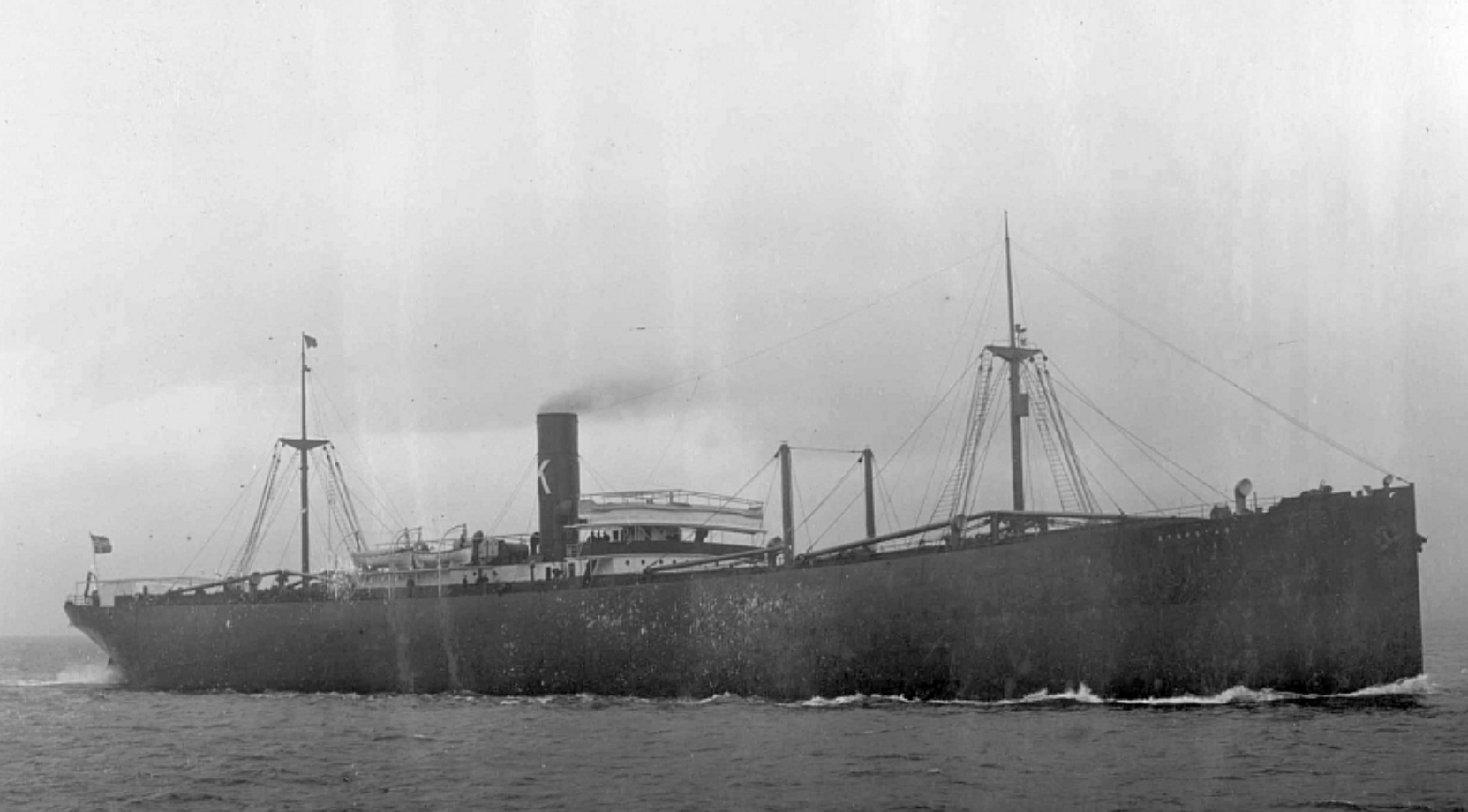
Storstad was a steam cargo ship built in 1910 by Armstrong, Whitworth & Co Ltd of Newcastle for A. F. Klaveness & Co of Sandefjord, Norway. The ship was primarily employed as an ore and coal carrier doing tramp trade during her career. In May 1914 she accidentally rammed and sank the ocean liner RMS Empress of Ireland, killing over 1,000 people. During the First World War, Storstad was torpedoed and sunk by the German submarine U-62.
Storstad was laid down at Armstrong, Whitworth & Co Low Walker shipyard in Newcastle and launched on 4 October 1910 (yard number 824). As the ship was being launched, she struck a nearby steamship SS Dardania from Trieste, and her stern was damaged. After successful completion of sea trials, during which the vessel was able to reach speed of 13.0 knots (15.0 mph; 24.1 km/h), Storstad was handed over to her owners and fully commissioned in January 1911. To operate the vessel, she was transferred to a separate company, Aktieselskabet "Maritim", owned by A. F. Klaveness.[citation needed]
The ship was built on the Isherwood longitudinal framing principle, and at the time of her launch was the largest vessel to be constructed in this manner. The ship was specifically designed for coal and iron ore carriage, and had very large hatches built, with ten powerful winches installed for quick cargo discharge. As built, the ship was 440.0 feet (134.1 m) long (between perpendiculars) and 58.1 feet (17.7 m) abeam, a mean draft of 24 feet 6 inches (7.47 m). Storstad was assessed at 6,028 gross register tons (GRT), 3,561 net register tons (NRT) and had deadweight tonnage of approximately 10,650. The vessel had a steel hull, and a single 447 nominal horsepower triple-expansion steam engine, with cylinders of 28+1⁄2-inch (72 cm), 47-inch (120 cm), and 78-inch (200 cm) diameter with a 54-inch (140 cm) stroke, that drove a single screw propeller, and moved the ship at up to 13 knots (24 km/h; 15 mph).
Upon delivery, Storstad departed on 31 January 1911 for her maiden voyage from Newcastle for Narvik and arrived there on 4 February. The vessel loaded 9,609 tons of iron ore and sailed for Philadelphia on 11 February reaching it on 7 March. At the time, this was the largest cargo of iron ore unloaded at Philadelphia from a single ship. Storstad then proceeded to Jacksonville where she took on 6,500 tons of phosphate rock on 17 March, then continued on to Savannah and loaded 8,071 bales of cotton and departed for Hamburg on 28 March. Upon return from Europe on 20 May 1911 the ship was chartered to transport iron ore and coal from Wabana and North Sydney to Montreal and other ports along St. Lawrence River through the end of navigational season in late November.[citation needed]
In November 1911 the vessel was chartered for one trip to South America by the Barber Line. Storstad left New York on 3 December 1911 and arrived in Buenos Aires on 30 December, after a call at Montevideo. She then continued on to Rosario and from there sailed out back to New York. Upon arrival, the vessel was chartered by the Lamport & Holt Line for one trip to Manchester. Storstad loaded general cargo, including 1,900 bales of cotton and some food supplies, including cottonseed oil, lard and bacon, and left New York on 21 April 1912. The ship arrived in Liverpool on 4 May and upon discharging her cargo, sailed back to North America to resume her iron ore and coal trade in Canada.[citation needed]
After the end of navigational season in December 1912, Storstad was chartered by Gans Steamship Line and sailed to Tampa Bay, loaded 3,213 tons of phosphate pebble and then sailed to Port Eads, arriving there on 20 December. The ship took on more cargo and then sailed for Antwerp arriving there on 22 January 1913. During her journey Storstad encountered some rough weather, and arrived in port with damage about her decks, including washed overboard portion of the deckload, and some deck equipment and covers. Her No. 5 hold was also full of water. The ship arrived in Philadelphia on 28 February with iron ore from Narvik and after unloading continued to Florida. Storstad loaded 5,600 tons of phosphate pebble on 19 March at Boca Grande, then continued to Galveston where she took on 13,097 bales of cotton and departed for Bremen on 22 March. After finishing her European charter, the ship returned to her usual Canadian trade in May 1913.[citation needed]
Upon fulfillment of her summer obligations, Storstad arrived at Norfolk on 20 December 1913 to load a cargo of grain bound for Italy. The vessel left on 26 December for Genoa, which she reached on 16 January 1914. On her return journey, the ship sailed via Roses and Lisbon and arrived at Philadelphia on 5 March with a cargo of cork.[citation needed]
Upon unloading, Storstad sailed for Norfolk where she loaded 9,700 tons of coal plus 1,100 tons in bunkers and departed for Venice on 20 March. The vessel arrived in Italy on 10 April, and upon discharging her cargo departed for North Sydney arriving there on 12 May 1914. The vessel was chartered by the Dominion Coal Company to transport coal between North Sydney and Montreal for the duration of summer navigational season.[citation needed]
SS Storstad
Storstad was a steam cargo ship built in 1910 by Armstrong, Whitworth & Co Ltd of Newcastle for A. F. Klaveness & Co of Sandefjord, Norway. The ship was primarily employed as an ore and coal carrier doing tramp trade during her career. In May 1914 she accidentally rammed and sank the ocean liner RMS Empress of Ireland, killing over 1,000 people. During the First World War, Storstad was torpedoed and sunk by the German submarine U-62.
Storstad was laid down at Armstrong, Whitworth & Co Low Walker shipyard in Newcastle and launched on 4 October 1910 (yard number 824). As the ship was being launched, she struck a nearby steamship SS Dardania from Trieste, and her stern was damaged. After successful completion of sea trials, during which the vessel was able to reach speed of 13.0 knots (15.0 mph; 24.1 km/h), Storstad was handed over to her owners and fully commissioned in January 1911. To operate the vessel, she was transferred to a separate company, Aktieselskabet "Maritim", owned by A. F. Klaveness.[citation needed]
The ship was built on the Isherwood longitudinal framing principle, and at the time of her launch was the largest vessel to be constructed in this manner. The ship was specifically designed for coal and iron ore carriage, and had very large hatches built, with ten powerful winches installed for quick cargo discharge. As built, the ship was 440.0 feet (134.1 m) long (between perpendiculars) and 58.1 feet (17.7 m) abeam, a mean draft of 24 feet 6 inches (7.47 m). Storstad was assessed at 6,028 gross register tons (GRT), 3,561 net register tons (NRT) and had deadweight tonnage of approximately 10,650. The vessel had a steel hull, and a single 447 nominal horsepower triple-expansion steam engine, with cylinders of 28+1⁄2-inch (72 cm), 47-inch (120 cm), and 78-inch (200 cm) diameter with a 54-inch (140 cm) stroke, that drove a single screw propeller, and moved the ship at up to 13 knots (24 km/h; 15 mph).
Upon delivery, Storstad departed on 31 January 1911 for her maiden voyage from Newcastle for Narvik and arrived there on 4 February. The vessel loaded 9,609 tons of iron ore and sailed for Philadelphia on 11 February reaching it on 7 March. At the time, this was the largest cargo of iron ore unloaded at Philadelphia from a single ship. Storstad then proceeded to Jacksonville where she took on 6,500 tons of phosphate rock on 17 March, then continued on to Savannah and loaded 8,071 bales of cotton and departed for Hamburg on 28 March. Upon return from Europe on 20 May 1911 the ship was chartered to transport iron ore and coal from Wabana and North Sydney to Montreal and other ports along St. Lawrence River through the end of navigational season in late November.[citation needed]
In November 1911 the vessel was chartered for one trip to South America by the Barber Line. Storstad left New York on 3 December 1911 and arrived in Buenos Aires on 30 December, after a call at Montevideo. She then continued on to Rosario and from there sailed out back to New York. Upon arrival, the vessel was chartered by the Lamport & Holt Line for one trip to Manchester. Storstad loaded general cargo, including 1,900 bales of cotton and some food supplies, including cottonseed oil, lard and bacon, and left New York on 21 April 1912. The ship arrived in Liverpool on 4 May and upon discharging her cargo, sailed back to North America to resume her iron ore and coal trade in Canada.[citation needed]
After the end of navigational season in December 1912, Storstad was chartered by Gans Steamship Line and sailed to Tampa Bay, loaded 3,213 tons of phosphate pebble and then sailed to Port Eads, arriving there on 20 December. The ship took on more cargo and then sailed for Antwerp arriving there on 22 January 1913. During her journey Storstad encountered some rough weather, and arrived in port with damage about her decks, including washed overboard portion of the deckload, and some deck equipment and covers. Her No. 5 hold was also full of water. The ship arrived in Philadelphia on 28 February with iron ore from Narvik and after unloading continued to Florida. Storstad loaded 5,600 tons of phosphate pebble on 19 March at Boca Grande, then continued to Galveston where she took on 13,097 bales of cotton and departed for Bremen on 22 March. After finishing her European charter, the ship returned to her usual Canadian trade in May 1913.[citation needed]
Upon fulfillment of her summer obligations, Storstad arrived at Norfolk on 20 December 1913 to load a cargo of grain bound for Italy. The vessel left on 26 December for Genoa, which she reached on 16 January 1914. On her return journey, the ship sailed via Roses and Lisbon and arrived at Philadelphia on 5 March with a cargo of cork.[citation needed]
Upon unloading, Storstad sailed for Norfolk where she loaded 9,700 tons of coal plus 1,100 tons in bunkers and departed for Venice on 20 March. The vessel arrived in Italy on 10 April, and upon discharging her cargo departed for North Sydney arriving there on 12 May 1914. The vessel was chartered by the Dominion Coal Company to transport coal between North Sydney and Montreal for the duration of summer navigational season.[citation needed]
Recent media
Recent media