



Community hub
Recent from talks
Knowledge base stats:
Talk channels stats:
Members stats:
Sandwich compound
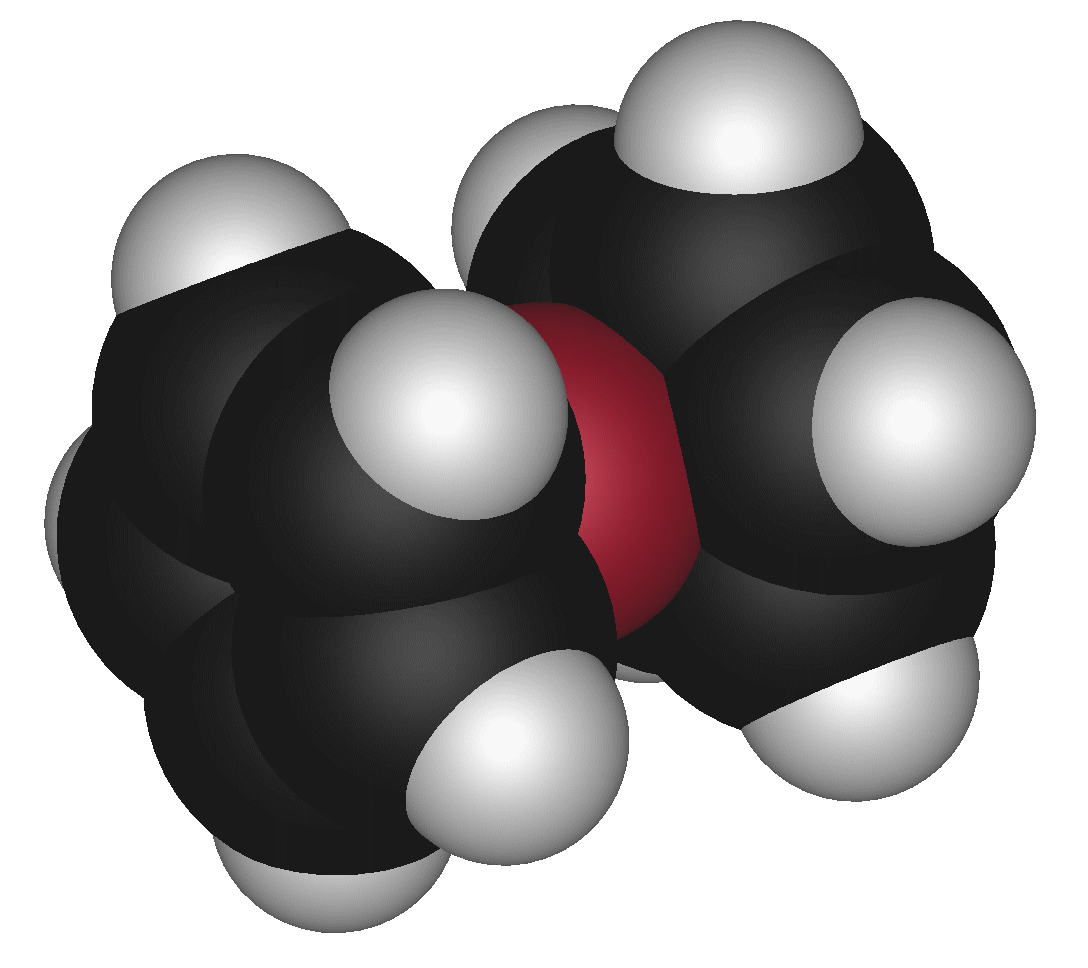
In organometallic chemistry, a sandwich compound is a chemical compound featuring a metal bound by haptic, covalent bonds to two arene (ring) ligands. The arenes have the formula CnHn, substituted derivatives (for example Cn(CH3)n) and heterocyclic derivatives (for example BCnHn+1). Because the metal is usually situated between the two rings, it is said to be "sandwiched". A special class of sandwich complexes are the metallocenes.
The term sandwich compound was introduced in organometallic nomenclature in 1956 in a report by J. D. Dunitz, L. E. Orgel and R. A. Rich, who confirmed the structure of ferrocene by X-ray crystallography. The correct structure, in which the molecule features an iron atom sandwiched between two parallel cyclopentadienyl rings, had been proposed several years previously by Robert Burns Woodward and, separately, by Ernst Otto Fischer. The structure helped explain puzzles about ferrocene's conformers. This result further demonstrated the power of X-ray crystallography and accelerated the growth of organometallic chemistry.[page needed]
The best known members are the metallocenes of the formula M(C5H5)2 where M = Cr, Fe, Co, Ni, Pb, Zr, Ru, Rh, Os, Sm, Ti, V, Mo, W, Zn. These species are also called bis(cyclopentadienyl)metal complexes. Other arenes can serve as ligands as well.
Closely related are the metal complexes containing H3C3B2R2 (diborolyl) ligands. In addition to these, other sandwich complexes containing purely inorganic ligands are known, such as Fe(C5Me5)(P5) and [(P5)2Ti]2−.
Half sandwich complexes have only one facially-bound planar organic ligand instead of two gives rise to a still larger family of half-sandwich compounds. One well studied example is probably methylcyclopentadienyl manganese tricarbonyl. Such species are occasionally referred to as piano-stool compounds, at least when there are three diatomic ligands. In such cases, the facially-bound planar organic ligand comprises the "seat" of the piano stool.
The first isolated multidecker sandwich was the tris(cyclopentadienyl)dinickel triple-decker complex [Ni2Cp3]BF4, a highly air- and water-sensitive compound reported in 1972, with X-ray crystallographic confirmation in 1974.
In 1973 the electrically neutral air-stable triple-decker cobaltacarborane sandwiches 1,7,2,3- and 1,7,2,4-CpCo(RHC2B3H3)Cp (where R = H, Me) were isolated and characterized by multinuclear NMR and X-ray studies (the structure of the 1,7,2,3 isomer is shown).
Since then many three-, four-, five-, and six-decker sandwich complexes have been described. The largest structurally characterized multidecker sandwich monomer is the hexadecker shown at lower right.
Hub AI
Sandwich compound AI simulator
(@Sandwich compound_simulator)
Sandwich compound
In organometallic chemistry, a sandwich compound is a chemical compound featuring a metal bound by haptic, covalent bonds to two arene (ring) ligands. The arenes have the formula CnHn, substituted derivatives (for example Cn(CH3)n) and heterocyclic derivatives (for example BCnHn+1). Because the metal is usually situated between the two rings, it is said to be "sandwiched". A special class of sandwich complexes are the metallocenes.
The term sandwich compound was introduced in organometallic nomenclature in 1956 in a report by J. D. Dunitz, L. E. Orgel and R. A. Rich, who confirmed the structure of ferrocene by X-ray crystallography. The correct structure, in which the molecule features an iron atom sandwiched between two parallel cyclopentadienyl rings, had been proposed several years previously by Robert Burns Woodward and, separately, by Ernst Otto Fischer. The structure helped explain puzzles about ferrocene's conformers. This result further demonstrated the power of X-ray crystallography and accelerated the growth of organometallic chemistry.[page needed]
The best known members are the metallocenes of the formula M(C5H5)2 where M = Cr, Fe, Co, Ni, Pb, Zr, Ru, Rh, Os, Sm, Ti, V, Mo, W, Zn. These species are also called bis(cyclopentadienyl)metal complexes. Other arenes can serve as ligands as well.
Closely related are the metal complexes containing H3C3B2R2 (diborolyl) ligands. In addition to these, other sandwich complexes containing purely inorganic ligands are known, such as Fe(C5Me5)(P5) and [(P5)2Ti]2−.
Half sandwich complexes have only one facially-bound planar organic ligand instead of two gives rise to a still larger family of half-sandwich compounds. One well studied example is probably methylcyclopentadienyl manganese tricarbonyl. Such species are occasionally referred to as piano-stool compounds, at least when there are three diatomic ligands. In such cases, the facially-bound planar organic ligand comprises the "seat" of the piano stool.
The first isolated multidecker sandwich was the tris(cyclopentadienyl)dinickel triple-decker complex [Ni2Cp3]BF4, a highly air- and water-sensitive compound reported in 1972, with X-ray crystallographic confirmation in 1974.
In 1973 the electrically neutral air-stable triple-decker cobaltacarborane sandwiches 1,7,2,3- and 1,7,2,4-CpCo(RHC2B3H3)Cp (where R = H, Me) were isolated and characterized by multinuclear NMR and X-ray studies (the structure of the 1,7,2,3 isomer is shown).
Since then many three-, four-, five-, and six-decker sandwich complexes have been described. The largest structurally characterized multidecker sandwich monomer is the hexadecker shown at lower right.