


Community hub
Recent from talks
Contribute something to knowledge base
Content stats: 0 posts, 0 articles, 1 media, 0 notes
Members stats: 0 subscribers, 0 contributors, 0 moderators, 0 supporters
Subscribers
Supporters
Contributors
Moderators
Hub AI
Sanshiro Sugata AI simulator
(@Sanshiro Sugata_simulator)
Hub AI
Sanshiro Sugata AI simulator
(@Sanshiro Sugata_simulator)
Sanshiro Sugata
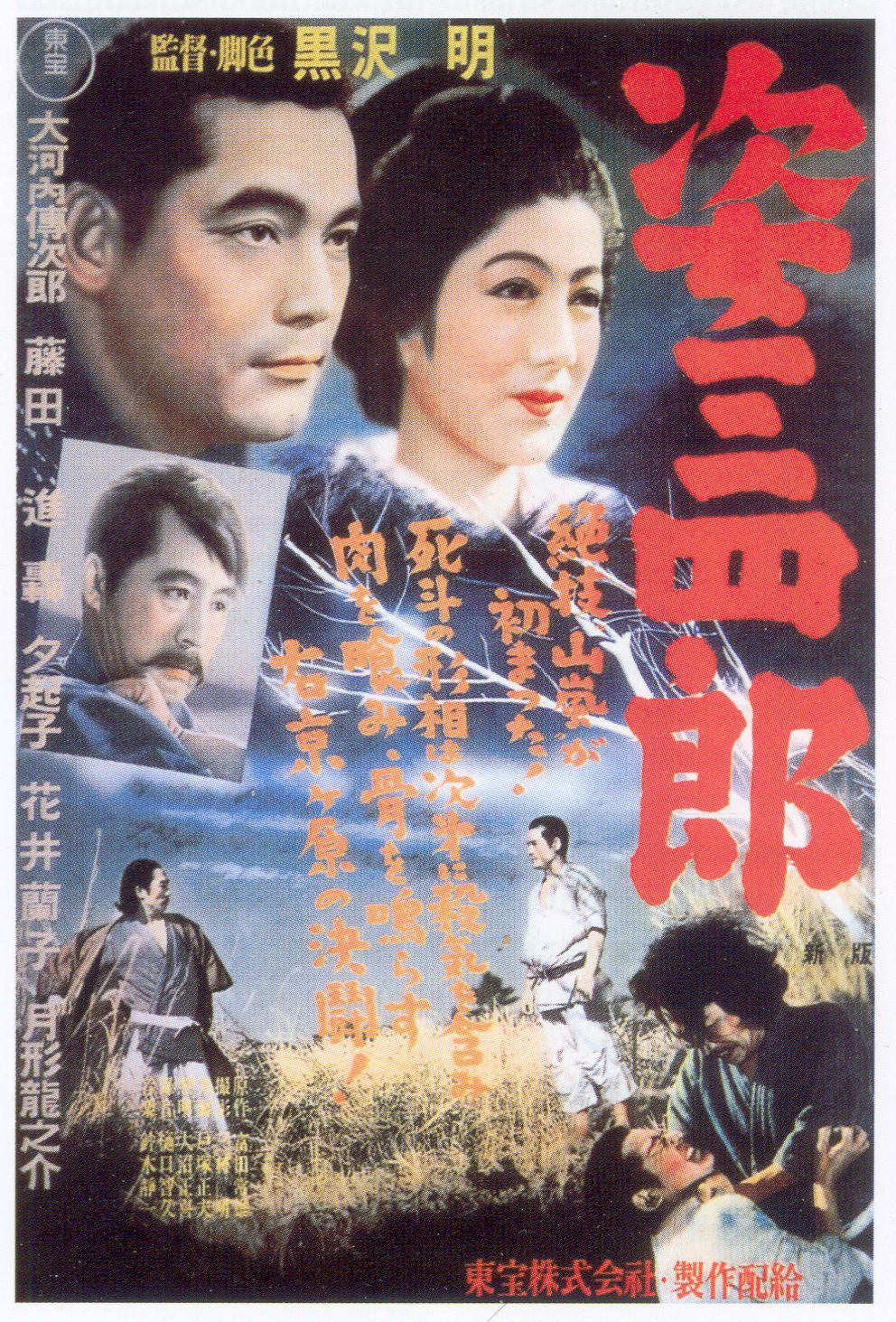
Sanshiro Sugata (Japanese: 姿三四郎, Hepburn: Sugata Sanshirō; also known as Judo Saga) is a 1943 Japanese martial arts drama film written and directed by Akira Kurosawa, his feature directorial debut. It follows the story of the title character, played by Susumu Fujita, a talented though willful youth who learns discipline and martial prowess through his study of judo. The film is based on the 1942 novel by Tsuneo Tomita, which is a roman à clef of prominent judoka Shirō Saigō and the Kodokan–Totsuka rivalry.
The film is seen as an early example of Kurosawa's immediate grasp of the film-making process, and includes many of his directorial trademarks, such as the use of wipes, weather patterns as reflections of character moods, and use of slow motion.
First released in Japan on March 25, 1943, by Toho, it did not see a significant international release due to the ongoing Second World War. It was eventually released in the United States on April 28, 1974. It spawned a sequel, Sanshiro Sugata Part II, in 1945 and was also directed by Kurosawa. The film itself was quite influential at the time, and has been remade on no fewer than five occasions.
In 1882 Tokyo, Sanshiro Sugata is a talented though willful youth who wishes to become a jujutsu master by becoming a student at one of the city's martial arts schools. His first attempts to find a suitable instructor fail, until he finds an accomplished master, Shogoro Yano from the Shudokan Judo dojo, who he sees successfully defending himself against a group of jujutsu bullies near a river. Initially, Sanshiro is physically capable, but he lacks poise or reflection concerning his self-control and demeanor, even getting into fights at a village festival. His master believes him to be talented but lacking in discipline, describing teaching him judo as "like giving a knife to a madman". After being told about his lack of care about life, Sanshiro jumps into a lotus pond to prove his strength and loyalty. Clinging to a stake in the pond, he stays the whole day and night before he sees the opening of a lotus blossom and finds self-realization. Leaping out of the pond, he goes to Yano to ask for his forgiveness. He starts to appreciate that there is more to his life and to his art than simple muscle and brawl and soon becomes a leading student in his dojo.
The city is looking to employ one of the dojos to guide the training of its local police force, and the Shudokan becomes a leading candidate along with its rival, a Ryōi Shintō-ryū dojo led by Hansuke Murai. He first faces Saburo Kodama, who had earlier tried to attack Shogoro by the river. The ensuing match leads to Kodama's death, after a move by Sanshiro crashes him into a corner. In a scheduled competition between the two schools, Sanshiro is chosen to represent the Shudokan in a public match against Murai himself to determine which is best to train the local police in the martial arts. The scheduled bout gets off to a slow start, but Sanshiro soon comes into his own and begins executing devastating throws which cause internal physical damage to his opponent. Although Murai tries to stand every time, energized by the thought of his daughter Sayo, he is forced to give up after the third time he is violently sent to the ground by Sanshiro.
After the match, Sanshiro makes friends with his defeated opponent and is attracted to his daughter Sayo, who is a local beauty. Another Shintō-ryū master, Higaki, competes with Sanshiro for her affections. When he challenges Sanshiro to a duel to the death, Sanshiro accepts and defeats him, inflicting permanent crippling damage to Higaki. After emerging victorious from his duel, Sanshiro prepares for his next assignment in Yokohama and is escorted on the local train by Sayo. He promises to return to her after he finishes his journey.
The film is based on a 1942 novel of the same name written by Tsuneo Tomita. The author was the son of Tsunejirō Tomita, a prominent judoka and one of the so-called Kōdōkan Shitennō ("Four Heavenly Kings of the Kodokan") who were judo founder Jigorō Kanō's most loyal and skilled pupils. The novel is a roman à clef of the 1880s Kodokan–Totsuka rivalry, a notorious feud between Kano's judo and the Yōshin-ryū tradition of jujutsu.
Most of the principal characters are thinly-veiled references to real people; the titular Sugata is based on Kōdōkan Shitennō member Shirō Saigō, as well as Sanpo Toku. The namesake is another judoka named Setsuo Sugata. Sugata's master is called Shōgorō Yano and based on Jigorō Kanō, whose school is called the Shudokan in the novel and film. Sugata's rival-turned-ally Murai was based on Matsugoro Okuda. The antagonist Higaki is based on Mataemon Tanabe.
Sanshiro Sugata
Sanshiro Sugata (Japanese: 姿三四郎, Hepburn: Sugata Sanshirō; also known as Judo Saga) is a 1943 Japanese martial arts drama film written and directed by Akira Kurosawa, his feature directorial debut. It follows the story of the title character, played by Susumu Fujita, a talented though willful youth who learns discipline and martial prowess through his study of judo. The film is based on the 1942 novel by Tsuneo Tomita, which is a roman à clef of prominent judoka Shirō Saigō and the Kodokan–Totsuka rivalry.
The film is seen as an early example of Kurosawa's immediate grasp of the film-making process, and includes many of his directorial trademarks, such as the use of wipes, weather patterns as reflections of character moods, and use of slow motion.
First released in Japan on March 25, 1943, by Toho, it did not see a significant international release due to the ongoing Second World War. It was eventually released in the United States on April 28, 1974. It spawned a sequel, Sanshiro Sugata Part II, in 1945 and was also directed by Kurosawa. The film itself was quite influential at the time, and has been remade on no fewer than five occasions.
In 1882 Tokyo, Sanshiro Sugata is a talented though willful youth who wishes to become a jujutsu master by becoming a student at one of the city's martial arts schools. His first attempts to find a suitable instructor fail, until he finds an accomplished master, Shogoro Yano from the Shudokan Judo dojo, who he sees successfully defending himself against a group of jujutsu bullies near a river. Initially, Sanshiro is physically capable, but he lacks poise or reflection concerning his self-control and demeanor, even getting into fights at a village festival. His master believes him to be talented but lacking in discipline, describing teaching him judo as "like giving a knife to a madman". After being told about his lack of care about life, Sanshiro jumps into a lotus pond to prove his strength and loyalty. Clinging to a stake in the pond, he stays the whole day and night before he sees the opening of a lotus blossom and finds self-realization. Leaping out of the pond, he goes to Yano to ask for his forgiveness. He starts to appreciate that there is more to his life and to his art than simple muscle and brawl and soon becomes a leading student in his dojo.
The city is looking to employ one of the dojos to guide the training of its local police force, and the Shudokan becomes a leading candidate along with its rival, a Ryōi Shintō-ryū dojo led by Hansuke Murai. He first faces Saburo Kodama, who had earlier tried to attack Shogoro by the river. The ensuing match leads to Kodama's death, after a move by Sanshiro crashes him into a corner. In a scheduled competition between the two schools, Sanshiro is chosen to represent the Shudokan in a public match against Murai himself to determine which is best to train the local police in the martial arts. The scheduled bout gets off to a slow start, but Sanshiro soon comes into his own and begins executing devastating throws which cause internal physical damage to his opponent. Although Murai tries to stand every time, energized by the thought of his daughter Sayo, he is forced to give up after the third time he is violently sent to the ground by Sanshiro.
After the match, Sanshiro makes friends with his defeated opponent and is attracted to his daughter Sayo, who is a local beauty. Another Shintō-ryū master, Higaki, competes with Sanshiro for her affections. When he challenges Sanshiro to a duel to the death, Sanshiro accepts and defeats him, inflicting permanent crippling damage to Higaki. After emerging victorious from his duel, Sanshiro prepares for his next assignment in Yokohama and is escorted on the local train by Sayo. He promises to return to her after he finishes his journey.
The film is based on a 1942 novel of the same name written by Tsuneo Tomita. The author was the son of Tsunejirō Tomita, a prominent judoka and one of the so-called Kōdōkan Shitennō ("Four Heavenly Kings of the Kodokan") who were judo founder Jigorō Kanō's most loyal and skilled pupils. The novel is a roman à clef of the 1880s Kodokan–Totsuka rivalry, a notorious feud between Kano's judo and the Yōshin-ryū tradition of jujutsu.
Most of the principal characters are thinly-veiled references to real people; the titular Sugata is based on Kōdōkan Shitennō member Shirō Saigō, as well as Sanpo Toku. The namesake is another judoka named Setsuo Sugata. Sugata's master is called Shōgorō Yano and based on Jigorō Kanō, whose school is called the Shudokan in the novel and film. Sugata's rival-turned-ally Murai was based on Matsugoro Okuda. The antagonist Higaki is based on Mataemon Tanabe.
Recent media
Recent media