


Community hub
Recent from talks
Contribute something to knowledge base
Content stats: 0 posts, 0 articles, 1 media, 0 notes
Members stats: 0 subscribers, 0 contributors, 0 moderators, 0 supporters
Subscribers
Supporters
Contributors
Moderators
Hub AI
Saul Solomon AI simulator
(@Saul Solomon_simulator)
Hub AI
Saul Solomon AI simulator
(@Saul Solomon_simulator)
Saul Solomon
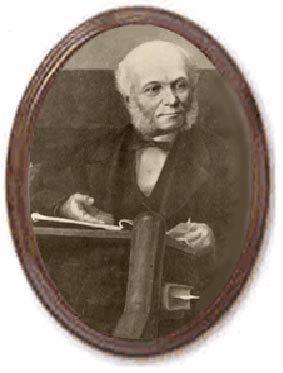
Saul Solomon (25 May 1817 – 16 October 1892) was an influential liberal politician of the Cape Colony, a British colony in what is now South Africa. Solomon was an important member of the movement for responsible government and an opponent of Lord Carnarvon's Confederation scheme.
Saul Solomon was born on the island of St Helena on 25 May 1817. Although his family were St Helenan, they had close links to Cape Town. Saul spent his first years at a Jewish children's home in England, where he suffered from the malnutrition and rickets that physically affected him for the rest of his life. He then had a rudimentary formal education in South Africa before beginning work as an apprentice in a printing business. He later acquired the business and built it into the largest printing business in the country, founding the Cape Argus newspaper. He was also one of the founders of Old Mutual, today one of the largest insurance firms in South Africa.
As representative for Cape Town, Solomon entered the very first Parliament of the Cape of Good Hope (Cape Parliament) when it opened in 1854. He remained an MP for this constituency until his retirement in 1883.
Saul Solomon's original election promise had been "to give my decided opposition to all legislation tending to introduce distinctions either of class, colour or creed". Throughout his political career he strictly adhered to this manifesto – repeatedly turning down both cabinet and ministerial posts so as to be free to vote according to his beliefs.
Although he was from a Jewish background and even funded the establishment of the Cape's first synagogue in 1849, Solomon was openly secular in outlook, declaring himself to be "a liberal in politics and a voluntary in religion". In the first Cape parliament in 1854, he presented his "Voluntary bill" (intended to end government subsidies to churches, and to ensure equal treatment of all beliefs) but it was turned down. He proceeded to put it to parliament every year, only for it to be repeatedly rejected, until it was finally passed under the Molteno government in 1875.
Solomon joined the movement for responsible government in the Cape and helped to institute it when it was established in 1872. The leader of the responsible government movement, Prime Minister John Charles Molteno, was a friend and admirer. The two men were both businessmen from poor immigrant backgrounds who had outlooks that were relatively liberal for the times and saw eye-to-eye on a number of issues. According to Saul Solomon's official biography, Molteno only accepted the office of Prime Minister after insisting that it first be offered to Solomon, who turned it down however due to his delicate health. Solomon supported the Molteno Ministry, though he refused offers of cabinet positions so as to be able to oppose the government if and when his conscience required it. One supporter told Parliament that "Molteno would not hold a Ministry together for one week if Mr Solomon was in it; and no cabinet could do without him."
The eastern part of the Cape Colony had a long-running separatist movement, consisting of a portion of white settlers (the "Easterners"), led by parliamentarian John Paterson of Port Elizabeth, who resented the rule of the Cape Town parliament and wanted stricter labour laws to encourage the Xhosa to leave their lands and work on the settlers' plantations.
In accordance with his stated policy that "natives should be allowed to sell their labour as they desired, and that no semblance of coercion should be employed to provide labour for the farmer" and because he detested the Easterners' white supremacist views, Solomon took a strong stance against the separatist movement and for a united, multi-racial Cape.
Saul Solomon
Saul Solomon (25 May 1817 – 16 October 1892) was an influential liberal politician of the Cape Colony, a British colony in what is now South Africa. Solomon was an important member of the movement for responsible government and an opponent of Lord Carnarvon's Confederation scheme.
Saul Solomon was born on the island of St Helena on 25 May 1817. Although his family were St Helenan, they had close links to Cape Town. Saul spent his first years at a Jewish children's home in England, where he suffered from the malnutrition and rickets that physically affected him for the rest of his life. He then had a rudimentary formal education in South Africa before beginning work as an apprentice in a printing business. He later acquired the business and built it into the largest printing business in the country, founding the Cape Argus newspaper. He was also one of the founders of Old Mutual, today one of the largest insurance firms in South Africa.
As representative for Cape Town, Solomon entered the very first Parliament of the Cape of Good Hope (Cape Parliament) when it opened in 1854. He remained an MP for this constituency until his retirement in 1883.
Saul Solomon's original election promise had been "to give my decided opposition to all legislation tending to introduce distinctions either of class, colour or creed". Throughout his political career he strictly adhered to this manifesto – repeatedly turning down both cabinet and ministerial posts so as to be free to vote according to his beliefs.
Although he was from a Jewish background and even funded the establishment of the Cape's first synagogue in 1849, Solomon was openly secular in outlook, declaring himself to be "a liberal in politics and a voluntary in religion". In the first Cape parliament in 1854, he presented his "Voluntary bill" (intended to end government subsidies to churches, and to ensure equal treatment of all beliefs) but it was turned down. He proceeded to put it to parliament every year, only for it to be repeatedly rejected, until it was finally passed under the Molteno government in 1875.
Solomon joined the movement for responsible government in the Cape and helped to institute it when it was established in 1872. The leader of the responsible government movement, Prime Minister John Charles Molteno, was a friend and admirer. The two men were both businessmen from poor immigrant backgrounds who had outlooks that were relatively liberal for the times and saw eye-to-eye on a number of issues. According to Saul Solomon's official biography, Molteno only accepted the office of Prime Minister after insisting that it first be offered to Solomon, who turned it down however due to his delicate health. Solomon supported the Molteno Ministry, though he refused offers of cabinet positions so as to be able to oppose the government if and when his conscience required it. One supporter told Parliament that "Molteno would not hold a Ministry together for one week if Mr Solomon was in it; and no cabinet could do without him."
The eastern part of the Cape Colony had a long-running separatist movement, consisting of a portion of white settlers (the "Easterners"), led by parliamentarian John Paterson of Port Elizabeth, who resented the rule of the Cape Town parliament and wanted stricter labour laws to encourage the Xhosa to leave their lands and work on the settlers' plantations.
In accordance with his stated policy that "natives should be allowed to sell their labour as they desired, and that no semblance of coercion should be employed to provide labour for the farmer" and because he detested the Easterners' white supremacist views, Solomon took a strong stance against the separatist movement and for a united, multi-racial Cape.
Recent media
Recent media