
Recent from talks
Second Taiwan Strait Crisis
Knowledge base stats:
Talk channels stats:
Members stats:
Second Taiwan Strait Crisis
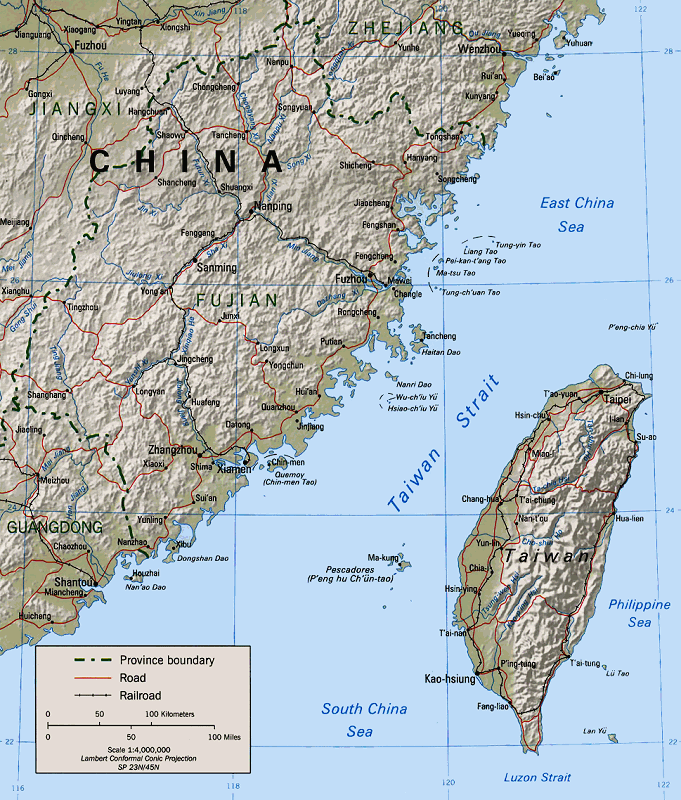
The Second Taiwan Strait Crisis, also known as the 1958 Taiwan Strait Crisis, was a conflict between the People's Republic of China (PRC) and the Republic of China (ROC). The PRC shelled the islands of Kinmen (Quemoy) and the Matsu Islands along the east coast of mainland China in an attempt to take them from Taiwan, governed by the Kuomintang (KMT), and to probe the extent of American commitment to defend the Republic of China. The conflict also involved air, naval, and amphibious operations. Then U.S. secretary of state Christian Herter reportedly described it as the "first serious nuclear crisis".
The conflict was a continuation of the Chinese Civil War and First Taiwan Strait Crisis. The Republic of China (ROC) had begun to build military installations on the island of Kinmen (Quemoy) and the Matsu archipelago. The Chinese People's Liberation Army (PLA) began firing artillery at both Kinmen and some of the nearby Matsu islands.
On 24 and 25 August 1958 Chinese Communist forces and Taiwanese forces clashed in the vicinity of Dongding Island, which the Nationalist troops controlled. The action was seen as an attempt by the communists to land on the island. This was the only naval and amphibious landing action during the crisis. The communist forces were repelled from taking the island. The action has also been seen as an attempt to draw Nationalist forces away from other areas.
... on the 24th two night naval engagements took place near Quemoy. The clashes resulted from a Chinese Communist attempt at landing on the small island of Tung-Ting in the Quemoy complex. The first attack involved four Chinese Communist gunboats and six small landing craft while the second involved five Chinese Communist gunboats and thirty motorized junks. According to the GRC Ministry of National Defense, several enemy ships were sunk and the attack was driven off by seven Chinese Nationalist Patrol craft. The GRC lost one LSM (landing craft, mechanized) and had one LST (landing ship, tank) damaged. Prior to September 3, when they were advised of U.S. escort plans, the Nationalists made five attempts to land an LST with troop replacements and several ships. These efforts were turned back by Chinese Communist PT boats and artillery fire.
In the days after shelling began, the American Joint Chiefs of Staff had determined to defend the islands even if the defense necessitated a nuclear response. Throughout the following weeks as the crisis continued to unfold, contingency plans were developed as it became clear that the critical issue was supplying Kinmen. In a meeting on 2 September, Secretary of State John Foster Dulles met with the Joint Chiefs of Staff and other top officials to formulate an ongoing American strategy. The group determined that the use of nuclear weapons would ultimately be necessary for the defense of Kinmen, but that the United States should initially limit itself to using conventional forces. Throughout the crisis, coordination between American policymakers and military commanders was hampered by communication delays of days at a time, but by September American officials had authorized naval escorts to accompany ROC convoys up to 3 miles off Kinmen and begun to supply the ROC with advanced weapons. The Chinese Communists considered the escorts a violation of the territorial waters of the People's Republic of China. On 19 September, Soviet Premier Nikita Khrushchev sent a letter warning that the American actions threatened world war, claiming that the Soviet Union would be forced to honor its commitments to the territorial integrity of Communist China. The letter was rejected by the American government.
The Eisenhower Administration responded to the request for aid from the ROC according to its obligations in the ROC-United States mutual defense treaty that had been ratified in 1954. President Dwight D. Eisenhower ordered the reinforcement of the U.S. Navy Seventh Fleet in the area, and he ordered American naval vessels to help the Nationalist Chinese government to protect the supply lines to the islands. In addition, the U.S. Air Force deployed F-100D Super Sabres, F-101C Voodoos, F-104A Starfighters, and B-57B Canberras to Taiwan to demonstrate support for Taiwan. The F-104s were disassembled and airlifted to Taiwan in C-124 Globemaster II transport aircraft, marking the first time such a method was used to move fighter aircraft over a long distance.
By 11 September, the artillery crisis was overall stabilized (even though numerous rounds of artillery would still be fired by Communist China almost daily for the next two months or so) because U.S. Navy warships started to escort ROC convoys to Kinmen, breaking the previous artillery blockade due to constant PRC artillery shells that prevented any air or naval relief for Kinmen. The PRC did not want to risk war with the United States so they refrained from firing on any convoys if they observed U.S. Navy ships. The biggest issues in the crisis after September 11 were the air battles and the success or failure of the naval convoys relieving the Kinmen garrison.
Landing units with LVTs from the ROC Marine Corps spent the next few months delivering supplies to the Kinmen Islands, starting from 10 September. Despite continued artillery fire from the PRC, the Marines were able to keep the islands supplied. For this action, the ROC Marines were later awarded a presidential banner from Chiang Kai-shek.
Hub AI
Second Taiwan Strait Crisis AI simulator
(@Second Taiwan Strait Crisis_simulator)
Second Taiwan Strait Crisis
The Second Taiwan Strait Crisis, also known as the 1958 Taiwan Strait Crisis, was a conflict between the People's Republic of China (PRC) and the Republic of China (ROC). The PRC shelled the islands of Kinmen (Quemoy) and the Matsu Islands along the east coast of mainland China in an attempt to take them from Taiwan, governed by the Kuomintang (KMT), and to probe the extent of American commitment to defend the Republic of China. The conflict also involved air, naval, and amphibious operations. Then U.S. secretary of state Christian Herter reportedly described it as the "first serious nuclear crisis".
The conflict was a continuation of the Chinese Civil War and First Taiwan Strait Crisis. The Republic of China (ROC) had begun to build military installations on the island of Kinmen (Quemoy) and the Matsu archipelago. The Chinese People's Liberation Army (PLA) began firing artillery at both Kinmen and some of the nearby Matsu islands.
On 24 and 25 August 1958 Chinese Communist forces and Taiwanese forces clashed in the vicinity of Dongding Island, which the Nationalist troops controlled. The action was seen as an attempt by the communists to land on the island. This was the only naval and amphibious landing action during the crisis. The communist forces were repelled from taking the island. The action has also been seen as an attempt to draw Nationalist forces away from other areas.
... on the 24th two night naval engagements took place near Quemoy. The clashes resulted from a Chinese Communist attempt at landing on the small island of Tung-Ting in the Quemoy complex. The first attack involved four Chinese Communist gunboats and six small landing craft while the second involved five Chinese Communist gunboats and thirty motorized junks. According to the GRC Ministry of National Defense, several enemy ships were sunk and the attack was driven off by seven Chinese Nationalist Patrol craft. The GRC lost one LSM (landing craft, mechanized) and had one LST (landing ship, tank) damaged. Prior to September 3, when they were advised of U.S. escort plans, the Nationalists made five attempts to land an LST with troop replacements and several ships. These efforts were turned back by Chinese Communist PT boats and artillery fire.
In the days after shelling began, the American Joint Chiefs of Staff had determined to defend the islands even if the defense necessitated a nuclear response. Throughout the following weeks as the crisis continued to unfold, contingency plans were developed as it became clear that the critical issue was supplying Kinmen. In a meeting on 2 September, Secretary of State John Foster Dulles met with the Joint Chiefs of Staff and other top officials to formulate an ongoing American strategy. The group determined that the use of nuclear weapons would ultimately be necessary for the defense of Kinmen, but that the United States should initially limit itself to using conventional forces. Throughout the crisis, coordination between American policymakers and military commanders was hampered by communication delays of days at a time, but by September American officials had authorized naval escorts to accompany ROC convoys up to 3 miles off Kinmen and begun to supply the ROC with advanced weapons. The Chinese Communists considered the escorts a violation of the territorial waters of the People's Republic of China. On 19 September, Soviet Premier Nikita Khrushchev sent a letter warning that the American actions threatened world war, claiming that the Soviet Union would be forced to honor its commitments to the territorial integrity of Communist China. The letter was rejected by the American government.
The Eisenhower Administration responded to the request for aid from the ROC according to its obligations in the ROC-United States mutual defense treaty that had been ratified in 1954. President Dwight D. Eisenhower ordered the reinforcement of the U.S. Navy Seventh Fleet in the area, and he ordered American naval vessels to help the Nationalist Chinese government to protect the supply lines to the islands. In addition, the U.S. Air Force deployed F-100D Super Sabres, F-101C Voodoos, F-104A Starfighters, and B-57B Canberras to Taiwan to demonstrate support for Taiwan. The F-104s were disassembled and airlifted to Taiwan in C-124 Globemaster II transport aircraft, marking the first time such a method was used to move fighter aircraft over a long distance.
By 11 September, the artillery crisis was overall stabilized (even though numerous rounds of artillery would still be fired by Communist China almost daily for the next two months or so) because U.S. Navy warships started to escort ROC convoys to Kinmen, breaking the previous artillery blockade due to constant PRC artillery shells that prevented any air or naval relief for Kinmen. The PRC did not want to risk war with the United States so they refrained from firing on any convoys if they observed U.S. Navy ships. The biggest issues in the crisis after September 11 were the air battles and the success or failure of the naval convoys relieving the Kinmen garrison.
Landing units with LVTs from the ROC Marine Corps spent the next few months delivering supplies to the Kinmen Islands, starting from 10 September. Despite continued artillery fire from the PRC, the Marines were able to keep the islands supplied. For this action, the ROC Marines were later awarded a presidential banner from Chiang Kai-shek.
Recent media