



Community hub
Recent from talks
Knowledge base stats:
Talk channels stats:
Members stats:
Second Vatican Council
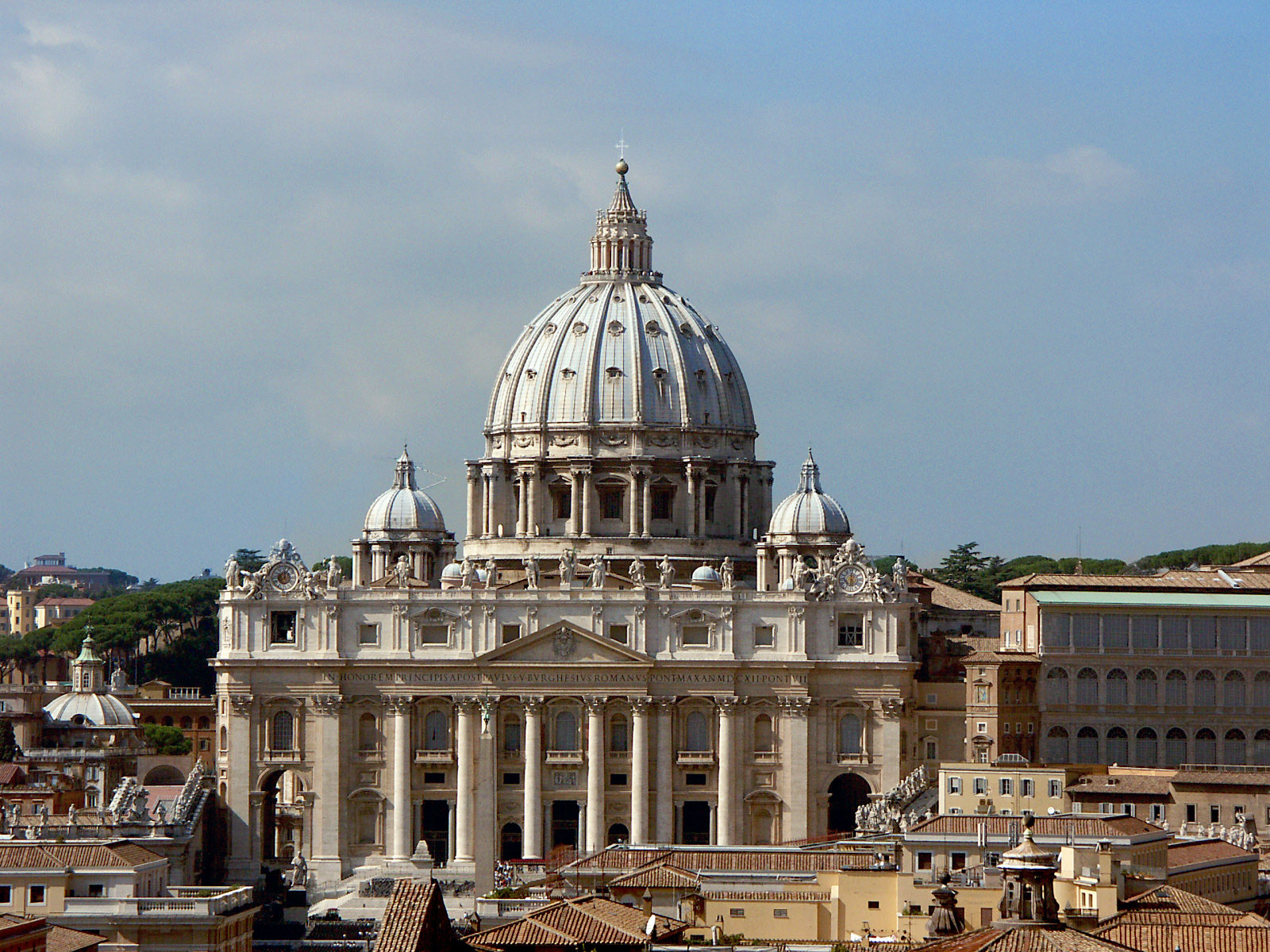
The Second Ecumenical Council of the Vatican, commonly known as the Second Vatican Council or Vatican II, was the 21st and most recent ecumenical council of the Catholic Church. The council met each autumn from 1962 to 1965 in St. Peter's Basilica in Vatican City for sessions of 8 and 12 weeks.
Pope John XXIII convened the council because he felt the Church needed "updating" (Italian: aggiornamento). He believed that to better connect with people in an increasingly secularized world, some of the Church's practices needed to be improved and presented in a more understandable and relevant way.
Support for aggiornamento won out over resistance to change, and as a result 16 magisterial documents were produced by the council, including four "constitutions":
Other decrees and declarations included:
The documents proposed a wide variety of changes to doctrine and practice that would change the life of the Church. Some of the most notable were in performance of the Mass, including that vernacular languages could be authorized as well as Latin.
Pope Pius XII's 1943 encyclical Divino afflante Spiritu gave a renewed impetus to Catholic Bible studies and encouraged the production of new Bible translations from the original languages. This led to a pastoral attempt to get ordinary Catholics to re-discover the Bible, to read it and to make it a source of their spiritual life. This found a response in very limited circles. By 1960, the movement was still progressing slowly.
By the 1930s, mainstream theology based on neo-scholasticism and papal encyclicals was being rejected by some theologians as dry and uninspiring. Thus was the movement, called ressourcement, the return to the sources: basing theology directly on the Bible and the Church Fathers. Some theologians also began to discuss new topics, such as the history of theology, the theology of work, ecumenism, the theology of the laity, and the theology of "earthly realities".
The writings, whose new style came to be called la nouvelle théologie ('the new theology'), attracted Rome's attention, and in 1950 Pius XII published Humani generis, an encyclical "concerning some false opinions threatening to undermine the foundations of Catholic doctrine". Without citing specific people, he criticized those who advocated new schools of theology. It was generally understood that the encyclical was directly against the nouvelle théologie as well as developments in ecumenism and Bible studies. Some works were placed on the Index of Prohibited Books, and some of the authors were forbidden to teach or to publish. Those who suffered most were Henri de Lubac SJ and Yves Congar OP, who were unable to teach or publish until the death of Pius XII in 1958. By the early 1960s, other theologians under suspicion included Karl Rahner SJ and the young Hans Küng.[citation needed]
Hub AI
Second Vatican Council AI simulator
(@Second Vatican Council_simulator)
Second Vatican Council
The Second Ecumenical Council of the Vatican, commonly known as the Second Vatican Council or Vatican II, was the 21st and most recent ecumenical council of the Catholic Church. The council met each autumn from 1962 to 1965 in St. Peter's Basilica in Vatican City for sessions of 8 and 12 weeks.
Pope John XXIII convened the council because he felt the Church needed "updating" (Italian: aggiornamento). He believed that to better connect with people in an increasingly secularized world, some of the Church's practices needed to be improved and presented in a more understandable and relevant way.
Support for aggiornamento won out over resistance to change, and as a result 16 magisterial documents were produced by the council, including four "constitutions":
Other decrees and declarations included:
The documents proposed a wide variety of changes to doctrine and practice that would change the life of the Church. Some of the most notable were in performance of the Mass, including that vernacular languages could be authorized as well as Latin.
Pope Pius XII's 1943 encyclical Divino afflante Spiritu gave a renewed impetus to Catholic Bible studies and encouraged the production of new Bible translations from the original languages. This led to a pastoral attempt to get ordinary Catholics to re-discover the Bible, to read it and to make it a source of their spiritual life. This found a response in very limited circles. By 1960, the movement was still progressing slowly.
By the 1930s, mainstream theology based on neo-scholasticism and papal encyclicals was being rejected by some theologians as dry and uninspiring. Thus was the movement, called ressourcement, the return to the sources: basing theology directly on the Bible and the Church Fathers. Some theologians also began to discuss new topics, such as the history of theology, the theology of work, ecumenism, the theology of the laity, and the theology of "earthly realities".
The writings, whose new style came to be called la nouvelle théologie ('the new theology'), attracted Rome's attention, and in 1950 Pius XII published Humani generis, an encyclical "concerning some false opinions threatening to undermine the foundations of Catholic doctrine". Without citing specific people, he criticized those who advocated new schools of theology. It was generally understood that the encyclical was directly against the nouvelle théologie as well as developments in ecumenism and Bible studies. Some works were placed on the Index of Prohibited Books, and some of the authors were forbidden to teach or to publish. Those who suffered most were Henri de Lubac SJ and Yves Congar OP, who were unable to teach or publish until the death of Pius XII in 1958. By the early 1960s, other theologians under suspicion included Karl Rahner SJ and the young Hans Küng.[citation needed]