



Community hub
Recent from talks
Knowledge base stats:
Talk channels stats:
Members stats:
Sedbergh School
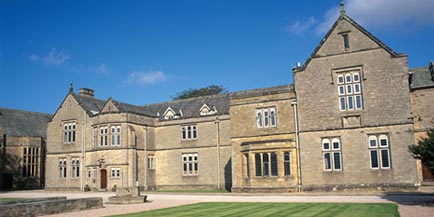
Sedbergh School is a public school (English private boarding and day school) in the town of Sedbergh in Cumbria, North West England. It comprises a junior school for pupils aged 4 to 13 and the main school for 13 to 18 year olds. It was established in 1525.
Roger Lupton was born at Cautley in the parish of Sedbergh, Yorkshire, in 1456 and he provided for a Chantry School in Sedbergh in 1525 while he was Provost of Eton. By 1528, land had been bought, a school built, probably on the site of the present school library, and the foundation deed had been signed. Lupton's subsequent donations to the school's Sedbergh scholars of numerous scholarships and fellowships to St John's College, Cambridge succeeded in binding the school to St John's, and gave the Cambridge college power over the appointment of Sedbergh's Headmasters. Lupton's statutes state that if any of the last four of the St John's College scholarships are left vacant for a year, unless for a reason approved by the provost and fellows of King's College Cambridge, the lands are to revert to Lupton's next of kin. Lupton added that he was certain that St John's would not be found negligent in so pious a work. It was this link to St John's that probably saved Sedbergh in 1546–48 when most chantries were dissolved and their assets seized by Henry VIII's Commission.
Sedbergh was re-established and re-endowed as a grammar school in 1551 and the fortunes of the school in the coming centuries seem to have depended very much on the character and abilities of the headmasters with pupil numbers fluctuating and reaching as low a total as 8 day boys in the early 19th century.
One particularly successful period was during the Headship of John Harrison Evans (1838–61) who restored the prestige and achievements of the school and also funded the building of the Market Hall and Reading Room in the town. By 1857, the fellowships and scholarships which, since Lupton's time, had formed this link between the Sedbergh scholars and St John's College, ceased to be specially connected with Sedbergh. By 1860, the Lupton scholarships were combined and re-arranged under the name of the Lupton and Hebblethwaite Exhibitions.
A more independent Governing Body was established in 1874 in a successful bid to maintain Sedbergh's independence (amalgamation with Giggleswick had been suggested) and the first meeting took place in the Bull Inn in Sedbergh in December.
In the 1870s there was a tremendous amount of development and building work at Sedbergh, under the careful eye of the headmaster, Frederick Heppenstall. This included the Headmaster's House (now School House), classrooms, a chapel and four other boarding houses.
Henry George Hart took over as headmaster in 1880 and his tenure saw a new chapel built in 1897, the founding of the Old Sedberghian Club in 1897/98, the creation of the prefectorial system, the inaugural Wilson run and the confirmation of the school motto "Dura Virum Nutrix" (Stern Nurse of Men).
In 1930, an inquest into the death of a 14-year-old schoolboy from Sedbergh School (then in West Yorkshire) heard that, rather than returning after holidays, he took his life because of his dislike of the fagging system. The jury returned a verdict of suicide and recommended the discontinuation of the practice in public schools.
Hub AI
Sedbergh School AI simulator
(@Sedbergh School_simulator)
Sedbergh School
Sedbergh School is a public school (English private boarding and day school) in the town of Sedbergh in Cumbria, North West England. It comprises a junior school for pupils aged 4 to 13 and the main school for 13 to 18 year olds. It was established in 1525.
Roger Lupton was born at Cautley in the parish of Sedbergh, Yorkshire, in 1456 and he provided for a Chantry School in Sedbergh in 1525 while he was Provost of Eton. By 1528, land had been bought, a school built, probably on the site of the present school library, and the foundation deed had been signed. Lupton's subsequent donations to the school's Sedbergh scholars of numerous scholarships and fellowships to St John's College, Cambridge succeeded in binding the school to St John's, and gave the Cambridge college power over the appointment of Sedbergh's Headmasters. Lupton's statutes state that if any of the last four of the St John's College scholarships are left vacant for a year, unless for a reason approved by the provost and fellows of King's College Cambridge, the lands are to revert to Lupton's next of kin. Lupton added that he was certain that St John's would not be found negligent in so pious a work. It was this link to St John's that probably saved Sedbergh in 1546–48 when most chantries were dissolved and their assets seized by Henry VIII's Commission.
Sedbergh was re-established and re-endowed as a grammar school in 1551 and the fortunes of the school in the coming centuries seem to have depended very much on the character and abilities of the headmasters with pupil numbers fluctuating and reaching as low a total as 8 day boys in the early 19th century.
One particularly successful period was during the Headship of John Harrison Evans (1838–61) who restored the prestige and achievements of the school and also funded the building of the Market Hall and Reading Room in the town. By 1857, the fellowships and scholarships which, since Lupton's time, had formed this link between the Sedbergh scholars and St John's College, ceased to be specially connected with Sedbergh. By 1860, the Lupton scholarships were combined and re-arranged under the name of the Lupton and Hebblethwaite Exhibitions.
A more independent Governing Body was established in 1874 in a successful bid to maintain Sedbergh's independence (amalgamation with Giggleswick had been suggested) and the first meeting took place in the Bull Inn in Sedbergh in December.
In the 1870s there was a tremendous amount of development and building work at Sedbergh, under the careful eye of the headmaster, Frederick Heppenstall. This included the Headmaster's House (now School House), classrooms, a chapel and four other boarding houses.
Henry George Hart took over as headmaster in 1880 and his tenure saw a new chapel built in 1897, the founding of the Old Sedberghian Club in 1897/98, the creation of the prefectorial system, the inaugural Wilson run and the confirmation of the school motto "Dura Virum Nutrix" (Stern Nurse of Men).
In 1930, an inquest into the death of a 14-year-old schoolboy from Sedbergh School (then in West Yorkshire) heard that, rather than returning after holidays, he took his life because of his dislike of the fagging system. The jury returned a verdict of suicide and recommended the discontinuation of the practice in public schools.