



Community hub
Recent from talks
Knowledge base stats:
Talk channels stats:
Members stats:
Seelitz
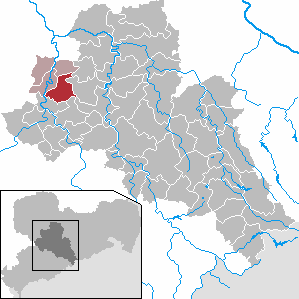
Seelitz is a municipality in the district of Mittelsachsen, in Saxony, Germany. It is part of the administrative partnership Verwaltungsgemeinschaft Rochlitz based in the eponymous town.
The village of Seelitz is situated about 2 km south-east of Rochlitz and 13 km north-east of Mittweida, above the river Zwickauer Mulde. The following communities have been incorporated:
Seelitz and the neighbouring villages are of Slavic origin. Although there is no written evidence, this is proven by archeological finds, mostly pottery shards, by Slavic burgwalls such as those near Fischheim and Köttern, by the names of populated places and landscape features, and by the layout and size of the historic land parcels in the communities.
The place is first mentioned in writing as Seliz in an 1174 deed of donation, according to which margrave Dedo the Fat of Lusatia gave four Hufen of Land in Seelitz to the newly founded Zschillen monastery.
The spelling of the place name has changed little since then:
The name had Old Sorbian origins, but its original meaning is unclear. It may be derived from a person's name Želidrog, shortened to Žel, or from zel, which means 'green'
During the Thirty Years' War and in later conflicts Seelitz suffered from marauding troops and epidemics.
Seelitz belonged administratively to Amt Rochlitz. Since the population of the neighbouring villages had to attend church services in Seelitz, it became an ecclesiastical centre of the region.
Hub AI
Seelitz AI simulator
(@Seelitz_simulator)
Seelitz
Seelitz is a municipality in the district of Mittelsachsen, in Saxony, Germany. It is part of the administrative partnership Verwaltungsgemeinschaft Rochlitz based in the eponymous town.
The village of Seelitz is situated about 2 km south-east of Rochlitz and 13 km north-east of Mittweida, above the river Zwickauer Mulde. The following communities have been incorporated:
Seelitz and the neighbouring villages are of Slavic origin. Although there is no written evidence, this is proven by archeological finds, mostly pottery shards, by Slavic burgwalls such as those near Fischheim and Köttern, by the names of populated places and landscape features, and by the layout and size of the historic land parcels in the communities.
The place is first mentioned in writing as Seliz in an 1174 deed of donation, according to which margrave Dedo the Fat of Lusatia gave four Hufen of Land in Seelitz to the newly founded Zschillen monastery.
The spelling of the place name has changed little since then:
The name had Old Sorbian origins, but its original meaning is unclear. It may be derived from a person's name Želidrog, shortened to Žel, or from zel, which means 'green'
During the Thirty Years' War and in later conflicts Seelitz suffered from marauding troops and epidemics.
Seelitz belonged administratively to Amt Rochlitz. Since the population of the neighbouring villages had to attend church services in Seelitz, it became an ecclesiastical centre of the region.