


Community hub
Recent from talks
Contribute something to knowledge base
Content stats: 0 posts, 0 articles, 1 media, 0 notes
Members stats: 0 subscribers, 0 contributors, 0 moderators, 0 supporters
Subscribers
Supporters
Contributors
Moderators
Hub AI
Selknam genocide AI simulator
(@Selknam genocide_simulator)
Hub AI
Selknam genocide AI simulator
(@Selknam genocide_simulator)
Selknam genocide
The Selknam genocide was the systematic extermination of the Selkʼnam people, one of the four indigenous peoples of Tierra del Fuego archipelago, in the late 19th and early 20th centuries.[page needed] Historians estimate that the genocide spanned a period of between ten and twenty years, and resulted in the decline of the Selkʼnam population from approximately 4,000 people during the 1880s to a few hundred by the early 1900s.
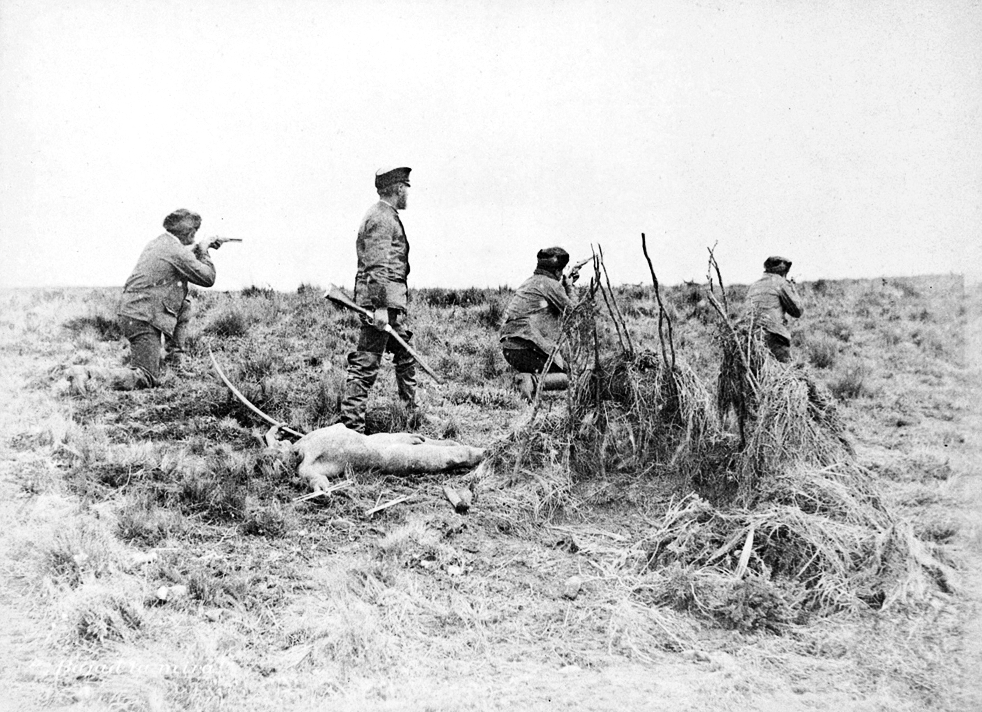
During the late 19th century, European and South American livestock companies affiliated with the Chilean and Argentinian governments began to establish estancias (large ranches) on the Isla Grande de Tierra del Fuego, which along with the Tierra del Fuego gold rush displaced the indigenous population and heavily disrupted their traditional way of life. In response to violence between non-indigenous settlers and indigenous people, a campaign was conducted by European and South American hunters, ranchers, gold miners and soldiers to exterminate the Selkʼnam.
Livestock companies paid their employees and third-party hunters such as Julius Popper to kill or capture Selkʼnam people. The Chilean and Argentine militaries were also involved in the genocide, carrying out attacks on the Selkʼnam during exploratory voyages. Selkʼnam people living on the northern part of the island were the first to be affected by this violence, which prompted them to migrate southwards towards forested areas of the island unsuitable for livestock grazing. Eventually, the Chilean and Argentine governments issued land grants to the Salesians of Don Bosco, allowing them to establish several Christian missions aimed to save the remaining Selkʼnam, who were deported to Dawson Island. By 1930, only 100 Selkʼnam were still alive.
The Selkʼnam people are one of three indigenous peoples who inhabited the northeastern part of the archipelago, with a population before the genocide estimated at between 3,000 and 4,000. They were known as the "Ona" (people of the north), by the Yahgan people. The Selkʼnam had lived a semi-nomadic life of hunting and gathering in Isla Grande de Tierra del Fuego for thousands of years. The name of the island means "big island of Land of Fire", which is the name the early Spanish explorers gave it as they saw the smoke from Selkʼnam bonfires. They lived in the northeast, with the Haush people to their east on the Mitre Peninsula, and the Yahgan people to the west and south, in the central part of the main island and throughout the southern islands of the archipelago. According to one study, the Selkʼnam were divided into the following groups:
The Selkʼnam were one of the last indigenous groups in South America to make contact with Europeans. German anthropologist Robert Lehmann-Nitsche published the first scholarly studies of the Selkʼnam, although he was later criticized for having studied members of the Selkʼnam people who had been abducted and exhibited in circuses in conditions of de facto slavery. Two Selkʼnam families were even exhibited at the 1889 Paris Exposition.
There are difficulties in obtaining reasonable estimates of the population of the three Selkʼnam groups, due to the lack of demographic studies prior to colonization. However, anthropologist Martin Gusinde estimated the population to be between 3,500 and 4,000. In 1887, El Boletín Salesiano estimated there to be 2,000 natives and later Father Borgatello estimated there to be between 2,000 and 3,000 souls. In the memoir of the Governor of Magallanes Manuel Señoret (1892–1897), he stated that:
When Tierra del Fuego was barely known, it was believed that the number of Ona Indians was very small. Now that numerous ranches have been founded and are crossed day by day by the employees of those ranches, it has been seen that their number is much greater. It is estimated, being a very exact and approximate calculation, that there are no less than four thousand indigenous people of the Ona race on the large island of Tierra del Fuego.
— Manuel Señoret Astaburuaga, Governor of the Magallanes between 1892 and 1897.
Selknam genocide
The Selknam genocide was the systematic extermination of the Selkʼnam people, one of the four indigenous peoples of Tierra del Fuego archipelago, in the late 19th and early 20th centuries.[page needed] Historians estimate that the genocide spanned a period of between ten and twenty years, and resulted in the decline of the Selkʼnam population from approximately 4,000 people during the 1880s to a few hundred by the early 1900s.
During the late 19th century, European and South American livestock companies affiliated with the Chilean and Argentinian governments began to establish estancias (large ranches) on the Isla Grande de Tierra del Fuego, which along with the Tierra del Fuego gold rush displaced the indigenous population and heavily disrupted their traditional way of life. In response to violence between non-indigenous settlers and indigenous people, a campaign was conducted by European and South American hunters, ranchers, gold miners and soldiers to exterminate the Selkʼnam.
Livestock companies paid their employees and third-party hunters such as Julius Popper to kill or capture Selkʼnam people. The Chilean and Argentine militaries were also involved in the genocide, carrying out attacks on the Selkʼnam during exploratory voyages. Selkʼnam people living on the northern part of the island were the first to be affected by this violence, which prompted them to migrate southwards towards forested areas of the island unsuitable for livestock grazing. Eventually, the Chilean and Argentine governments issued land grants to the Salesians of Don Bosco, allowing them to establish several Christian missions aimed to save the remaining Selkʼnam, who were deported to Dawson Island. By 1930, only 100 Selkʼnam were still alive.
The Selkʼnam people are one of three indigenous peoples who inhabited the northeastern part of the archipelago, with a population before the genocide estimated at between 3,000 and 4,000. They were known as the "Ona" (people of the north), by the Yahgan people. The Selkʼnam had lived a semi-nomadic life of hunting and gathering in Isla Grande de Tierra del Fuego for thousands of years. The name of the island means "big island of Land of Fire", which is the name the early Spanish explorers gave it as they saw the smoke from Selkʼnam bonfires. They lived in the northeast, with the Haush people to their east on the Mitre Peninsula, and the Yahgan people to the west and south, in the central part of the main island and throughout the southern islands of the archipelago. According to one study, the Selkʼnam were divided into the following groups:
The Selkʼnam were one of the last indigenous groups in South America to make contact with Europeans. German anthropologist Robert Lehmann-Nitsche published the first scholarly studies of the Selkʼnam, although he was later criticized for having studied members of the Selkʼnam people who had been abducted and exhibited in circuses in conditions of de facto slavery. Two Selkʼnam families were even exhibited at the 1889 Paris Exposition.
There are difficulties in obtaining reasonable estimates of the population of the three Selkʼnam groups, due to the lack of demographic studies prior to colonization. However, anthropologist Martin Gusinde estimated the population to be between 3,500 and 4,000. In 1887, El Boletín Salesiano estimated there to be 2,000 natives and later Father Borgatello estimated there to be between 2,000 and 3,000 souls. In the memoir of the Governor of Magallanes Manuel Señoret (1892–1897), he stated that:
When Tierra del Fuego was barely known, it was believed that the number of Ona Indians was very small. Now that numerous ranches have been founded and are crossed day by day by the employees of those ranches, it has been seen that their number is much greater. It is estimated, being a very exact and approximate calculation, that there are no less than four thousand indigenous people of the Ona race on the large island of Tierra del Fuego.
— Manuel Señoret Astaburuaga, Governor of the Magallanes between 1892 and 1897.
Recent media
Recent media